

By Herrains Product Development Team
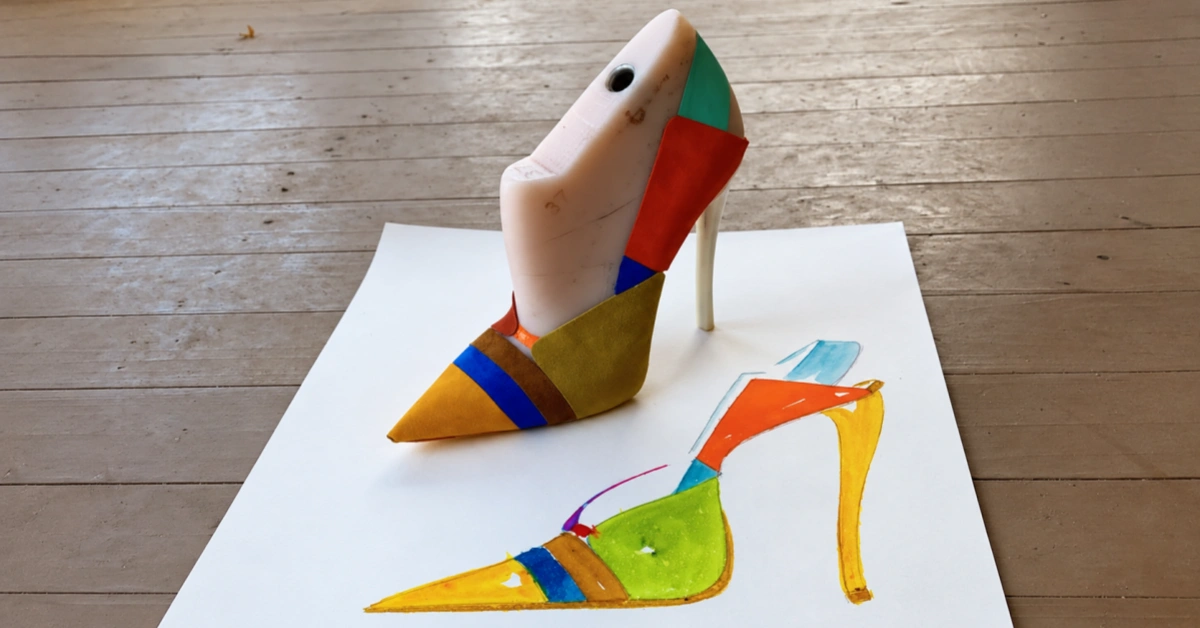
Most footwear founders lose confidence at the exact same moment: the gap between a sketch and a sample. A drawing can carry your vision, but it cannot prove that vision is buildable. This is where a free 3D modeling service changes the equation. Instead of guessing whether your design will translate into a real shoe, you get to see it — proportions, structure, and colorways — before a single piece of leather is cut. This guide explains how the service works at Herrains, why it reflects an enablement mindset rather than a transactional one, and how to use it to walk into sampling with certainty instead of hope.
What Is a Free 3D Modeling Service for Footwear Brands?
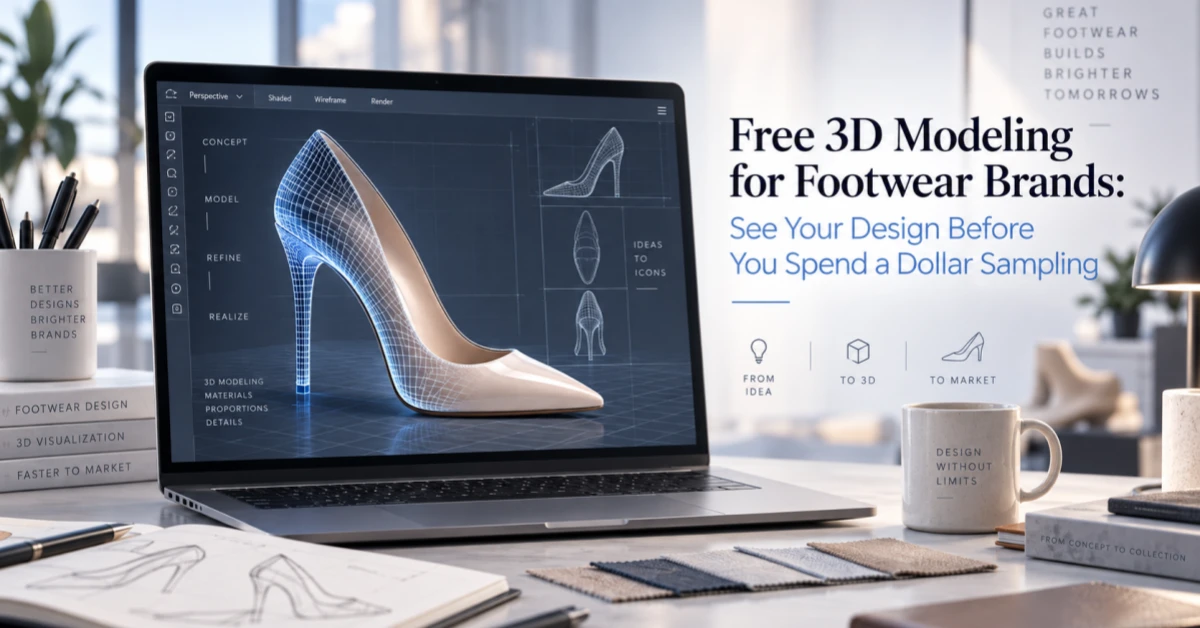
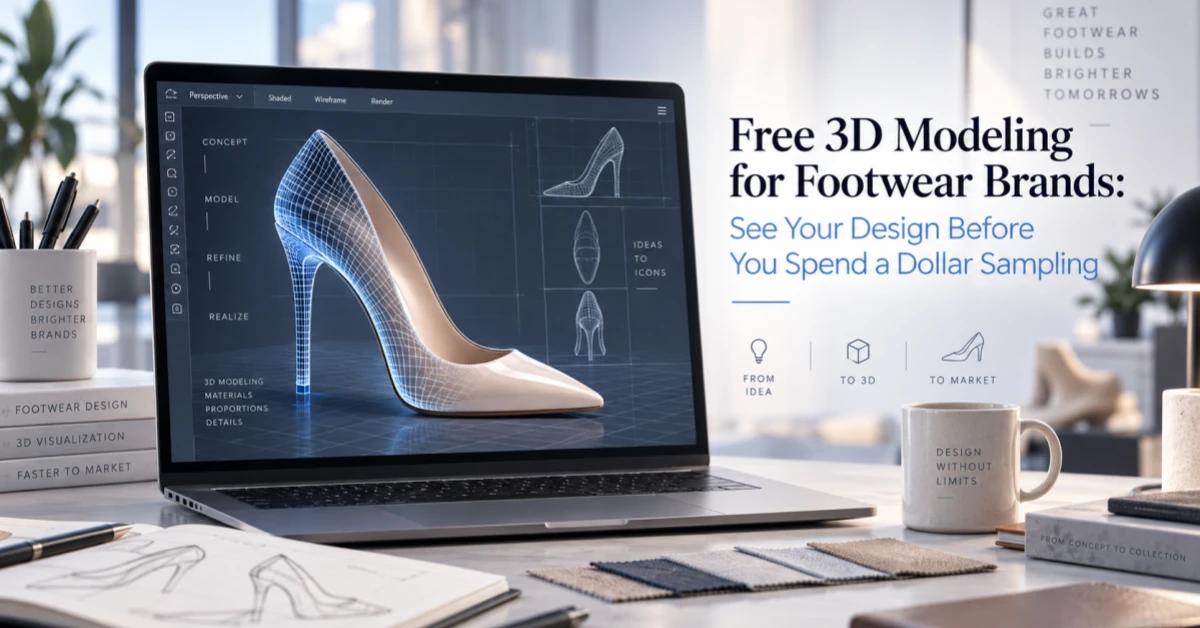
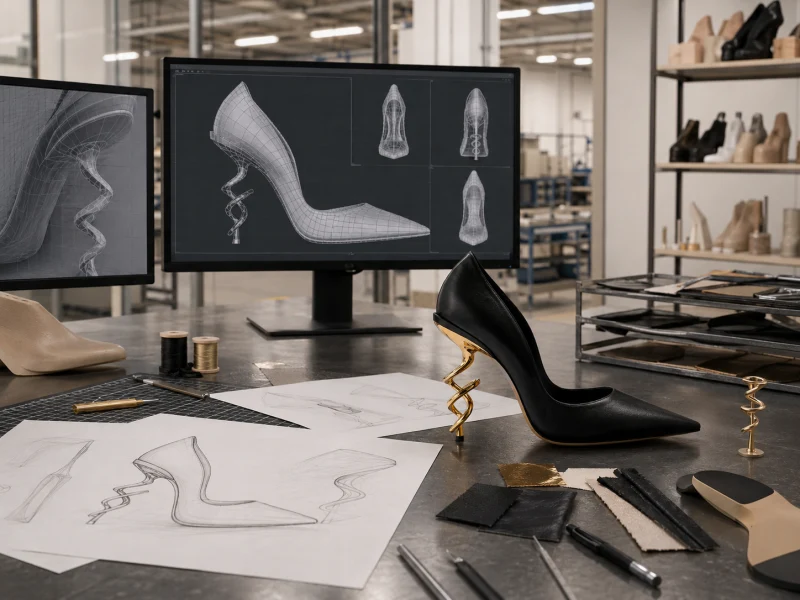
A free 3D modeling service takes your sketch, reference image, or even a rough verbal description and turns it into a digital preview of the finished product. It is not a rendering for marketing purposes — it is a working tool that checks whether your silhouette, heel geometry, or bag structure is proportionally sound and visually consistent with your design intent.
At Herrains, this sits inside a broader 72-hour 3D prototyping service: submit your direction, and within roughly three business days you receive a model you can review, rotate, and reference in conversations with your development partner. It is digital footwear design to production made tangible at the earliest, cheapest possible stage — before cost, materials, or manufacturing decisions are locked in.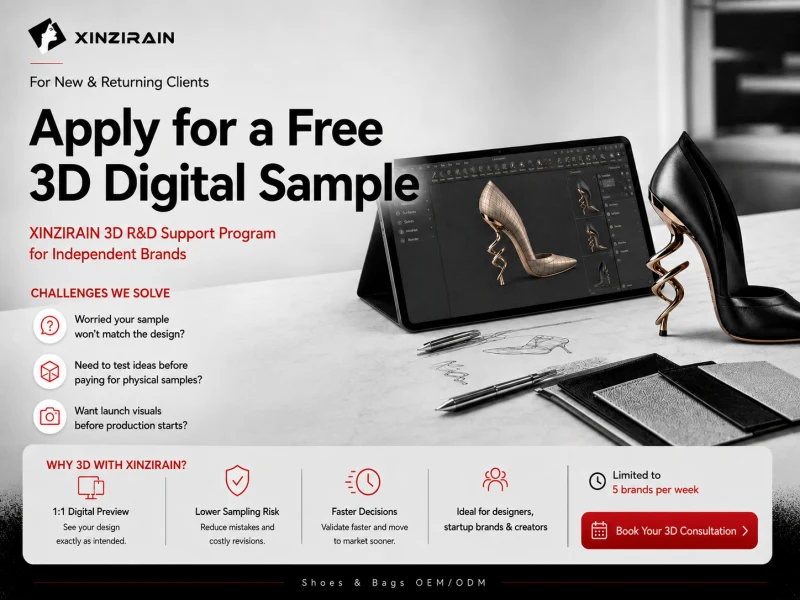
Why Sketch-Stage Founders Need 3D Modeling Before Sampling
If you have ever tried to describe a heel curve or a strap angle over email, you already know part of the problem. But the hesitation around a "free" service usually runs deeper than communication — it runs into real fears founders rarely say out loud.
"If it's free, what's the catch?"
Founders are trained to be suspicious of "free." The honest answer: there is no hidden upsell built into the model itself. The free 3D preview is scoped to one core deliverable — a proportion and silhouette check — typically within a reasonable number of revision rounds on the same design. It is not unlimited redesign work, and it is not a substitute for the material feasibility review or physical sampling that come after. We tell you where that line is before you start, not after.
"You can't explain a vision with words alone"
Founders often assume a factory "gets it" from a sketch and three reference photos. In reality, small proportional decisions — toe shape, heel height, hardware placement — get lost in translation. A 3D model removes that ambiguity. What you see is what gets built, not what someone interpreted from your notes.
"What if the model shows my design doesn't work?"
This is the fear underneath the fear: spending time and hope on an idea, only to be told it fails. Here is the reframe — if a proportion or structure genuinely will not work as drawn, learning that from a free digital model costs you nothing but a short conversation. Learning it from a $300–$1,500 sample costs you money, time, and momentum. A "no, not as drawn" from a 3D preview is not a rejection of your brand; it is the cheapest version of that answer you will ever get, paired with concrete suggestions for what would work instead.
"Physical samples are expensive mistakes waiting to happen"
A single sample round can run $300–$1,500. If the proportions are off, you pay again. Rapid footwear prototyping solutions exist precisely to catch that mistake digitally, at no cost, instead of physically, at real cost.
"Factories speak in specs, not feelings"
"Make it elegant" is not a manufacturing instruction. A 3D model forces the vague into the specific: exact curves, exact ratios, exact material zones. That specificity is what actually protects your design language once production begins.
How Herrains' Free 3D Modeling Service Works
The process is intentionally simple, because sketch-stage founders should not need a finished tech pack to start.
Step 1: Submit Your Sketch or Reference
Send whatever you have — a drawing, a Pinterest board, a competitor shoe you admire with notes on what to change. There is no minimum polish required.
Step 2: 72-Hour Rapid 3D Preview
Our team builds a digital model that reflects your proportions, silhouette, and intended colorways, so you can evaluate the direction visually rather than imagining it.
Step 3: Review and Adjust Before Committing
You give feedback directly on the model — not on a physical object that costs money to change. Adjustments at this stage are essentially free; the same fix after a sample is made rarely is.
Step 4: Move to Material and Cost Feasibility
Once the silhouette is confirmed, the conversation shifts to material availability and first-order cost — the natural next step toward a physical sample, entered with far less risk.
Send your sketch or reference and receive a rapid 3D model of your shoe or bag — proportions, silhouette, and colorway preview, no tech pack and no payment required.
Request My Free 3D Preview →
What You Actually Get From the Free 3D Preview
The deliverable is concrete, not conceptual:
- A rotatable digital model reflecting your sketch or reference
- Visual confirmation of proportions, heel geometry, or bag structure
- A first look at proposed colorways and material zones
- Notes on any construction risks visible at this stage
- A clear next-step recommendation: proceed, adjust, or hold
None of this requires a completed tech pack. The 3D model itself often becomes the starting point for building one.
What the Free 3D Preview Does Not Do (Managing Expectations)
An enablement mindset means telling you the edges of the tool, not just its benefits:
- It does not simulate real material behavior. Drape, stretch, and how leather or fabric folds under wear are refined later, in the material feasibility review — the digital preview is a proportion and structure check, not a physics simulation.
- It does not replace an in-hand fit check. Comfort, weight, and how a shoe actually feels on a foot can only be confirmed with a physical sample.
- It is not unlimited redesign. The free scope covers a focused review of one design direction with reasonable revision rounds — a full reimagining of the concept is a separate conversation.
- Turnaround depends on complexity and queue. Most requests move within the standard 72-hour window; highly complex silhouettes or peak submission periods can extend that slightly. We flag this upfront rather than promise a deadline we might miss.
What it reliably does: give you an honest, visual answer to "does this proportion actually work" before you spend money finding out the hard way.
The Enablement Mindset: From Service to Empowerment
Most manufacturing relationships are transactional: you place an order, the factory fulfills it. That model works for founders who already know exactly what they want. It fails sketch-stage founders, who need a partner willing to teach them what "buildable" even looks like.
A free 3D modeling service is not a marketing gimmick — it is a deliberate shift from order-taking to enablement. Instead of waiting for you to arrive with a perfect brief, we hand you a tool that builds your own judgment. You start recognizing proportion problems before we point them out. You start speaking the language of construction, not just aesthetics. That capability stays with you long after this one shoe ships — it is the difference between depending on a vendor for every decision and becoming a founder who can direct development with confidence.
This is the same logic behind our role as a footwear and bag brand launch partner: we are not measuring success by how many samples we ship, but by how ready you are to make your next ten decisions without us holding your hand.
The Kind of Mistake This Catches (A Realistic Scenario)
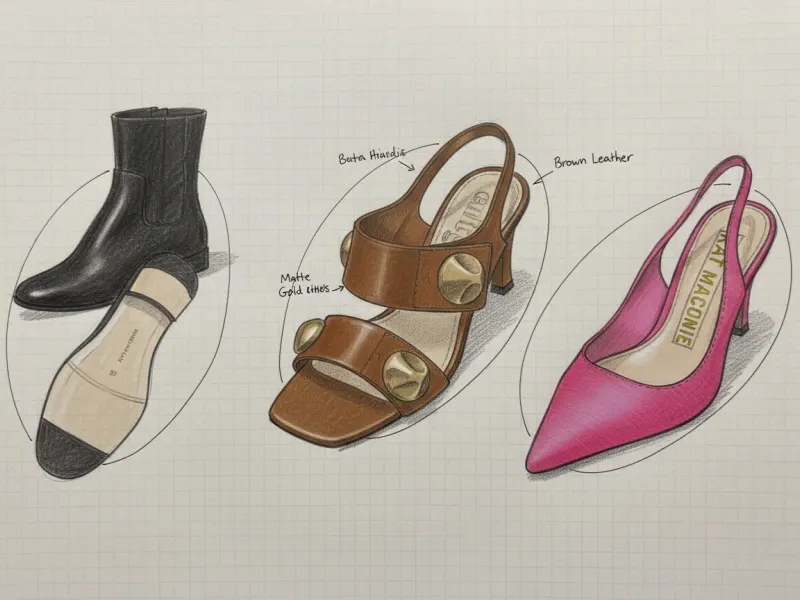
Here is a pattern we see often enough that it is worth describing, even without naming a specific brand: a founder sketches a boot with a dramatic shaft-to-heel ratio inspired by a runway reference. On paper, the proportions look striking. Built as drawn, without a digital check, that same ratio can throw off balance and fit once a last is involved — a flaw that is nearly invisible in a 2D sketch but immediately obvious the moment a 3D model is rotated in profile.
Caught on screen, that is a five-minute adjustment. Caught after a $300–$1,500 sample round, it is a lost cycle and a delayed launch. This is the actual value of the free preview: not that it guarantees a perfect design, but that it moves the moment of discovery from the most expensive stage of development to the cheapest one. It is the same logic behind early product validation — protecting budget and brand integrity before production begins, not after.
Conclusion: Let the Model Carry the Risk, Not Your Wallet
A sketch shows intent. A 3D model shows whether that intent is buildable. The gap between the two is exactly where most first-time footwear and bag brands lose money, time, and confidence — and it is entirely avoidable. A free 3D modeling service does not replace your creative vision; it protects it, translating your idea into something a factory can execute faithfully, and something you can approve with your eyes, not just your hope.
If you have a sketch sitting in a folder waiting for the courage to act on it, this is the lowest-risk way to start. Talk to our development team and see your design before you spend a dollar sampling it.
Get a free 3D preview of your shoe or bag design — no tech pack, no payment, no commitment. Just clarity before you sample.
Get My Free 3D Modeling Preview →
Frequently Asked Questions
1. What is a free 3D modeling service for footwear brands?
It is a no-cost digital preview of your shoe design, built from a sketch or reference image, that lets you confirm proportions, materials, and construction feasibility before paying for a physical sample.
2. Do I need a tech pack to request a free 3D model?
No. A sketch, a reference photo, or even a clear verbal description of your idea is enough to start. The tech pack is something we help build alongside the 3D preview, not a prerequisite for it.
3. How long does the free 3D modeling process take?
Our standard turnaround is a 72-hour 3D prototyping service for most footwear silhouettes, depending on design complexity.
4. Is the 3D model the same as a physical sample?
No. A 3D model is a digital preview used to validate proportions, colorways, and construction logic before you invest in a physical sample, which remains a separate, later step.
5. What happens after I receive my free 3D preview?
You review it, request adjustments if needed, and then decide whether to proceed to material feasibility review and physical sampling with full confidence in the direction.
6. Can bags be modeled the same way as shoes?
Yes. The same rapid 3D preview process applies to handbags, so footwear and bag lines can be validated together as one cohesive collection.
7. Does the free 3D modeling service come with any obligation?
No. It is a no-commitment review. You are free to walk away, revise your idea, or proceed to sampling at your own pace.
8. What information should I send to get started?
Your sketch or reference images, a sense of your target price point, and any must-have materials or details. The clearer your direction, the sharper the 3D preview.
9. Will the 3D model account for real material behavior?
The preview focuses primarily on proportion, structure, and visual accuracy. Material-specific behavior such as drape or stretch is refined during the material feasibility review that follows.
10. Why offer this for free instead of charging for it?
Because the earlier a founder can see and correct a design issue, the less expensive that mistake becomes. We would rather remove that barrier than let a fixable problem turn into a wasted sample.
11. Is there a limit to how many revisions the free service covers?
The free preview covers a focused proportion and silhouette check on one design direction, typically within a reasonable number of revision rounds. It is not open-ended redesign work; if your idea needs a substantially different concept, that becomes a separate discussion, explained upfront.
12. What if the 3D model shows my design isn't feasible as drawn?
That is the service working as intended, not a failure. Learning this from a free digital model costs a conversation; learning it from a physical sample costs $300–$1,500 and a delayed timeline. We pair any "not feasible as drawn" result with concrete, buildable alternatives that keep your original intent intact.
Related Reading
- What Is Product Validation for a Footwear Brand? A Guide for Sketch-Stage Founders
- How to Validate a Footwear or Handbag Design Before Sampling
- From 300 to 3,000 Pairs: A Practical Footwear Manufacturing Roadmap for Emerging Brands