

Successful footwear and handbag brands are not built simply by manufacturing a good product. They are built by connecting product development, demand validation, first production planning, inventory control and repeat orders into a commercial system that becomes more accurate over time.
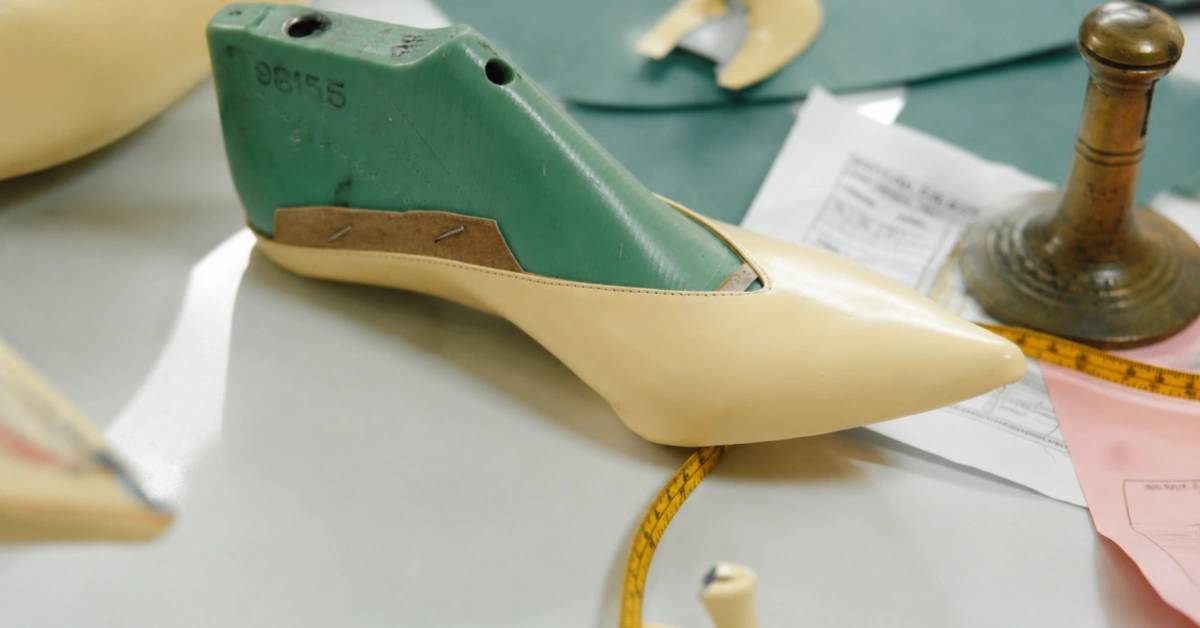
For many new footwear and handbag founders, one of the most exciting moments is seeing the first finished sample on the table. The silhouette is right. The material has been approved. The hardware, colors, proportions and packaging are finally coming together. A concept that once existed only as a sketch has become a real product.
But commercially, this is not the finish line.
It is only the beginning.
The questions that determine whether a brand can continue are very different:
- Will customers actually pay for the product?
- How many units should the first production run contain?
- What happens if demand is weaker than expected?
- What happens if the product sells faster than expected?
- Can the second production run generate a healthier margin than the first?
This is why serious footwear production planning should not be viewed simply as:
A more complete commercial path is:
Product development answers one question: Can we make this product?
Building a sustainable brand requires answering another: Can we continue selling it profitably and repeat the process with less risk each time?
Why Inventory Planning Matters in Footwear and Handbag Production
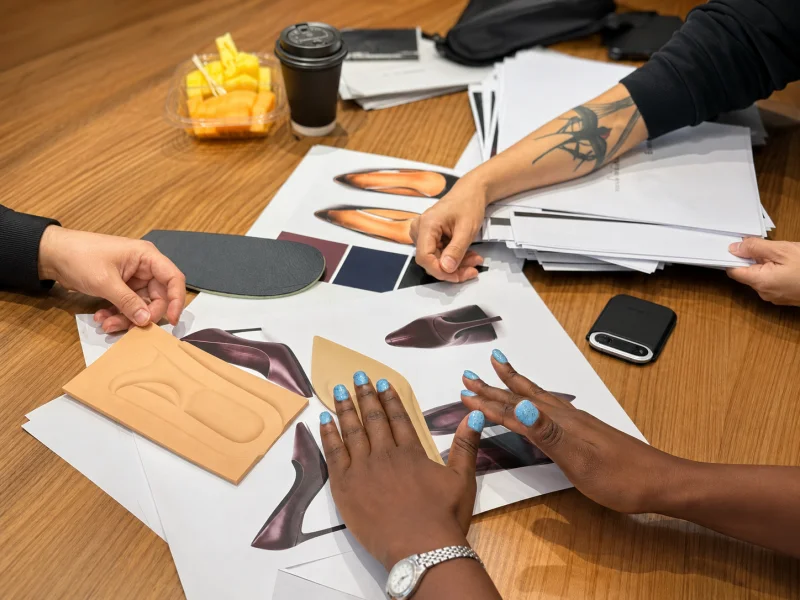
When new founders begin speaking with manufacturers, their first questions often focus on MOQ and unit price. They want to know what 300 pairs cost, how much they could save at 500 pairs, or whether several colors can be produced together.
These are valid questions. But the largest commercial risk is often not whether one pair costs five dollars more.
Unsold inventory represents much more than products sitting in a warehouse. It represents cash already committed to production, capital tied up in stock, warehousing costs, SKU complexity, seasonal risk and future markdown pressure.
This is not only a startup problem. McKinsey reported that fashion-industry days inventory outstanding reached an all-time high in 2024, approximately 14% above pre-2020 averages. The same analysis highlights better demand planning, inventory allocation and inventory management as important levers for improving fashion-industry economics.
For an emerging brand, the objective should therefore not simply be to get the lowest possible factory price.
A healthier objective is to build the highest possible inventory efficiency without damaging the product.
Why Gross Margin Does Not Always Mean a Profitable Product
Imagine a footwear brand launches a shoe with a retail price of $200 and a factory production cost of $55. It is tempting to calculate the difference as $145 of profit.
That is not the true business result.
Before the product reaches the consumer, the brand may still need to pay for:
- Manufacturing
- Packaging
- International freight
- Import duties
- Warehousing
- Fulfillment
- Payment processing
- E-commerce operations
- Customer acquisition
- Photography and content
- Returns and exchanges
- Customer service
- Promotions and markdowns
The more useful metric is often contribution margin.
The first production run may also carry development expenses such as prototype development, last development, outsole tooling, custom hardware moulds and packaging development.
A large difference between retail price and factory price therefore does not automatically mean a large business profit.
Profit is created by the complete commercial model, not by the factory quotation alone.
Why Pre-Orders Matter in Footwear Production Planning
The traditional retail model follows a simple sequence:
The brand predicts demand, manufactures inventory in advance and then tries to sell that inventory.
For a new brand, however, historical data is limited. The founder may not yet know which style will perform best, which color will convert, which sizes will sell fastest or whether customers will actually accept the planned retail price.
This is why emerging brands may use a combination of:
- Pre-orders
- Made-to-order production
- Limited drops
- Small-batch manufacturing
- Demand-led replenishment
The objective is not necessarily to eliminate inventory completely.
The objective is to move part of the production decision closer to confirmed demand.
Vogue Business has documented designer-led brands moving toward made-to-order models to gain more control over cash flow, production and inventory. Its reporting also shows that a hybrid approach can be more practical than treating made-to-order as a universal solution.
Pre-ordering should therefore be viewed as more than an early-payment mechanism. Its deeper commercial value is that it converts part of a forecast into actual purchasing data.
What Pre-Orders Actually Validate Before Production
Likes are not demand.
Waitlist registrations are useful, but they are not the same as paid demand.
The strongest commercial signal appears when a customer is willing to pay for the product.
Imagine a brand is preparing to launch its first loafer. After completing a production-ready sample, the brand creates campaign photography, product photography, founder content, material education and fit information.
It then opens a limited pre-order period and receives 180 paid orders.
Those 180 orders provide several forms of validation.
Style Validation
Does the market genuinely accept the design?
Price Validation
Will customers pay the planned retail price?
Color Validation
How does demand split between Black, Brown, Burgundy or other colorways?
Size Validation
Which sizes are actually selling?
Market Validation
Where are customers located and which markets are responding most strongly?
The brand now owns something extremely valuable: its own demand data.
For an early-stage footwear brand, this information may ultimately create more value than reducing the factory price by several dollars.
Before committing to bulk production, HERRAINS can review your design stage, materials, target quantity and launch plan to identify the main development and production risks.
How Pre-Orders Connect With Manufacturing MOQs
Pre-orders do not remove the physical realities of footwear and handbag manufacturing.
Production is still influenced by:
- Material MOQs
- Color minimums
- Component minimums
- Hardware quantities
- Outsole or tooling requirements
- Production-line efficiency
This means a realistic model is often not:
A more practical model is:
For example, a footwear brand receives 180 confirmed pre-orders while the commercially viable production quantity is 300 pairs.
| Production Component | Quantity | Purpose |
|---|---|---|
| Confirmed Pre-Orders | 180 pairs | Already supported by real customer demand |
| Controlled Inventory | 120 pairs | Allocated using pre-order size and color data |
| Total First Production | 300 pairs | Commercially viable production run |
The important difference is that the brand is no longer guessing how all 300 pairs should be allocated.
It can use real customer behavior to decide how the remaining inventory should be distributed across sizes, colors and SKUs.
This changes the process from inventory guessing to demand-informed production planning.
Why Footwear Inventory Planning Is More Complex Than Handbag Inventory
Footwear carries an additional inventory challenge: size.
A handbag SKU may primarily be defined by:
A footwear SKU often becomes:
The number of inventory combinations can grow quickly.
Demand will rarely be evenly distributed across those combinations.
A brand may discover that size 38 is already sold out while size 35 remains in stock. Black may move quickly while another colorway sells slowly.
This means footwear inventory planning is not simply about deciding how many total pairs to manufacture.
It is about determining how many units should be allocated to each Color × Size combination.
For a young footwear brand without historical sales data, pre-orders can provide the first meaningful basis for developing a reliable size curve.
How to Evaluate the First Production Run Beyond Immediate Profit
For an established brand, each production run should contribute directly to profit.
For a new brand, however, the first production run also has a strategic purpose: it validates the commercial model.
The first launch should help answer:
- Are customers willing to buy?
- Is the pricing appropriate?
- Which sizes move fastest?
- Which colors perform best?
- Which marketing messages convert?
- Why are customers returning or exchanging products?
- Are there fit or comfort issues?
- Does the packaging need improvement?
- Is the product worth reordering?
The first production run should therefore not be judged only by: How much profit did we make?
If the first run gives the brand enough demand, sizing, return and SKU information to make the second production run more accurate, it has created significant strategic value.
Why Repeat Orders Can Improve Footwear Brand Profitability
The first production run normally absorbs the highest development burden.
An original footwear project may include:
- Concept development
- Last selection or last development
- Pattern development
- Upper sampling
- Outsole selection or tooling
- Fit testing
- Sample revisions
- Final confirmation sample
- Packaging development
- Production preparation
An original handbag project may also require structural development, custom hardware, logo moulds, material trials, edge-paint adjustment and packaging engineering.
Many of these costs are front-loaded.
By the second production run, much of the product architecture already exists.
More importantly, the brand now knows:
- Which SKUs perform best
- Which sizes require stronger allocation
- Which materials customers prefer
- Which price point has already been accepted
- What caused returns or exchanges
- Which products deserve additional investment
The next order therefore becomes more accurate.
When Should a Footwear Brand Place a Repeat Production Order?
One of the most common mistakes among growing brands is waiting until inventory is nearly exhausted before contacting the manufacturer.
A repeat order still requires time for:
- Material preparation
- Component sourcing
- Production scheduling
- Manufacturing
- Quality inspection
- Packing
- International shipping
If the full replenishment cycle requires eight weeks and only two weeks of inventory remain, the brand may face a six-week stockout even though the product itself is successful.
If a product sells 50 pairs per week and requires eight weeks to replenish, approximately 400 pairs of demand may occur during that replenishment window alone.
The final decision should also consider seasonality, advertising plans, cash flow, material availability and actual size distribution.
Repeat-order manufacturing is therefore not only a factory decision. It is a coordination process between sales data, inventory data and supply-chain timing.
How Hero Products Reduce Development and Inventory Risk
When an emerging brand finds a successful product, it is tempting to immediately launch many unrelated styles.
But every completely new product can introduce new:
- Samples
- Tooling
- Materials
- Hardware
- Photography
- Advertising tests
- Inventory risk
A more disciplined growth strategy is often to identify a Hero Product first.
McKinsey's merchandising research describes a broader move toward tighter assortment structures, stronger core products, test-and-repeat models and reduced SKU complexity. These practices help brands react to demand while reducing excess inventory and supply-chain complexity.
Color Extension
Black, Brown, Burgundy, Cream or other validated colorways.
Material Extension
Leather, Suede, Patent, Textile or seasonally relevant materials.
Product Family Extension
A successful loafer can potentially evolve into a mule, boot or sandal. A successful handbag silhouette may expand into Mini, Medium, Shoulder or Crossbody versions.
This allows the brand to reuse validated assets such as:
- Design language
- Materials
- Hardware
- Supply-chain relationships
- Packaging
- Consumer recognition
- Product storytelling
- Content assets
Instead of making a completely new commercial bet every season, the brand builds outward from products that have already demonstrated demand.
How Footwear Brands Improve Profit Beyond Lower Factory Prices
As brands scale, negotiating better manufacturing economics becomes important. But sustainable footwear brand profitability rarely comes from factory-price reduction alone.
Better Product Cost
Higher production volume, better engineering and repeated manufacturing can improve production efficiency.
Better Sell-Through
Production quantities move closer to actual market demand.
Less Dead Stock
Fewer units need to be discounted or liquidated.
Better SKU Planning
Capital becomes concentrated around the strongest styles, colors and sizes.
Better Reorder Accuracy
Repeat orders become increasingly driven by real sales data rather than assumptions.
Better Development Efficiency
Existing lasts, soles, hardware, materials and construction systems can often be reused.
More Full-Price Sales
Better inventory control can reduce the need for aggressive markdowns.
McKinsey's retail research notes that poorly managed markdowns can hurt both margins and brand equity. Its analysis found that more disciplined markdown optimization can materially improve margin rates. For a footwear or handbag brand, inventory therefore affects profit twice: first through the capital committed to stock, and again through the percentage of that stock that can still be sold at full price.
A mature brand therefore stops asking only:
It begins asking:
What Are the Risks of Pre-Order Footwear Production?
Pre-orders can reduce part of the inventory risk, but they create another responsibility: the customer has to wait.
Shopify's overview of on-demand manufacturing highlights the same trade-off: producing closer to actual demand can reduce inventory exposure and help test the market, but it can also create higher per-unit costs, longer customer lead times and scaling challenges.
Once a brand accepts payment, it also accepts a delivery commitment.
If the website promises shipping in six to eight weeks but the real delivery time becomes twelve to fourteen weeks, the result may include:
- Cancellations
- Refunds
- Chargebacks
- Customer service pressure
- Negative reviews
- Loss of trust
A serious pre-order program should therefore begin only after several manufacturing fundamentals are confirmed.
Production-Ready Sample
The sample should already be close to final bulk-production condition.
Confirmed Cost
Product cost should not still be changing significantly.
Realistic MOQ
The final production quantity should be technically and commercially achievable.
Material Availability
Custom leather, special colors, fabrics and hardware should be evaluated before the launch.
Production Lead Time
The manufacturer and brand should agree on a realistic production schedule.
Shipping Plan
The brand should understand how completed products will reach its warehouse, retailer or fulfillment partner.
Delivery Buffer
The best-case factory lead time should not automatically become the delivery promise given to customers.
Pre-Order + Small Batch + Restock: A Practical Production Model
For many emerging footwear and handbag brands, a hybrid production model can provide a better balance between customer experience and inventory risk.
Phase 1 — Product Validation
Define the target customer, retail price, product positioning and competitive environment.
Phase 2 — Product Development
Develop the structure, materials, lasts, hardware, prototype and target product cost.
Phase 3 — Production-Ready Sample
Finalize a sample suitable for both manufacturing confirmation and marketing.
Phase 4 — Content & Pre-Launch
Prepare photography, video, founder storytelling, product education and waitlist campaigns.
Phase 5 — Pre-Order
Use paid demand to validate style, color, size and price.
Phase 6 — First Production
Combine confirmed orders with controlled inventory to create a commercially sensible first production run.
Phase 7 — Launch & Delivery
Deliver the first orders and collect real data on sales, sizing, returns, reviews and product feedback.
Phase 8 — Reorder
Begin replenishment planning before inventory reaches zero.
Phase 9 — Product Expansion
Expand validated Hero Products through new colors, materials and related silhouettes.
Phase 10 — Scale
Whether you are validating a first collection or preparing a repeat order, the development plan should match your product, demand data, MOQ and launch timing.
How a Manufacturing Partner Supports Brand Growth and Repeat Orders
Traditional manufacturing relationships are straightforward: the brand provides a design, the factory manufactures it, and both sides discuss MOQ, price and lead time.
For modern independent brands, however, production alone does not solve the entire commercial problem.
A long-term manufacturing partner should also help identify:
- Whether a design is production-feasible
- Which structures may create unnecessary cost
- Which hardware requires custom tooling
- Which materials create MOQ risk
- Which designs are appropriate for smaller first production runs
- Which components can be reused in future collections
- How the first production run can connect with the reorder
- How future development time can be reduced
This is how HERRAINS approaches the role of a manufacturing partner.
The value of manufacturing should not stop at turning a sketch into a physical product.
Conclusion: The Goal Is Not First-Order Profit. It Is Repeatable Profit.
Many new footwear and handbag founders initially ask:
That is a reasonable question.
But as the brand matures, more important questions appear:
- If the first production run performs well, can we replenish it quickly?
- Can the second order be more accurate than the first?
- Can inventory efficiency improve over time?
- Can initial development costs be spread across more orders?
- Can one successful product become a long-term product family?
A durable footwear or handbag brand is not built around one successful launch.
It is built around a repeatable system:
↓
Develop the Product
↓
Control the First Production Run
↓
Deliver
↓
Read Market Data
↓
Reorder Before Stockouts
↓
Improve Inventory Efficiency
↓
Expand Proven Products
↓
Generate Sustainable Profit
For a founder developing an original footwear or handbag collection, the manufacturing question should therefore never be limited to:
The better question is:
That is the point where product manufacturing begins to become brand building.
HERRAINS supports brands through design feasibility, sample development, production planning, bulk manufacturing and repeat-order growth. If you already have a sketch, tech pack, sample or product concept, our team can review the manufacturing path before you commit to production.
Frequently Asked Questions
Do new footwear and handbag brands need to use pre-orders?
No. Pre-orders are a demand-validation tool rather than a mandatory business model. Brands with established sales history, mature retail channels or sufficient working capital may prefer traditional inventory models. For newer brands without reliable historical data, pre-orders can provide useful information about real purchasing demand, sizing, colors and pricing.
Do factory MOQs still apply if a brand uses pre-orders?
Usually, yes. Pre-orders help validate demand, but they do not automatically remove material, hardware, outsole or production minimums. A practical approach is often to combine confirmed pre-orders with controlled inventory to reach an efficient production quantity.
Should the first production run focus on achieving the lowest possible unit price?
Not necessarily. The brand should consider landed cost, sell-through, inventory risk and contribution margin. Increasing an order from 300 to 1,000 pairs to reduce the factory price may create a worse financial result if the additional inventory cannot be sold efficiently.
Why is footwear inventory planning especially important?
Footwear includes a size dimension, so inventory is affected by style, color and size simultaneously. Some sizes may sell out while others remain in stock. Real sales and pre-order data can help a brand gradually establish a more reliable size curve.
Is the first production run a failure if it does not generate a large profit?
Not necessarily. For an emerging brand, the first production run also validates pricing, customer demand, sizing, returns, product feedback and inventory assumptions. If that information makes the next production run more accurate, the first order can still create significant strategic value.
When should a footwear brand begin planning a repeat order?
Before inventory reaches zero. The reorder point should consider sales velocity, production lead time, shipping time and safety stock. Once a product develops stable demand, the brand should establish a clear replenishment system rather than waiting for stockouts.
About HERRAINS
HERRAINS is a custom footwear and handbag manufacturing partner supporting brands from product development through production and repeat-order growth.
We work with brands across design feasibility, materials and construction development, prototype validation, production planning and repeat manufacturing. Our goal is to help turn original footwear and handbag concepts into commercially viable products that can enter the market, generate real demand and support future growth.
For brands developing original products, manufacturing should not simply be the final step in the supply chain. It should be part of the business model.
Learn more about HERRAINS manufacturing capabilities and team.
Industry References
- McKinsey & Company — What to Expect in the Global Fashion Industry in 2026
- Vogue Business — Why More Designers Are Adopting a Made-to-Order Model
- Shopify — Made-to-Order Manufacturing: On-Demand Guide
- McKinsey & Company — Great Merchandising Never Goes Out of Fashion
- McKinsey & Company — Hitting the Mark: Why Markdowns Matter More Than Ever