
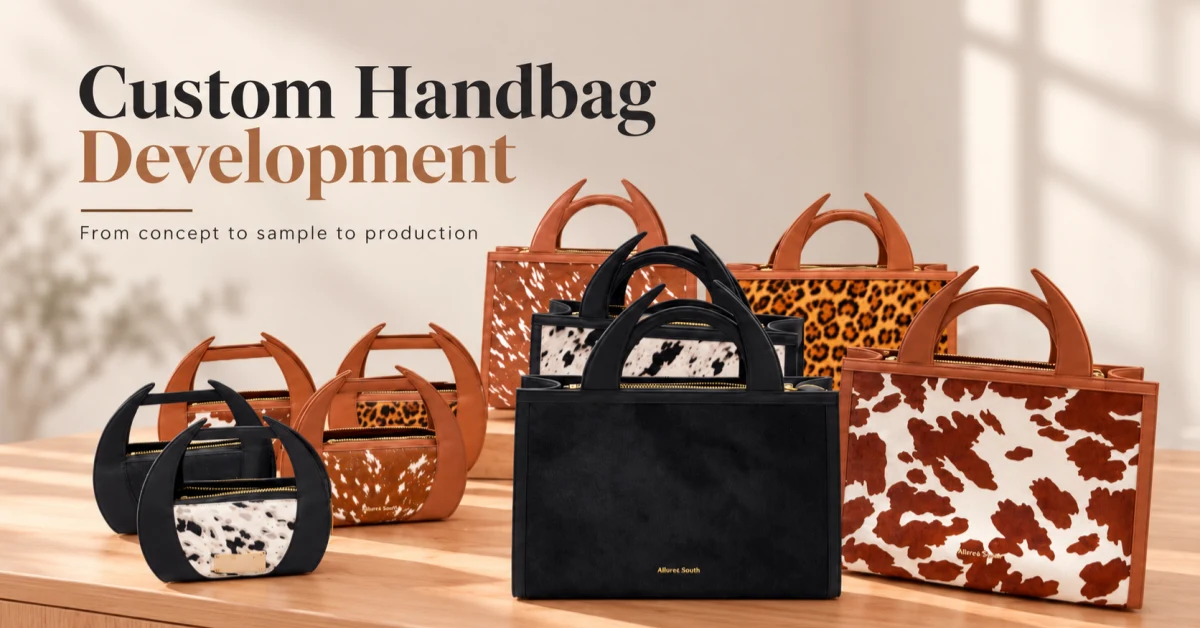

A handbag can appear simple in a design presentation and become complicated the moment it moves to pattern making. A buckle changes the strap construction. A thicker leather changes how a folded edge behaves. A smaller body dimension changes the usable cutting layout. Even a modest hardware adjustment can force a brand to revisit a pattern, reinforcement and sample that were already approved.
That is why custom handbag development is not primarily a search for a unit price. It is a process of deciding which details deliver the product's identity, which details require engineering and which details create cost without creating customer value. This article examines the technical decisions that usually deserve attention before a custom handbag moves into bulk production.
What Determines the Cost of a Custom Handbag?
A useful handbag manufacturing cost review separates one-time development expenses from recurring production expenses. Pattern adjustments, tooling, trims, cutting yield, and assembly time should each be discussed before a brand compares quotes.
The cost of a custom handbag is shaped by the bill of materials, material utilization, pattern complexity, labor operations, hardware specification, reinforcement, lining, packaging, order quantity and development requirements. A quotation may cover the obvious parts, but a product can become materially more expensive when a single component changes the way several other parts must be assembled.
For example, a structured tote requires more than an attractive exterior fabric. The brand must decide how the base carries weight, whether the sides hold their profile, how the handles transfer load and how the opening behaves when the bag is filled. An unstructured pouch may use fewer stiffening components but require carefully considered lining and seam finishes to look intentional rather than unfinished. Neither approach is automatically superior; each makes different manufacturing demands.
Our editorial contribution to Big News Network on the hidden costs of fashion product development discusses the wider business implications of overlooked early-stage decisions. Here we apply that principle to the physical construction of handbags, where costs are often decided before the first commercial purchase order.
Hardware Is a Design System, Not Just a Decorative Item
Custom handbag hardware decisions should cover more than shape and finish. Attachment method, plating consistency, abrasion resistance, weight, and replenishment lead time all matter when a component has to perform across a production run.
Clasp, lock, zipper pull, chain, ring and buckle selection can define a handbag's personality. But hardware is also part of its functional architecture. A custom clasp may require a precise mounting position, compatible reinforcement, a suitable screw or rivet method and enough clearance for a reliable opening action. A chain handle changes the load path and may require different anchoring than a leather strap.
For a brand, the temptation is to request a unique metal part early in the design process. That can be appropriate when the detail is central to the identity and the planned order supports development. It is less attractive when the project is still testing shape, dimensions or customer demand. A custom metal tool may need specification drawings, prototypes, surface-finish approval and a production minimum. If the bag body changes later, the tool may no longer fit the revised design.
One sensible option is to validate function and proportion with an available component, then assess custom hardware after the concept is stable. This is not the same as settling for a generic final product. It separates two questions: Does the bag work as designed? And does the final proprietary hardware add enough value to justify its development?
Material Price and Material Yield Are Different Questions
Handbag material selection should balance the quoted price per unit of material with usable yield, surface variation, thickness, stability, and cutting restrictions. A seemingly cheaper material can increase waste or require additional reinforcement.
A brand may compare two leather prices and select the lower quote. That ignores the proportion of material that can actually be used. Handbag patterns must be placed around defects, grain direction, stretch, shade variation and the size of individual panels. Larger uninterrupted panels can be more demanding than many smaller pieces because they require suitable areas without visible imperfections.
Material yield also depends on construction. A design with broad curved panels, matched grain orientation or strict color-matching requirements may generate more offcut. A cheaper hide or fabric is not a saving if the usable yield is materially worse or the assembly needs additional correction. Likewise, selecting a premium leather solely because it looks compelling in a swatch can lead to problems if the surface marks easily during production or does not behave well at folded edges.
Ask for a comparison that considers both material cost and the usable output for the proposed pattern. At the same time, check whether smaller component pieces can be nested into remaining sections without compromising quality. The objective is disciplined utilization, not forcing visibly defective material into a premium product.
What a Material Swatch Cannot Tell You
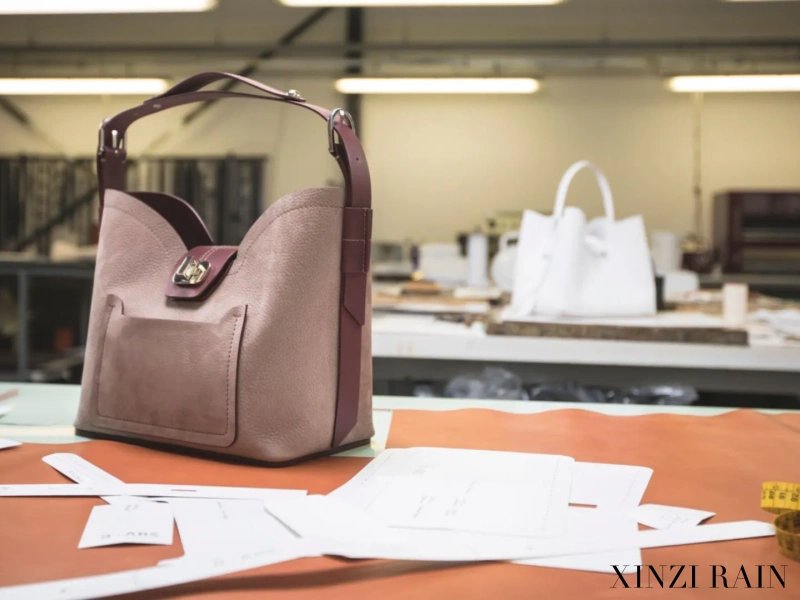
A swatch communicates color, texture and initial hand feel. It does not necessarily show how a material performs after skiving, folding, stitching or repeated handling. Leather may thin unevenly at an edge. Coated materials can react differently to heat or adhesive. A lining may feel appropriate on the table but catch against the contents of a finished bag. Some finishes are more sensitive to abrasion or color transfer than their appearance suggests.
Before approval, evaluate a material in a representative construction, not only in isolation. For leather goods, that can include an edge-finishing test, stitched seam, folded corner, strap attachment or small panel built using the intended backing material. For a soft bag, assess drape and wrinkle behavior. For a structured silhouette, test whether panels retain their shape without unacceptable stiffness.
The test plan should reflect the intended use and destination market. Do not assume that an attractive material is suitable for every construction or claim. A responsible manufacturing partner should explain where substitutes require approval rather than changing the material silently to solve a purchasing constraint.
Reinforcement Changes Both Structure and Perceived Quality
Consumers rarely see reinforcement directly, but they notice its effects. The base either stands or collapses. The mouth of the bag either opens smoothly or twists. A handle either keeps its shape or stretches over time. These outcomes depend on the relationship between exterior material, lining, interlining, reinforcement and stitching—not just on the nominal thickness of the leather.
Adding the stiffest possible board is not the answer. Over-reinforcement can make a design heavy, create hard transitions or prevent the intended silhouette from moving naturally. Under-reinforcement can cause sagging, distortion around hardware and premature wear at load points. Prototype the actual combination and assess it with typical contents, not only while the bag is empty.
This also explains why an apparently small dimension change may justify another technical review. When a tote becomes wider, the stresses at its handle attachments and base may change. If the volume or intended load increases, the reinforcement and attachment method should be revisited. Those decisions belong in development, before they become customer-service problems.
Pattern Complexity Has a Labor Cost
Two handbags using similar materials and similar finished dimensions can have very different production costs. One may rely on broad clean panels with accessible stitching paths. The other may involve multiple curved seams, hand-finished edges, turned corners, interior pockets and concealed attachments. Each operation changes the skills, time, fixtures or inspection points required.
When an early quotation exceeds the brand's target, reducing the product to cheaper material is only one option—and often the worst one for a premium positioning. Instead, examine whether hidden seams can be simplified, whether a reinforcement layer can be consolidated, whether a decorative element adds meaningful customer value and whether similar components can share construction methods across a collection.
Preserve what the customer buys emotionally: the silhouette, tactile experience, usability and distinctive detail. Simplify complexity that does not reinforce that promise. This is a more durable approach to value engineering than stripping quality from the visible product.
Consider Color, Hardware Finish and MOQ Together
A new label might plan one shape in six colors, each with a different plating finish. In a product presentation, this looks like one bag with six variations. In procurement, it may behave like several small orders requiring separate material lots, hardware finishes, packaging variants and approval samples. The total planned quantity can hide fragmentation at the component level.
There is no universal minimum order quantity for all handbag components. It depends on the specific factory, material supplier, finish, technique and purchase arrangement. Before committing to a wide assortment, map each color and hardware finish to its likely minimum and lead time. Determine whether the brand can use common lining, zipper tape, reinforcement or hardware finish across the range without losing its design identity.
For an initial launch, a tighter selection can support better stock depth and more reliable reorders. Expanding colors later becomes easier when the underlying construction is already proven. The important distinction is between variety that helps customers choose and variety that merely fragments purchasing.
Document the Handbag Sample as a Production Specification
A reliable handbag production process requires a clear record of approved dimensions, stitch construction, reinforcement placement, hardware specification, edge treatment, packaging, and inspection criteria. That record helps purchasing and production teams reproduce the final sample.
A first sample should invite questions, not automatic approval. Check dimensions at specified measurement points, pattern symmetry, panel alignment, handle drop, attachment strength, zipper operation, hardware clearance, lining fit, pocket access, edge quality, stitching consistency and packaging presentation. A sample approved for appearance may still be unsuitable as the sole reference for bulk production.
Every revision should state what changed and why. If a handle attachment is widened, update the pattern and reinforcement details. If a metal finish changes, approve the finish against a physical reference under appropriate lighting. If the lining changes, confirm its effect on construction and cleaning requirements. The final package should identify approved materials and finishes, measurable dimensions, construction details, brand placement and acceptance criteria.
Brands preparing their first product can review how to validate a footwear or handbag design before sampling before issuing a brief. This helps distinguish product-direction questions from issues a physical prototype must answer.
A Useful Cost Review Compares Alternatives, Not Just Prices
Well-managed custom handbag development compares changes against their effect on silhouette, durability, manufacturability, and target retail price. A lower component quote has little value if it causes avoidable returns or changes the intended brand experience.
Suppose a brand is evaluating a shoulder bag with a distinctive front lock. Option A uses a custom metal lock, a new mounting system and a highly structured front panel. Option B uses an existing high-quality closure adapted to the same design language, with a simpler internal reinforcement layout. An effective review should compare more than ex-factory price.
Ask which option requires new tooling, how many approval stages are needed, whether the hardware can be reordered consistently, which construction risks remain, how the finish will be inspected and how each choice affects the intended retail value. If the lock is central to brand recognition, Option A may be justified. If customers principally value the leather, silhouette and wearability, Option B may allow more development budget to stay with those priorities.
This is not an argument against custom components. It is an argument for timing them correctly and measuring them against the role they play in the finished product. Development spending is productive when it removes uncertainty or creates defensible differentiation.
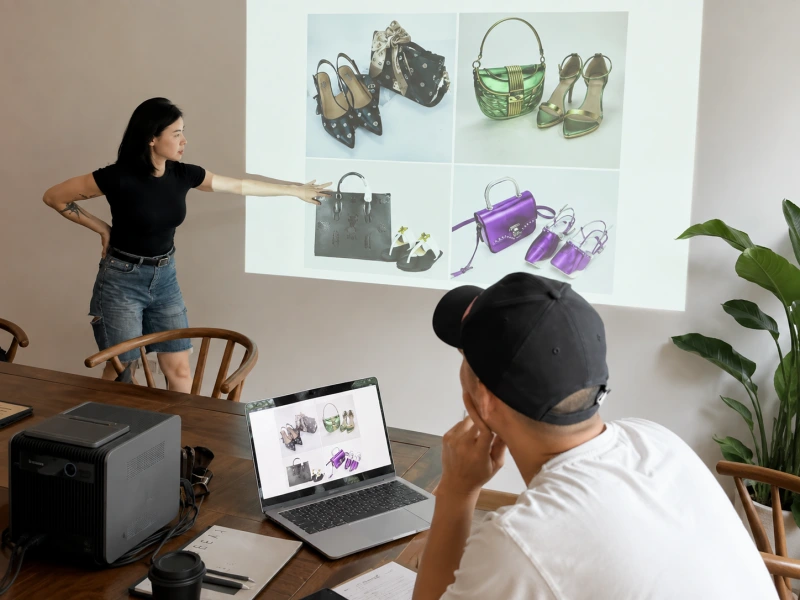
How to Evaluate a Custom Handbag Manufacturing Partner
Ask potential partners to explain how they move from reference imagery to pattern development, material evaluation, component approval and final production specifications. Show them a potentially difficult detail and ask what they would test first. A useful answer should identify risks, not simply promise that anything is possible.
Discuss ownership and control of custom patterns, tooling and artwork before committing to development, along with how changes and additional costs are approved. Confirm how production substitutions will be handled and whether the manufacturing team can maintain consistent records across repeat orders. These questions are as important to an established brand adding a new collection as they are to a startup launching its first style.
As the collection moves toward launch, the broader economics of pricing, freight, returns and marketing also matter. The fashion product development cost guide provides additional context on expenses beyond the factory quotation.
Frequently Asked Questions
Does custom handbag hardware always require a mold?
No. The answer depends on the component and customization. Some modifications can use existing components or finishing methods; original shapes or mechanisms may require new tooling. Confirm the exact manufacturing route before budgeting.
Why can two handbags made from the same leather have different costs?
Pattern yield, panel size, stitching operations, edge finishing, reinforcement, lining, hardware, quality checks and order structure can differ substantially even when the leather specification is identical.
Should a new brand choose fewer colors for its first production run?
Often a focused color range is easier to source and control, but the right assortment depends on demand evidence, component minimums and sales channels. Model material and hardware requirements by variant before deciding.
When should a handbag sample be approved for bulk production?
Approve it when dimensions, materials, components, function, construction, branding and quality expectations are documented and verified against the intended commercial order. A visually attractive sample alone is not a complete production standard.
Premium handbag development is a sequence of controlled trade-offs. The goal is not to remove every expensive detail. It is to invest in the details that make the product recognizable, usable and repeatable while preventing avoidable complexity from consuming the margin.
Discuss a Custom Handbag Development Project
Share your reference images or drawings, intended materials, hardware requirements, order estimate and target market. Herrains can help structure a development conversation around the technical and commercial decisions that matter before sampling.
Review Your Handbag Project →