

The global footwear industry depends on highly coordinated supply chains involving material suppliers, factories, logistics providers, and quality control teams. However, many fashion brands underestimate how complex footwear manufacturing supply chains actually are until delays, defects, or inventory problems begin affecting their business.
Today, footwear brands face increasing pressure from rising material costs, unstable shipping schedules, changing consumer demand, and shorter product development cycles. As a result, supply chain management has become one of the most important factors in successful footwear manufacturing.
At HERRAINS, a sub-brand of XINZIRAIN specializing in one-stop footwear and bag manufacturing solutions, we work with brands across Europe and North America to solve real production and sourcing challenges every day.
In this article, we will explore the most common supply chain problems in footwear manufacturing, how they affect brands, and what businesses can do to reduce risks and improve production stability.
Why Footwear Supply Chains Are So Complex
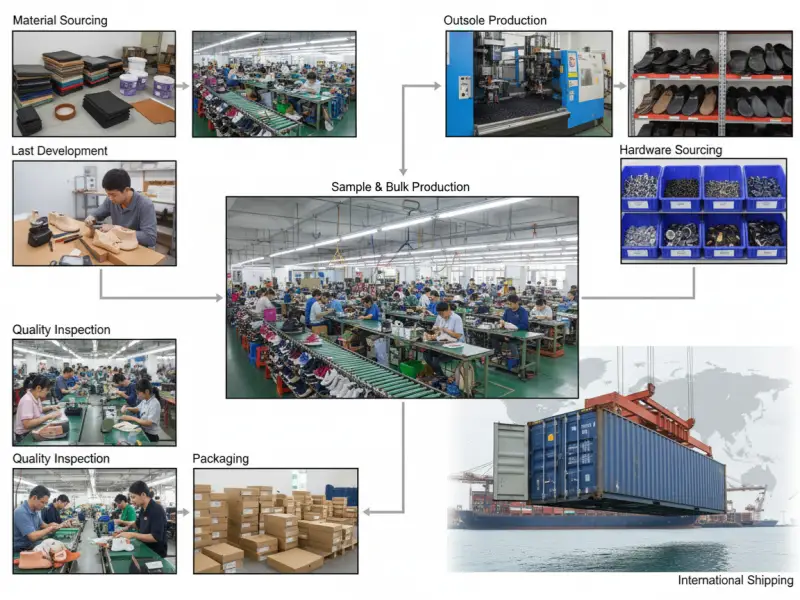
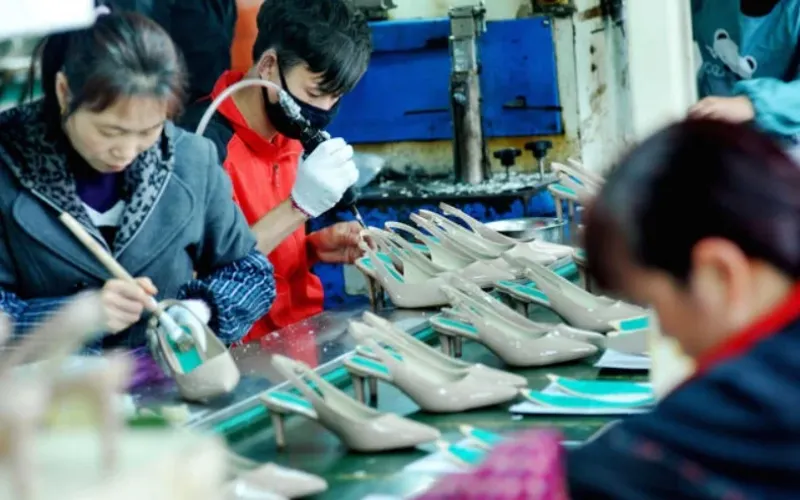
Unlike simple consumer products, footwear manufacturing involves multiple interconnected production stages.
A typical footwear supply chain includes:
- Material sourcing
- Last development
- Outsole production
- Hardware sourcing
- Sample development
- Bulk production
- Quality inspection
- Packaging
- International shipping
Each stage depends on coordination between multiple suppliers and production teams. Even small disruptions can affect the entire manufacturing schedule.
For this reason, experienced footwear manufacturers focus heavily on supply chain integration and production planning.
Problem 1: Material Supply Delays
One of the most common footwear supply chain problems is delayed material sourcing.
Footwear production often depends on multiple materials, including:
- Leather
- Suede
- Mesh fabrics
- Rubber outsoles
- Foam components
- Metal hardware
- Packaging materials
If one supplier delays delivery, the entire footwear manufacturing process may stop.
Material delays usually happen because of:
- Supplier shortages
- Seasonal demand spikes
- International shipping delays
- Poor inventory planning
- Inconsistent supplier relationships
For fashion brands working on seasonal launches, these delays can seriously impact sales timelines.
Reliable shoe manufacturers reduce this risk by maintaining stable supplier networks and backup sourcing systems.
Problem 2: Inconsistent Material Quality
Another major supply chain issue in footwear manufacturing is inconsistent material quality.
Even when suppliers provide the same material category, quality variations can occur in:
- Color consistency
- Leather texture
- Thickness
- Flexibility
- Durability
- Finish quality
This creates serious production problems, especially for premium footwear brands that require strict product consistency.
Poor material consistency often results in:
- Product defects
- Higher return rates
- Customer complaints
- Failed quality inspections
Professional footwear manufacturers perform incoming material inspections before production begins to identify problems early.
At HERRAINS, our QC team checks materials before sampling and bulk production to maintain stable quality standards across every order.
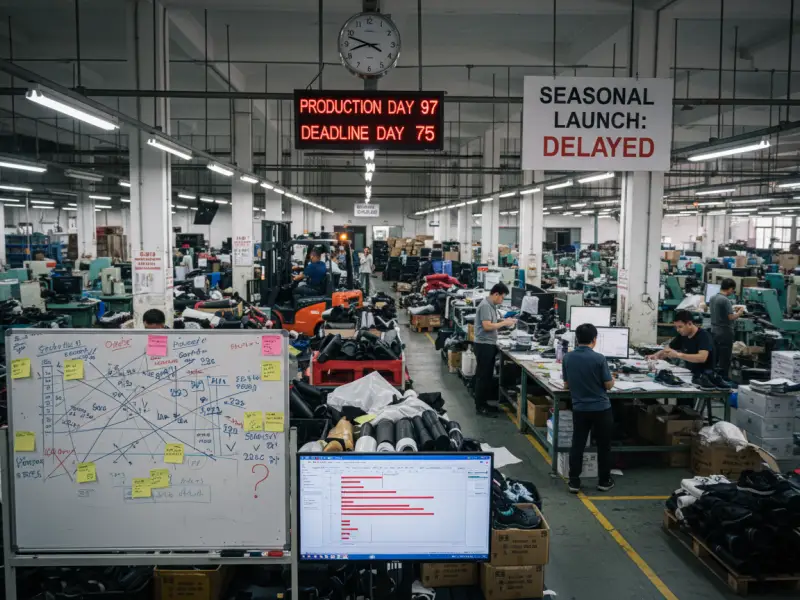
Problem 3: Long Production Lead Times
Lead time instability is one of the biggest frustrations for footwear brands.
Many footwear factories struggle with:
- Overloaded production schedules
- Poor planning systems
- Limited labor capacity
- Delayed raw materials
- Weak communication between departments
As a result, production timelines become unpredictable.
In footwear manufacturing, long lead times can affect:
- Seasonal product launches
- Retail delivery deadlines
- Inventory planning
- Marketing campaigns
- Wholesale commitments
Brands should work with shoe manufacturers that provide transparent scheduling and realistic production timelines instead of overly aggressive promises.
Problem 4: Communication Gaps Between Suppliers and Factories
Footwear manufacturing requires constant coordination between multiple suppliers and production teams.
Without efficient communication, common issues include:
- Incorrect material usage
- Wrong color matching
- Delayed revisions
- Packaging errors
- Production misunderstandings
Communication problems become even more serious when brands work with disconnected vendors instead of integrated manufacturing partners.
A one-stop footwear manufacturer can significantly reduce communication risks by centralizing:
- Development
- Sourcing
- Production
- Quality control
- Logistics management
This creates faster decision-making and smoother production workflows.
Problem 5: Logistics and Shipping Disruptions
Global footwear supply chains rely heavily on international shipping.
In recent years, footwear brands have faced major logistics challenges, including:
- Port congestion
- Container shortages
- Rising freight costs
- Customs delays
- Unstable shipping schedules
These issues directly affect inventory planning and delivery commitments.
For brands selling in Europe and North America, shipping delays can create:
- Missed retail launches
- Stock shortages
- Higher warehousing costs
- Reduced customer satisfaction
Experienced footwear manufacturers usually work with long-term logistics partners to improve shipping stability and reduce risks.
Problem 6: Poor Demand Forecasting
Many footwear brands struggle with inaccurate demand forecasting.
This often leads to:
- Overstock inventory
- Production shortages
- Emergency reorders
- Cash flow pressure
Footwear manufacturing requires careful balance between production efficiency and inventory flexibility.
Brands should work closely with their shoe manufacturer to plan:
- Seasonal demand
- MOQ strategies
- Material reservations
- Production capacity
Flexible footwear manufacturers can help brands reduce inventory risks by supporting lower MOQs and smaller test orders.
Problem 7: Lack of Supply Chain Transparency
Some footwear factories operate with limited visibility into supplier operations and production progress.
This creates uncertainty for brands regarding:
- Material readiness
- Production status
- Quality issues
- Shipping schedules
Modern footwear brands increasingly expect transparent supply chain communication.
A professional footwear manufacturer should provide:
- Production updates
- Sampling progress
- QC reports
- Shipping coordination
- Clear problem-solving communication
Transparency builds trust and helps brands make faster operational decisions.
How Brands Can Reduce Footwear Supply Chain Risks
While supply chain problems cannot always be completely avoided, brands can significantly reduce risks by choosing the right footwear manufacturing partner.
Key strategies include:
Work With Integrated Manufacturers
One-stop footwear manufacturers provide better coordination across sourcing, development, production, and logistics.
Prioritize Communication
Fast and clear communication reduces production misunderstandings and delays.
Verify Supplier Networks
Strong supplier relationships improve material stability and delivery reliability.
Plan Production Earlier
Early development and forecasting help reduce seasonal production pressure.
Focus on Long-Term Partnerships
Stable manufacturing partnerships usually create better supply chain performance over time.
Why Brands Choose HERRAINS for Footwear Manufacturing
As part of the XINZIRAIN manufacturing group, HERRAINS provides integrated footwear manufacturing solutions designed to reduce supply chain risks for global brands.
Our services include:
- OEM footwear manufacturing
- ODM shoe development
- Material sourcing
- Quality control
- Flexible MOQ production
- Packaging customization
- International logistics support
Our supply chain system is built to help brands move from concept to delivery more efficiently while maintaining stable quality and production timelines.
Final Thoughts
Supply chain management is now one of the most important factors in successful footwear manufacturing. Brands that ignore supply chain risks often face delays, quality problems, and rising operational costs.
By understanding common footwear supply chain problems and working with experienced manufacturing partners, brands can improve production stability, reduce delays, and scale more efficiently.
In today’s competitive market, successful footwear manufacturing depends not only on product design — but on the strength of the entire supply chain system.