

Small Batch Footwear Manufacturing: Why the First 300 Pairs Decide More Than Quantity
For an emerging footwear brand, the first production run is rarely just a quantity decision. It is a business test. It tests whether the design is desirable, whether the fit works across real sizes, whether the material performs after wear, whether customers accept the price, whether product photos convert, and whether the brand can manage delivery without damaging trust.
Many founders ask a simple question: “Can we start with 300 pairs and later scale to 3,000 pairs?” The better question is: “What should we prove at each stage before increasing production volume?”
At Herrains, we see 300 to 3,000 pairs as a controlled manufacturing roadmap, not a random order range. A 300-pair run can help a brand validate its product and audience. A 500 to 800-pair run can support early retail, pre-order fulfillment, or a focused product drop. A 1,000 to 1,500-pair run can help turn one successful style into a stable category. A 3,000-pair production plan requires stronger material planning, size grading, quality control, delivery scheduling, and inventory confidence.
This staged approach matters because footwear is technically more demanding than many fashion products. A shoe must look right, fit correctly, support walking, survive repeated wear, and remain consistent across sizes. If a brand scales too early, small mistakes become expensive: wrong size ratios, uncomfortable lasts, unstable heels, material cracking, delayed delivery, excessive inventory, and customer returns.
This guide explains how brands can use technical sampling, 3D prototyping, small-batch testing, and sample-led pre-sale to reduce avoidable risk before moving from 300 to 3,000 pairs.
Custom Shoe Manufacturing for Startups: The Risks Founders Often Underestimate
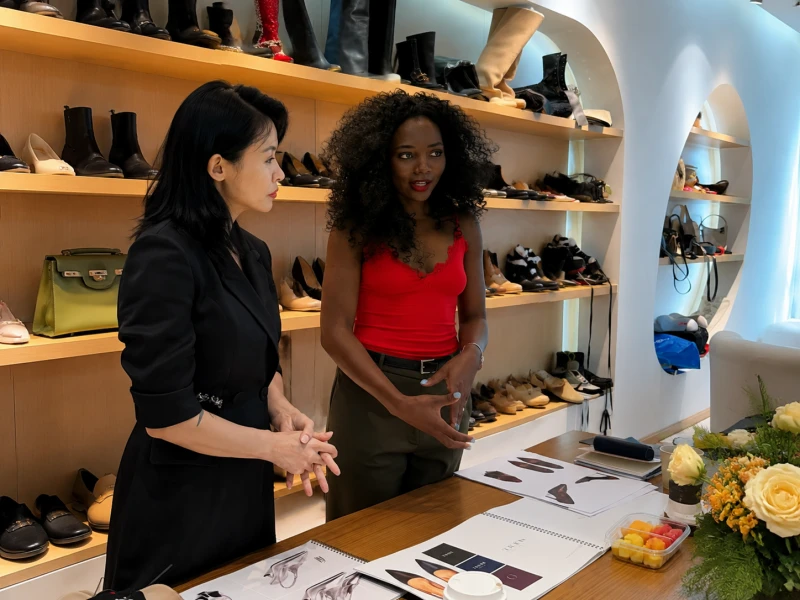
New footwear brands usually focus on design, photography, launch campaigns, and pricing. Those are important, but manufacturing risk often appears earlier and deeper than expected.
The first risk is unclear product definition. A sketch or reference image is not enough for accurate shoe development. A manufacturer needs target customer, size range, last direction, material preference, heel height, outsole type, lining choice, construction method, packaging needs, and intended retail positioning. Without these inputs, the sample may be technically possible but commercially wrong.
The second risk is unvalidated fit. Footwear is not a flat product. A beautiful upper can fail if the last is too narrow, the instep is too tight, the heel slips, or the outsole does not flex correctly. Brands often discover fit issues after the first sample, but the damage becomes much larger if bulk production begins before proper testing.
The third risk is material mismatch. A material may look attractive in a showroom but behave poorly during cutting, lasting, stitching, gluing, or long-term wear. Patent finishes, metallic materials, suede, soft leather, vegan materials, and textile uppers all behave differently. Material choice must be tested against the shoe structure, not judged by appearance alone.
The fourth risk is overproduction. Fashion overproduction is often caused by inaccurate forecasting, fear of stockouts, and volume-driven production planning. NUL’s article on fashion overproduction notes that misjudged trends can lead to unsold stock and that brands often overproduce because they fear running out of inventory more than holding excess stock (NUL Global on fashion overproduction). For a new shoe brand, overproduction can tie up cash, force discounting, and weaken brand positioning.
The fifth risk is scaling without process control. A single sample is not the same as repeatable production. The brand must confirm grading, material supply, color consistency, upper symmetry, heel attachment, outsole bonding, packaging standards, and delivery timelines before moving into larger quantities.
These risks do not mean founders should avoid production. They mean production should be staged with evidence.
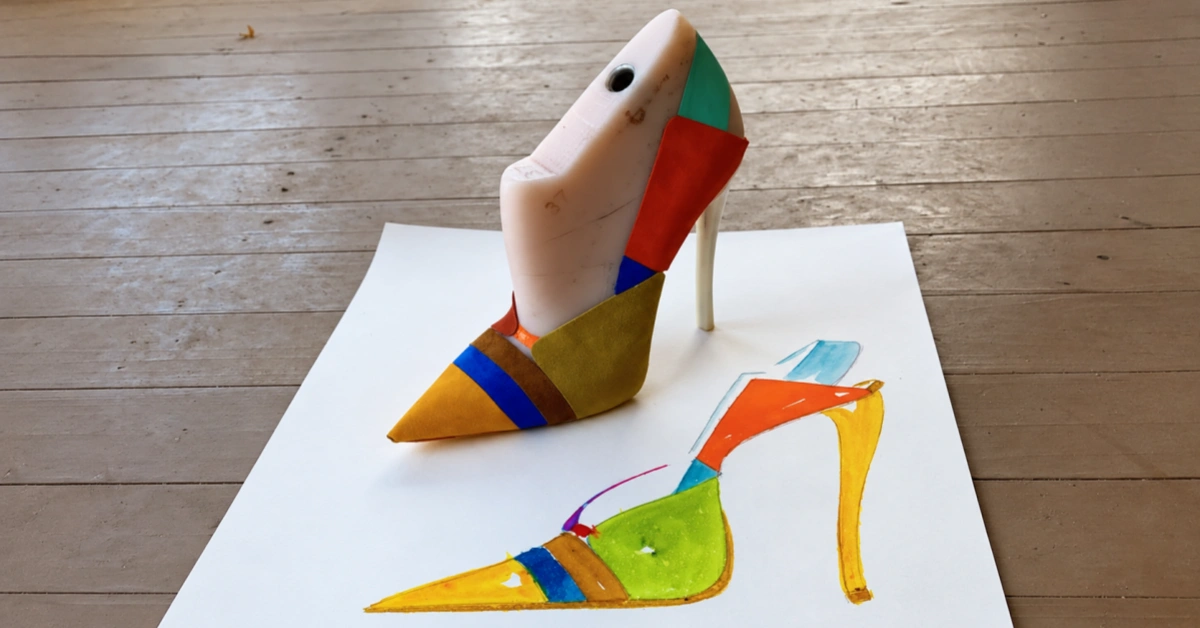
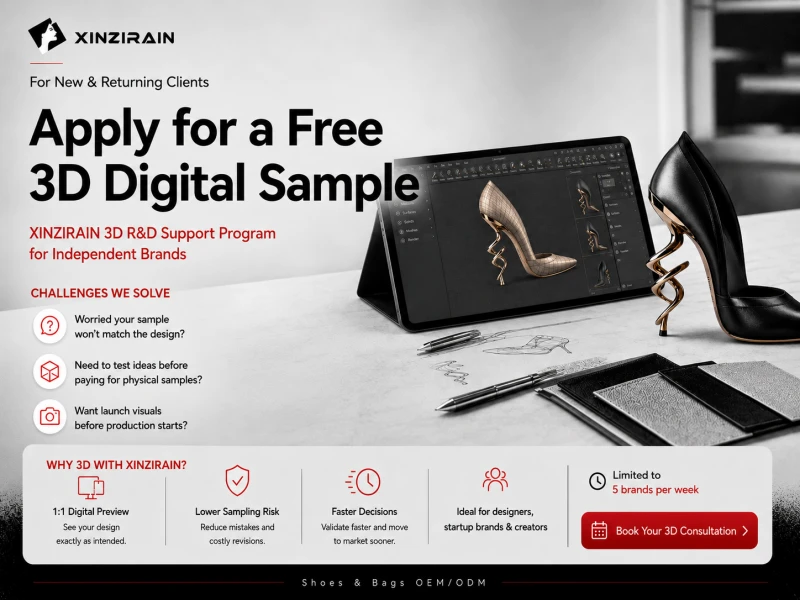
3D Shoe Prototyping: Reducing Blind Sampling Before Physical Development
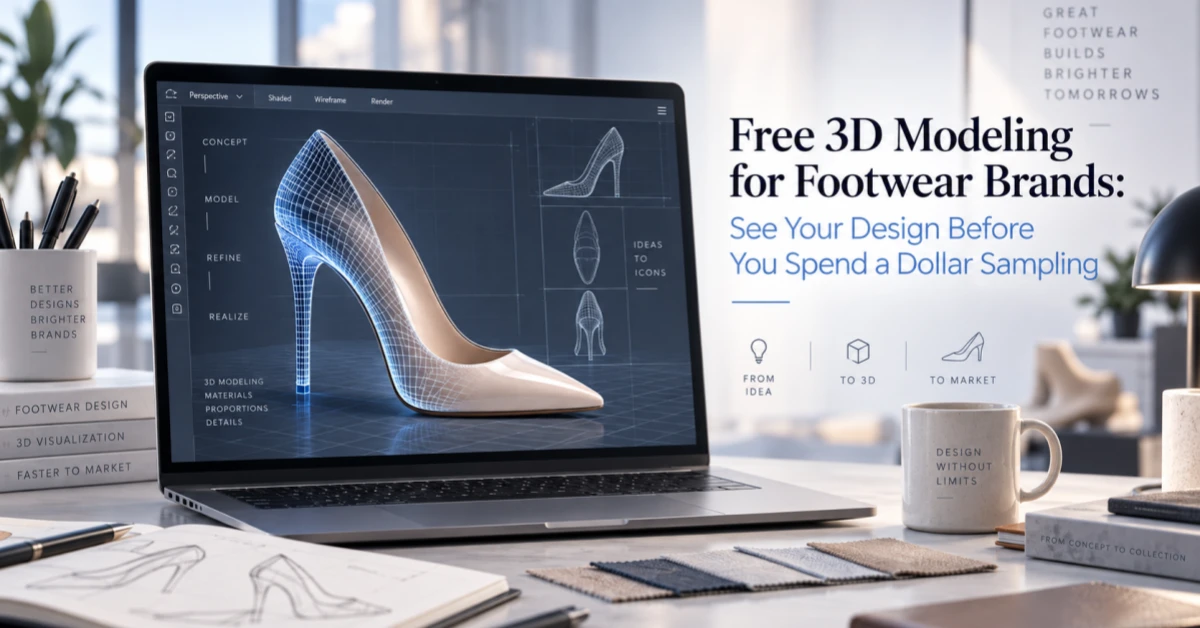
3D prototyping is not a replacement for physical shoe samples. It is a decision-making tool before physical sampling becomes expensive.
In footwear development, 3D modeling can help review silhouette, proportion, panel placement, heel shape, outsole volume, color direction, and material combination. For many brands, this is where the first major mistakes can be prevented. A design that looks balanced in a sketch may become too heavy, too sharp, too flat, or too aggressive when translated into a realistic 3D view.
The value of 3D prototyping is especially clear in four areas.
First, it improves visual alignment. Designers, consultants, and factories can discuss the same shape instead of interpreting separate references differently. This reduces communication gaps.
Second, it supports faster design iteration. Colorways, material panels, outsole thickness, heel shape, and decorative placements can be reviewed before physical materials are cut.
Third, it helps prepare pre-sale and buyer communication assets. A brand should not rely only on abstract sketches when talking to early customers, retailers, or investors. 3D visuals can support campaign planning, internal approval, and technical discussion.
Fourth, it reduces unnecessary physical revisions. TaaS notes that 3D virtual sampling can help designers explore concepts and variations before actual production and can help technical designers and production teams reduce lengthy fit sampling time (TaaS on 3D virtual sampling). The same principle applies to footwear: virtual review helps narrow decisions before the factory enters deeper physical development.
However, brands must understand the boundary. A 3D model cannot fully confirm leather behavior, walking comfort, heel stability, outsole flexibility, adhesive performance, or foot pressure. Those still require physical samples. The correct workflow is not “3D instead of samples.” It is “3D before samples, then physical samples for fit and construction validation.”
Footwear Sample Development: What Must Be Proven Before 300 Pairs
Before a brand produces 300 pairs, the sample stage must answer more than “Does it look good?” A proper technical sample should prove that the concept can become a wearable, repeatable product.
Last and Fit Validation
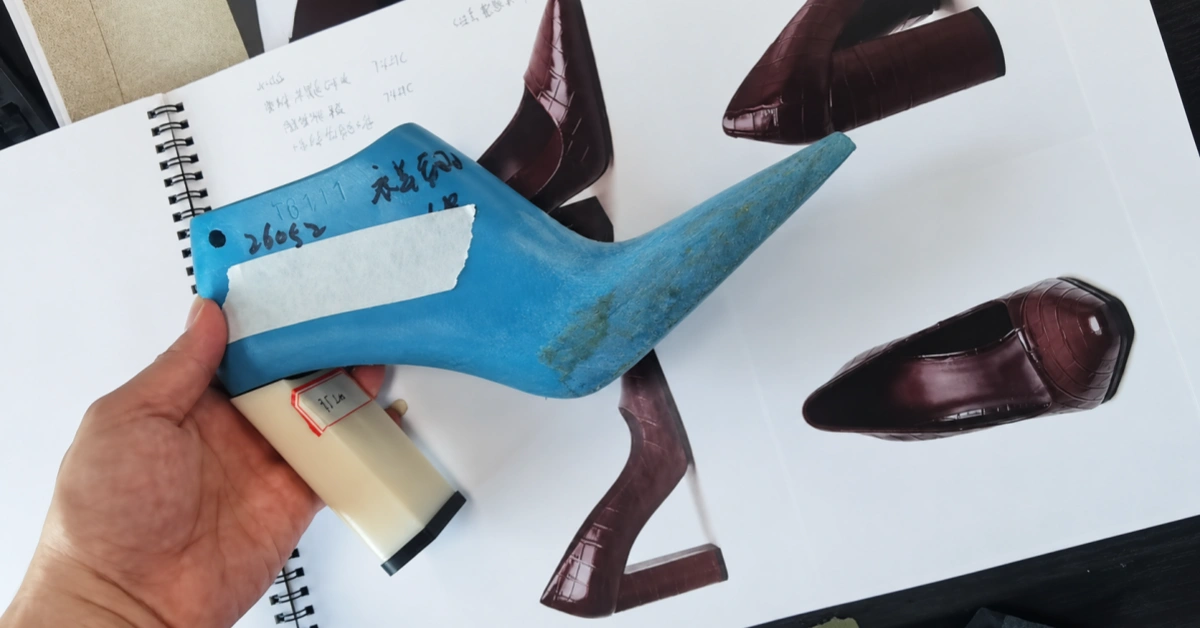
The last determines toe shape, width, instep, heel grip, volume, and posture. For heels, boots, loafers, sneakers, and sandals, the last must match the intended user and product category. Brands should test not only one display size but also how the fit will scale across the size range.
Material Behavior
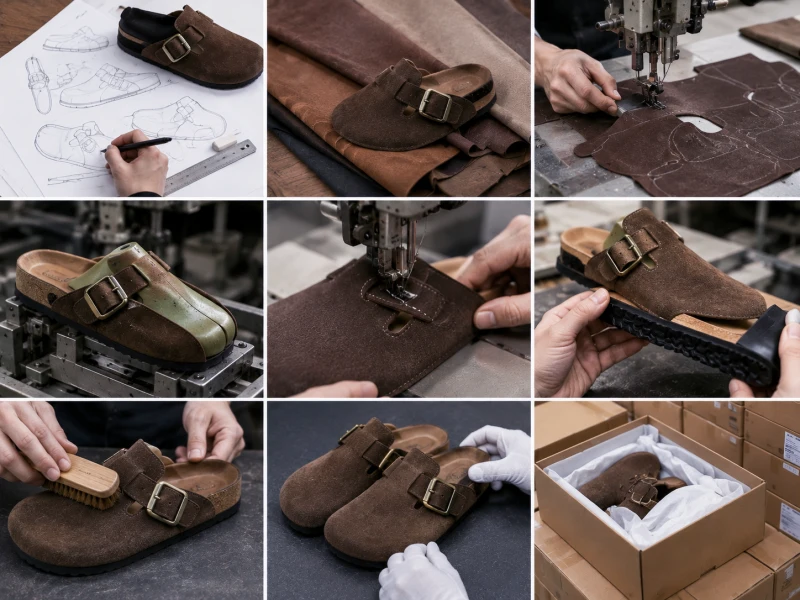
The selected material must survive cutting, stitching, lasting, finishing, and wear. A soft material may wrinkle. A stiff material may hurt the foot. A glossy finish may crack if forced over the wrong shape. A textile upper may need reinforcement. Vegan materials may require different bonding or folding methods.
Structural Stability
For high heels, the heel pitch, shank support, outsole balance, and insole board matter. For sneakers, cushioning, flex, outsole adhesion, and upper support matter. For boots, shaft structure, zipper performance, lining comfort, and ankle mobility matter. Each category has its own failure points.
Construction Method
The sample must confirm whether the chosen construction method is realistic for the target price and quality level. Cemented construction, stitched construction, molded soles, wrapped heels, platform soles, and complex upper patterns all require different controls.
Finish and Brand Presentation
Customers judge shoes quickly. Edge finishing, stitching cleanliness, pair symmetry, outsole appearance, lining feel, logo placement, packaging, and care cards all influence perceived value.
A professional custom shoe manufacturer should help the brand identify which issues are design choices and which are technical risks. If the sample stage does not create technical clarity, the 300-pair run becomes a gamble.
300 Pairs Shoe Production: How to Use a First Batch as Market Validation
A 300-pair run should not be treated as a smaller version of mass production. It should be treated as a controlled market test.
The purpose of 300 pairs is to collect evidence. The brand should learn which sizes move fastest, which color receives the strongest response, whether customers accept the price, whether photos and videos convert, whether packaging protects the product, whether returns reveal fit issues, and whether delivery operations are manageable.
A 300-pair test can answer questions that no meeting can answer:
- Does the market want this silhouette?
- Is the price positioned correctly?
- Are customers choosing the hero color or a secondary color?
- Are size ratios accurate?
- Are customers asking for half sizes, wider widths, or different heel heights?
- Does the material perform after real wear?
- Does the packaging create the right first impression?
- Are product pages explaining the value clearly enough?
Small-batch production also helps manage inventory risk. Fashion Index explains that compared with large batch manufacturing, small batches can reduce inventory risk because there is less stock to house and sell (Fashion Index on batch manufacturing). While footwear has different technical constraints from apparel, the inventory principle is the same: a smaller controlled run gives the brand room to learn before committing deeper capital.
That said, small-batch production is not automatically easier. Unit cost is often higher, material purchasing may be less efficient, and production scheduling still requires serious planning. The purpose is not to make production “cheap.” The purpose is to make the first market move more controlled.
Shoe Pre-Sale Strategy: How Approved Samples Can Create Demand Before Scaling
A physical sample is not only a development milestone. It can become a commercial asset.
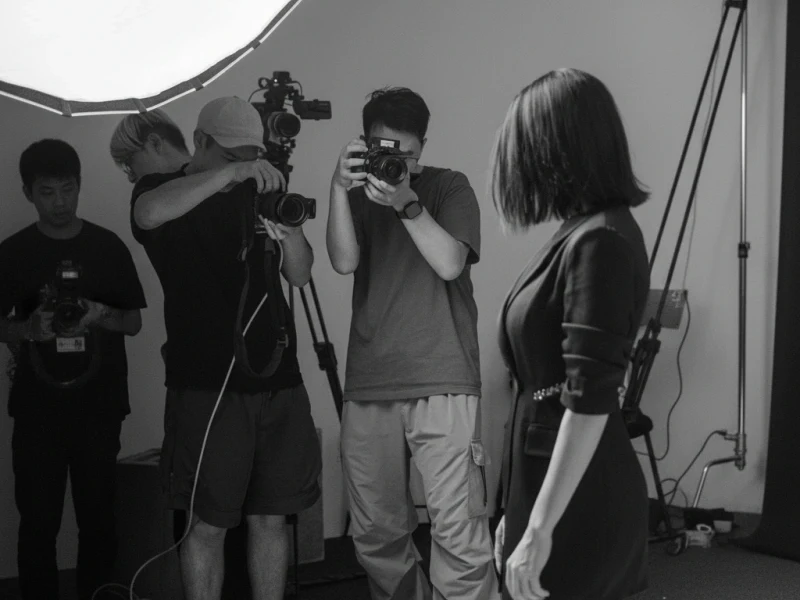
Once a sample is approved, a brand can use it to create campaign photography, product videos, founder story content, retailer pitch decks, pre-order pages, buyer feedback sessions, and social media launch material. This helps the brand test demand before committing to larger production.
Pre-sale is not suitable for every brand or every product. It requires honest delivery communication, reliable production planning, clear product images, transparent sizing guidance, and customer service readiness. If a brand cannot communicate timelines or handle delays professionally, pre-sale can damage trust.
But when done correctly, sample-led pre-sale can reduce guesswork. Instead of asking, “How many pairs should we make based on our opinion?” the brand can ask, “What does early customer response tell us?”
A strong pre-sale system should include:
- Approved physical sample: The sample must reflect the intended product closely enough for photography and buyer review.
- Clear product page: Materials, fit, heel height, outsole, care, and delivery expectations should be explained.
- Size guidance: The brand should reduce uncertainty with measurement notes, fit comments, or comparison guidance.
- Production calendar: Customers should understand when production begins and when delivery is expected.
- Feedback loop: Customer questions should be recorded because they often reveal missing product information.
- Controlled quantity: Pre-sale should support planning, not create uncontrolled obligations.
Herrains can support brands by connecting sample development with production feasibility. The goal is to ensure that what is shown in pre-sale can actually be produced with consistent quality.
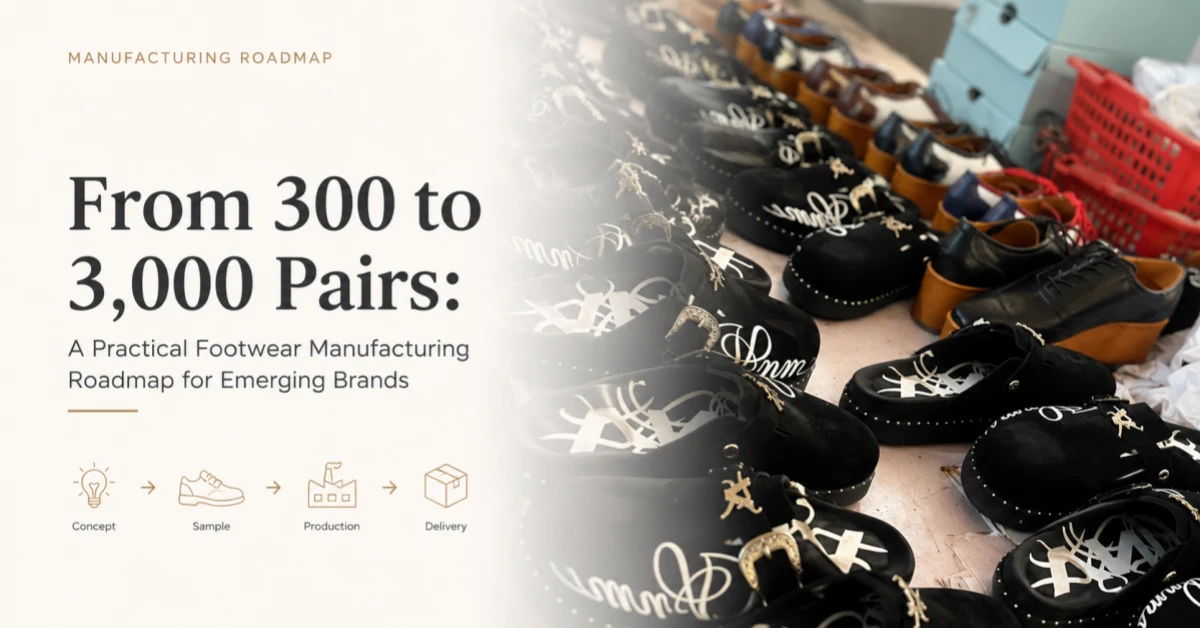
From 300 to 3,000 Pairs: The Staged Footwear Manufacturing Roadmap
Scaling from 300 to 3,000 pairs requires more than repeating the first batch ten times. Each stage changes the operational pressure.
Stage 1: Technical Sample
The technical sample confirms design feasibility, last direction, material behavior, structure, comfort, and construction method. This is where the brand should solve the biggest product risks.
Key output: a sample that can be tested, photographed, reviewed, and used for production planning.
Stage 2: 300-Pair Market Test
The 300-pair run validates customer response, size ratio, packaging, fulfillment, product page clarity, and early return reasons.
Key output: market evidence, not just sales volume.
Stage 3: 500–800 Pair Early Scaling
At this stage, the brand should adjust best-selling colors, refine size distribution, improve product education, and confirm material availability. It may also begin retailer conversations or pre-order fulfillment.
Key output: improved production plan based on first-batch data.
Stage 4: 1,000–1,500 Pair Category Building
The product begins shifting from a test style to a stable category. The brand should define construction standards, color strategy, replenishment logic, quality checkpoints, and customer feedback tracking.
Key output: repeatable production standards.
Stage 5: 3,000-Pair Scalable Production
At 3,000 pairs, the brand must think like an operator. Material purchasing, production scheduling, QC planning, packaging, warehouse coordination, and delivery timelines all become more serious. A mistake at this stage affects not just product cost but brand trust.
Key output: supply chain confidence and controlled scale.
Quality Control for Private Label Shoe Manufacturing
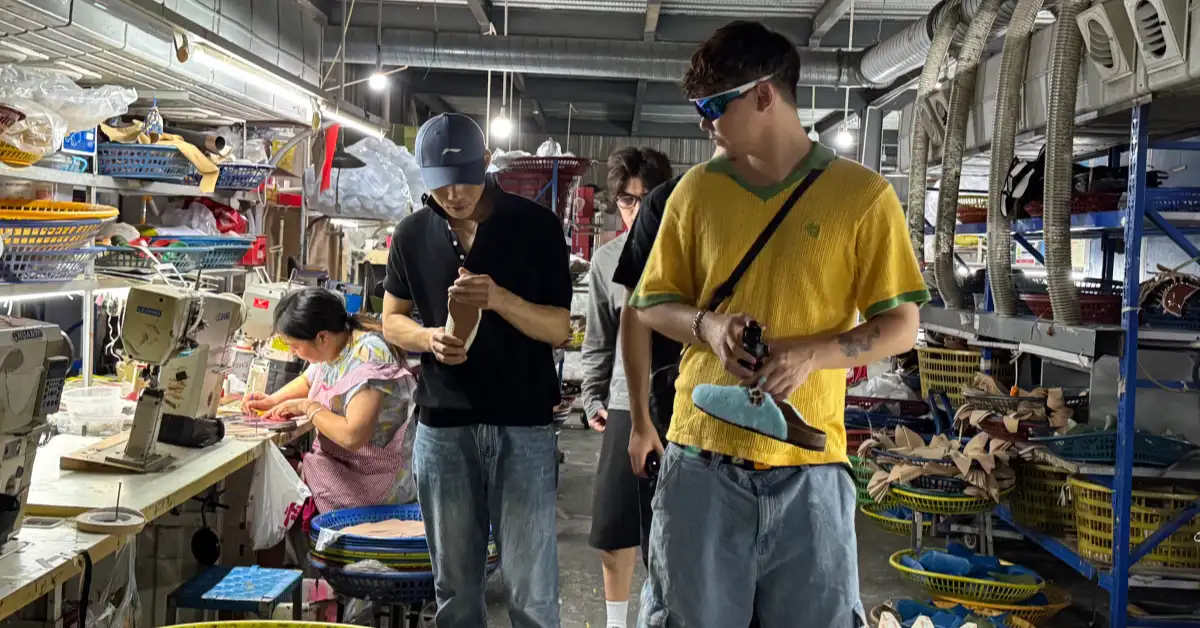
Quality control should not begin at the end of production. It should be built into every stage.
During sample development, QC means checking whether the design is technically feasible. During material sourcing, QC means confirming color, thickness, texture, durability, and consistency. During cutting and stitching, QC means controlling symmetry, alignment, and workmanship. During lasting, QC means checking shape, wrinkles, and fit structure. During assembly, QC means checking bonding, outsole placement, heel attachment, and finishing. During packing, QC means protecting the product and ensuring pair consistency.
For a 300-pair run, QC helps the brand learn. For 3,000 pairs, QC protects the brand from costly mistakes. A founder should ask the manufacturer what checkpoints exist before, during, and after production.
Important footwear QC points include:
- Pair symmetry
- Size accuracy
- Color consistency
- Material defects
- Stitching cleanliness
- Adhesive strength
- Outsole alignment
- Heel stability
- Lining comfort
- Logo placement
- Packaging condition
- Random wear or flex testing when needed
Quality control is not just a factory function. It is part of brand protection.
Inventory Risk Control: Why Evidence-Based Scaling Protects Brand Value
Inventory risk is one of the biggest threats to emerging footwear brands. Unsold stock locks cash. Deep discounting weakens brand positioning. Storage costs increase pressure. Delayed turnover limits new development.
The staged 300 to 3,000-pair model helps reduce this risk by connecting production decisions to evidence. A brand should not scale only because the design looks strong internally. It should scale because customers responded, sizes moved, returns were manageable, materials performed, and the production process proved repeatable.
This is especially important in fashion categories where trends move quickly. NUL’s discussion of overproduction highlights how inaccurate forecasting and overplanning can create unsold stock and waste (NUL Global on fashion overproduction). For footwear founders, the practical lesson is clear: production planning should follow validated demand as much as possible.
A controlled scaling model also supports better cash flow. Instead of committing too much capital to untested inventory, the brand can use each stage to improve product, content, pricing, and operations.
How Herrains Supports Brands From Sample to Scalable Production
Herrains supports emerging and established brands through a development path that connects creative direction with production reality.
Our role is not only to make shoes. It is to help brands understand what must be decided before production and what must be tested before scaling.
A typical Herrains development path includes:
- Concept review: Understand the brand, customer, design references, target price, and product category.
- Technical assessment: Review last direction, material risk, construction method, outsole, heel, and production feasibility.
- 3D or visual development support: Help align proportion, structure, color, and material direction before deeper sampling.
- Physical sample development: Produce and revise samples based on fit, structure, workmanship, and brand presentation.
- Small-batch planning: Prepare a controlled first production plan for market validation.
- Pre-sale support thinking: Help the brand understand what sample assets can support launch content and buyer communication.
- Scaling preparation: Improve size ratios, material planning, QC checkpoints, packaging, and delivery coordination before larger production.
This approach is designed for brands that want to grow with clarity. It does not encourage blind bulk production. It encourages evidence-based product development.
FAQ: Small Batch Footwear Manufacturing and 300–3,000 Pair Production Scaling
Is 300 pairs enough to test a footwear brand?
For many emerging brands, 300 pairs can be enough to test customer response, product photography, size distribution, pricing, packaging, and delivery workflow. It is not a guarantee of success, but it can provide useful market evidence before larger production.
Why should a brand avoid jumping directly to 3,000 pairs?
A 3,000-pair run requires stronger confidence in fit, material, size ratio, demand, production timing, and delivery operations. If those areas are untested, the brand may face inventory pressure, quality issues, or customer dissatisfaction.
How does 3D shoe prototyping help before sampling?
3D shoe prototyping helps review structure, silhouette, color, material direction, outsole volume, heel shape, and decorative details before physical sampling. It improves communication and reduces blind revisions, but physical samples are still needed for fit and wear validation.
Can an approved shoe sample support pre-sale?
Yes. An approved sample can support photography, product videos, retailer pitches, pre-order pages, and customer feedback collection. However, pre-sale requires clear delivery communication and realistic production planning.
What should a brand prepare before requesting a custom shoe sample?
A brand should prepare reference images, target customer, size range, material direction, heel or outsole preference, intended retail price, branding details, packaging needs, and expected production roadmap. A complete tech pack is helpful, but early technical discussion can also begin from references.
What changes when production grows from 300 to 3,000 pairs?
The main changes are material purchasing, production scheduling, quality control, size ratio planning, packaging coordination, delivery management, and inventory risk. Larger production requires stronger process control and clearer demand evidence.
Conclusion: Build Scale With Evidence, Not Guesswork
For an emerging footwear brand, the path from 300 to 3,000 pairs should not be driven by optimism alone. It should be built through technical sampling, 3D review, small-batch validation, customer feedback, pre-sale learning, and disciplined production planning.
The strongest brands do not treat manufacturing as the last step. They treat it as part of the brand-building system. Fit, materials, construction, delivery, packaging, and quality control all influence how customers experience the brand.
Herrains helps brands move from concept to sample, from sample to 300-pair market testing, and from validated demand to scalable production. If your brand is preparing a footwear launch, start with a technical development discussion and build a production roadmap that protects both your product and your brand trust.
Contact Herrains to discuss your custom footwear development roadmap, small-batch production plan, or 300 to 3,000-pair scaling strategy.
Start Your Development Plan