

Production capacity planning footwear and bag manufacturer teams rely on is shaped by one fixed event every year: Chinese New Year. Here is when to book 2027 Q1 capacity, and why the pre-CNY sampling window closes faster than most brands expect.
For footwear and bag brands, production capacity planning footwear and bag manufacturer decisions are rarely made at a convenient time. Most founders start asking about factory slots only after a sample is approved and a launch date is already circulating internally. By then, the realistic window for production capacity planning footwear and bag manufacturer teams can book is already shrinking.
Every year, one fixed event reshapes the entire China manufacturing calendar: Chinese New Year. In 2027, Chinese New Year falls on Saturday, February 6. Factories typically begin reducing new intake several weeks before the holiday and do not return to full output immediately after it. For brands planning a Q1 2027 launch, this creates a narrow and largely fixed booking window rather than a flexible one.
Production Capacity Planning Footwear and Bag Manufacturer Teams Should Start Early
A common misconception is that "early" simply means contacting a factory a few weeks sooner. In practice, 2027 Q1 manufacturing lead time is shaped by several sequential stages, not a single production run:
- Finalizing the approved sample and confirming materials
- Securing material and component procurement, which can carry its own lead time
- Scheduling the production slot itself within the factory's calendar
- Completing bulk production
- Quality inspection and packing
- International shipping to the destination market
If any one of these stages is compressed to "make up time," quality risk increases. If none of them are compressed, the brand needs to start earlier.

The table below outlines a general planning structure for a brand targeting market availability in Q1 2027.
| Pre-Launch Stage | Illustrative Duration | Why It Cannot Be Skipped |
|---|---|---|
| Tooling / full sample set | Approx. 5 days / 15 days | Confirms the production-ready construction before bulk material is committed |
| Approval sample / size set | Approx. 5 days / 7 days | Validates fit, finish and size consistency ahead of bulk cutting |
| Quality control / bulk production | Approx. 2 days / 30 days | Protects consistency across the full production run before shipment |
Illustrative structure only. Actual duration depends on product design, materials, order quantity and destination requirements. Reference: Herrains First-Order Production Planning.
How to Avoid Factory Delays Before Chinese New Year
Several patterns repeat every year among brands that experience avoidable delays:
Treating CNY as a short pause. Many factories do not simply close for the public holiday days. Staff travel, onboarding of returning workers, and ramp-back-to-capacity can extend disruption well beyond the official holiday dates.
Submitting late-stage design changes close to the holiday. A material swap or construction change requested in December is far riskier in a pre-CNY production calendar than the same request made in October.
Assuming a factory's quoted lead time already includes a capacity buffer. A standard lead time quote typically reflects normal-period capacity, not peak pre-holiday demand from multiple brands competing for the same production window.
Confirming a sample without confirming the production calendar. A successful development process and an available bulk-production slot are two different confirmations. One does not guarantee the other.
Holiday Season Factory Capacity Planning: Why the Window Narrows Every Year
Holiday season factory capacity planning is not unique to any single brand — it is a shared constraint across the entire manufacturing ecosystem. In the weeks before Chinese New Year, many factories are simultaneously finishing committed orders for existing clients, onboarding new project bookings for the post-holiday period, and managing staff who begin traveling home ahead of the holiday itself.
This is the structural reason the "final pre-CNY sampling window" exists as a concept at all. It is not a marketing deadline. It reflects the point at which a new project can still realistically move through sampling, confirmation, and a production slot before the shared calendar constraint takes effect.
Brands that engage a manufacturing partner during this window are not simply reserving capacity for themselves. They are aligning their own product timeline with a production calendar that every other brand sourcing from the same region is also competing for.
What a Realistic Pre-CNY Production Timeline Looks Like
Herrains' own first-order production planning process outlines a general three-step structure for moving from an approved sample toward a bulk-ready order: confirming the commercial plan, preparing production readiness, and completing launch conversion. Applied to a 2027 Q1 target, each step needs its own calendar space rather than being compressed into a single pre-holiday rush.
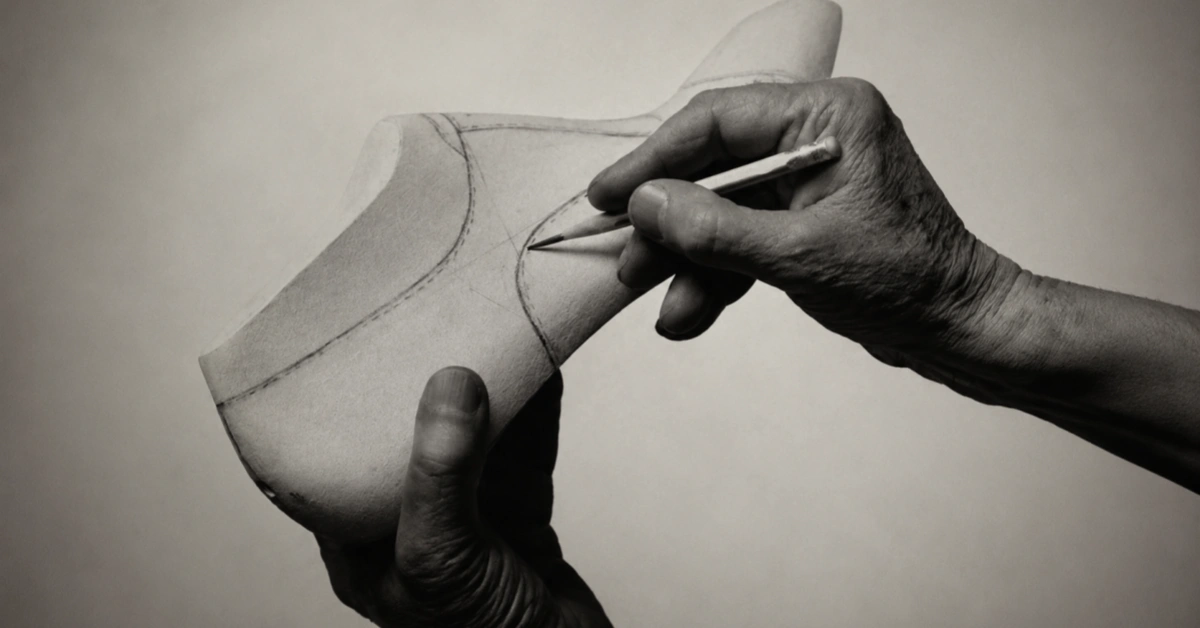
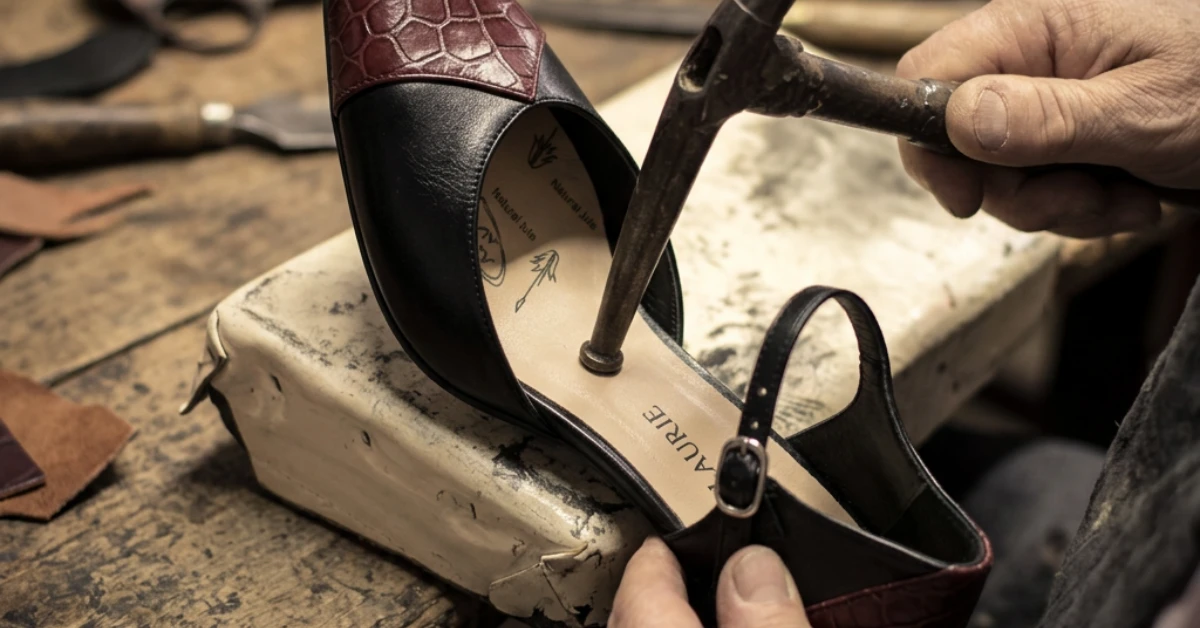
For footwear specifically, an illustrative production sequence might allocate approximately 5 days for tooling and a full sample set, a further 5–7 days for approval sample and size-set confirmation, and roughly 2 days for quality control ahead of a 30-day bulk production run. These figures are illustrative and will vary by product type, materials, and order complexity, but they show why "we will start after the holiday" is rarely a viable Q1 strategy — most of this sequence needs to be substantially underway, or complete, before the shutdown begins.
A brand that waits until January to begin this conversation is not simply starting late. It is attempting to compress a multi-stage process into the narrowest and most contested part of the entire manufacturing year.
Herrains can review your design stage, materials, target quantity and launch plan to identify the main production-calendar risks before the pre-CNY window closes.
Booking Production Slots Before CNY Shutdown Without Sacrificing Review
Securing a slot early does not mean skipping due diligence. It means moving the due diligence earlier in the calendar instead of removing it.
Before confirming a production slot, a brand should still be able to review:
- The approved product specification and confirmed materials
- Realistic order quantity and size/color allocation
- Ex-factory cost and estimated landed cost direction
- Quality control checkpoints built into the schedule
- Packaging, logistics, and delivery timing
Booking production slots before CNY shutdown is therefore less about rushing a decision and more about giving each of these review steps enough calendar room to happen properly, rather than under last-minute pressure.
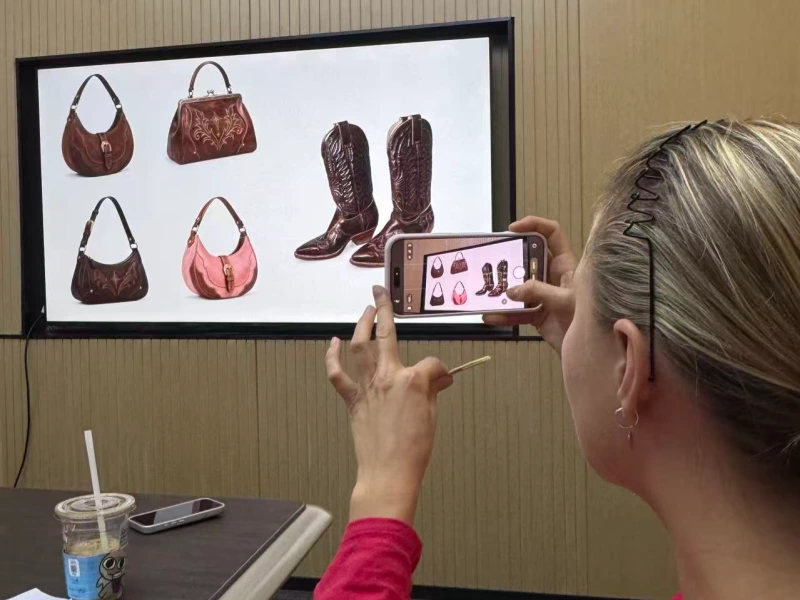
Why This Window Also Affects Repeat and Existing Orders
The pre-CNY period does not only affect brands placing a first order. Established brands with an existing product line face the same shared calendar constraint when planning a repeat order, a colorway extension, or a new style meant to reach shelves in Q1 2027.
A brand that already has a validated product and simply needs to replenish stock may assume reordering is faster than new development. In most cases it is — but the production slot itself is still part of the same shared pre-holiday capacity, alongside new-development projects from other brands. Reorders submitted in late December or January can end up queued behind both new-product sampling and other brands' replenishment requests, even when the product itself requires no further development work.
This is one reason booking production slots before CNY shutdown is best treated as an annual planning habit rather than a one-time response to a single launch date. Brands that build this into their yearly calendar typically experience fewer last-minute scheduling conflicts than brands that treat each order as an isolated event.
Turn Manufacturing Timing Into a Growth Decision
A fixed calendar event like Chinese New Year can be treated as either a constraint or a planning advantage. Brands that start the conversation early are not reacting to the holiday — they are using the 2027 Q1 manufacturing lead time to their benefit, securing a clear production path while later-moving brands are still negotiating for remaining capacity.
Production capacity planning footwear and bag manufacturer conversations started today, well ahead of the pre-CNY window, create more room for sample refinement, cost review, and a realistic launch date. Conversations started in January create pressure on every one of those same steps, often forcing a brand to choose between a delayed launch, a smaller production run than planned, or compressed quality checkpoints it would not otherwise accept.
None of these trade-offs are necessary when the production calendar is reviewed early. The goal is not to rush a decision, but to give a product's final stretch toward market — sampling confirmation, cost review, and the production slot itself — the same level of planning attention already given to its design.
Frequently Asked Questions
When should a brand start booking 2027 Q1 production capacity?
As early as possible once a sample is approved, and ideally well before the final pre-CNY sampling window closes. Since Chinese New Year 2027 falls on February 6, the realistic booking window for a Q1 launch typically needs to close in the months beforehand, once sampling, material procurement and production scheduling are factored in.
Does Chinese New Year only affect the factory during the public holiday days?
No. Many factories experience reduced capacity in the weeks before the holiday as committed orders are finished, and gradual ramp-back after it as staff return. The practical disruption window is typically longer than the official public holiday dates.
Can a brand still make late-stage design changes close to CNY?
Technically yes, but the risk increases significantly. A material swap or construction change requested close to the holiday competes with every other brand's pre-CNY requests for the same limited capacity, increasing the chance of delay.
Is reordering an existing product faster than booking a new production slot?
Reorders generally skip the development stages a new product requires, but the production slot itself is still part of the same shared pre-holiday capacity. A repeat order submitted late in the season can still be queued behind other brands' bookings.
What should be confirmed before booking a production slot?
The approved product specification, order quantity and size/color allocation, ex-factory and estimated landed cost direction, quality control checkpoints, and packaging and delivery timing should all be reviewed before a slot is finalized.
About Herrains
Herrains helps footwear and bag brands turn an approved sample into a production-ready first order, with production capacity, cost and launch planning aligned before bulk manufacturing begins.
We work with brands across design feasibility, materials and construction development, prototype validation, production scheduling and repeat-order growth. For brands targeting a Q1 2027 launch, this includes reviewing the production calendar early enough to avoid the shared pre-CNY capacity constraint.
Learn more about Herrains manufacturing capabilities and team.