
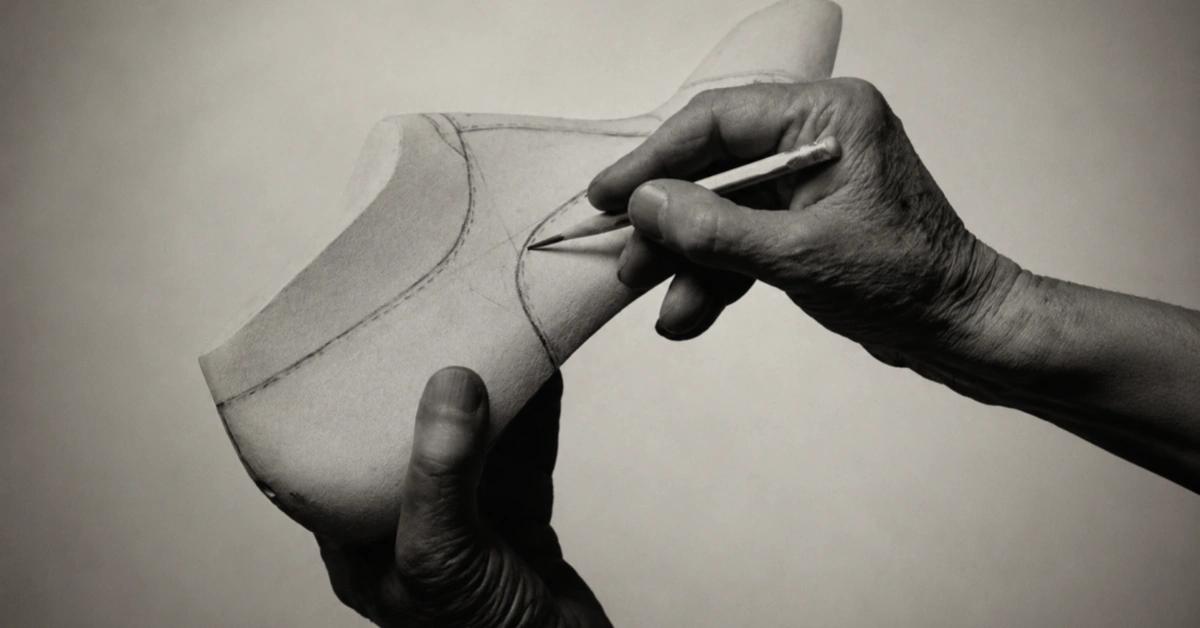
Quick answer: Most "endless" bulk production cycles are not caused by factory capacity — they are caused by five preventable gaps: unlocked BOMs, unaudited pre-production samples, single-source material dependency, unclear quality checkpoints, and no shared production calendar. A well-structured mass production run for footwear or leather goods should take 30–45 days from deposit to shipment-ready goods. If your factory quotes "60-90 days, sometimes longer," the root cause is almost always process, not capacity. Below is a stage-by-stage breakdown of where delays actually originate, and the specific checkpoints that let you catch them before your entire season's launch window disappears.
The Real Cost of "It's Just How Long Production Takes"
Every emerging brand founder has heard this sentence from a supplier at least once: "Bulk production just takes time, please be patient." It sounds reasonable — until your Q4 launch slips into Q1, your paid ad campaigns burn budget on backordered products, and your retail buyer cancels the PO because the goods missed the shelf-in date.
Here is the uncomfortable truth after two decades on the factory floor: lead time is not a fixed law of manufacturing — it is a function of how disciplined the pre-production process is. A factory that treats bulk production as "start cutting and see what happens" will always run 60-90+ days with unpredictable delays. A factory that treats it as an engineered process — with a locked technical package, verified materials, and staged quality gates — can reliably deliver in 30-45 days.
The goal of this guide is not to make you distrust your supplier. It is to give you the vocabulary and checkpoints to tell the difference between a factory that is managing the cycle and one that is improvising through it.
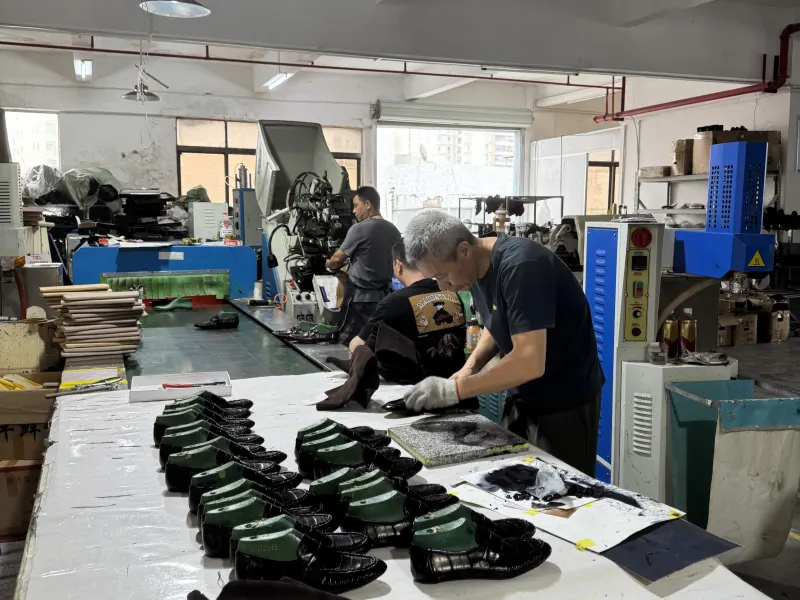
Anatomy of a Bulk Production Timeline (Where the Days Actually Go)
Before you can catch a delay, you need to know where the time is supposed to go. Here is a realistic breakdown for a mid-complexity footwear or handbag order (500-2,000 units):
Notice that the two biggest risk points — PP sample approval and bulk material sourcing — happen before a single unit is even cut. This is exactly why the pitfalls below cluster around the front half of the process. By the time you notice "production is late," the actual root cause usually happened 3-4 weeks earlier.
7 Pitfalls That Silently Add Weeks to Your Timeline
Approving a PP sample with "open items"
Buyers under launch pressure often approve a pre-production sample with notes like "fix the stitch color later" or "adjust hardware placement in bulk." This feels efficient, but it hands the factory a moving target. Every unresolved spec becomes a decision made unilaterally on the production line — and if it's wrong, you're not just fixing one sample, you're reworking hundreds of units.
Fix: No PP sample should be approved with an open item. Lock the technical package 100% before bulk cutting starts. If a detail genuinely can't be finalized, delay bulk cutting by the two days it takes to resolve it — that's far cheaper than a bulk rework.
2. Not verifying material availability before quoting a delivery date
A supplier can confirm "yes we can do this leather" from a swatch card without checking whether the tannery actually has that batch, color, and thickness in stock at bulk volume. When the order is placed, the factory discovers a 3-week backorder on the exact material specified — and this surfaces two weeks into your production window, not before it.
Fix: Ask your factory for written material stock confirmation (batch number, available meterage, hide/roll count) before signing off on the delivery date, not after the deposit is paid.
Single-sourcing critical hardware or trims
Zippers, buckles, D-rings, and branded hardware are frequently the actual bottleneck — not the leather or the stitching. If your factory sources a single component from one supplier with no backup, any disruption at that one vendor stalls your entire order, regardless of how fast the main factory floor is working.
Fix: Ask specifically: "What is the lead time on hardware, and is there a backup vendor?" A factory with a mature supply chain will have this answer memorized. A factory without one will need to "check and get back to you" — that hesitation is itself the answer.
No mid-production quality checkpoint
Many factories only inspect goods at the very end (final AQL), after the entire run is finished. If a defect pattern emerges — say, a consistent stitching tension issue — it isn't caught until units 1 through 2,000 have already been produced the same wrong way. Now the "fix" isn't a day of correction; it's a full re-do of a production run.
Fix: Insist on a mid-line inspection at roughly 20-30% completion. This is the single highest-leverage checkpoint in the entire calendar — it catches systemic issues while only a fraction of the order is affected.

Vague or missing shared production calendar
If your only visibility into production is "we'll update you when it ships," you have no way to know whether week 3 delays are recoverable or compounding. Brands are often surprised two weeks after the promised date, when a two-week slip was actually visible internally at week one.
Fix: Request a shared timeline with named milestones (cutting start, mid-line QC, final QC, packing) and dated check-ins. A factory confident in its process will provide this without resistance.
Treating sampling and bulk production as unrelated processes
Some brands sample with one team or vendor, then place the bulk order with a cheaper factory to save on unit cost. The new factory has to reverse-engineer the approved sample from scratch, re-solving problems the sampling team already solved — and often solving them differently.
Fix: Wherever possible, keep sampling and bulk production within the same technical team, even if execution capacity scales to a larger line. Continuity of technical ownership is one of the most underrated lead-time protections in the industry.
Communicating changes verbally instead of on the tech pack
A late-stage change relayed by chat message ("can we make the strap 2cm shorter?") often does not make it into the master tech pack the cutting team is working from. The result: half the run is cut to the old spec, half to the new one, and neither batch is fully correct.
Fix: Every change, no matter how minor, must be re-issued as a revised, dated technical package — not a chat message. If your factory doesn't insist on this discipline themselves, you should.
How the Herrains Manufacturing Model Compresses the Timeline
At Herrains, we rebuilt our production workflow around a simple principle: the sample stage is where lead time is won or lost, not the factory floor. This is the core of the Herrains Demand-Led Manufacturing model — the exact process we use to protect our partner brands from seasonal delays:
- 72-hour 3D Prototyping (The Herrains Fast-Track): We lock design intent before a single physical sample is cut, eliminating 1-2 rounds of "wait and see" sampling that usually adds 14 days to the clock.
- The Herrains Pre-Production Audit: We cross-check every Tech Pack against actual material stock and hardware lead times before quoting your delivery date — ensuring the "30-day" quote is a commitment, not a guess.
- Mid-Line Quality Gates: Our QC teams perform mandatory inspections at 25% completion, catching systemic issues while the order is still recoverable.
- Shared Production Visibility: Every Herrains bulk order comes with a dated milestone calendar, giving you the same visibility we have on the factory floor.
This disciplined approach is precisely why we created the Herrains Brand Kickstarter program. It is designed to solve the technical "open items" that cause bulk production delays before you ever place a PO. This phase acts as a technical insurance policy for your brand, ensuring every specification is production-ready.
Case in Point: Saving a Q4 Launch
A UK-based independent footwear brand approached us six weeks before a planned retail shelf-in date, after their previous factory caused a three-week slip. By implementing the Herrains Manufacturing framework — starting with a 72-hour 3D design lock and a pre-verified BOM — we delivered 1,200 units in 34 days, saving their entire Christmas season. The difference wasn't faster sewing; it was the Herrains pre-production discipline.
Frequently Asked Questions
Q: What is a realistic bulk production lead time for footwear or leather bags?
A: For a mid-complexity order of 500-2,000 units, 30-45 days from PP sample approval and deposit to shipment-ready goods is a realistic, well-managed timeline. Anything consistently quoted above 60 days warrants a process review.
Q: Can I shorten lead time by paying an expedite fee?
A: Expedite fees can help once production has already started, but they cannot fix root causes like unlocked specs or unverified material stock. Prevention at the pre-production stage is far more effective than acceleration mid-cycle.
Q: How much deposit is typical, and does it affect scheduling priority?
A: Deposit structures vary by factory, but production slot confirmation should always be tied to a locked tech pack, not just a deposit payment — paying a deposit against an unresolved spec does not actually reserve real production time.
Q: What should I ask a new supplier to gauge their lead-time reliability?
A: Ask for their stage-by-stage timeline breakdown (not just a single total number), their hardware/material backup sourcing policy, and whether mid-line QC is standard or optional. Clear, specific answers indicate a managed process; vague answers indicate improvisation.
Final Word
"Bulk production just takes time" is a sentence that should raise questions, not settle them. The brands that consistently hit their launch dates are not the ones with the fastest sewing lines — they are the ones who lock decisions early, verify materials before quoting dates, and insist on visibility throughout the run. If your current sourcing process can't answer the questions in this guide with specifics, it may be time for a technical audit before your next PO.
Ready to pressure-test your next production timeline before you commit? Explore the Herrains Brand Kickstarter program — a technical feasibility audit, 72-hour 3D prototyping, and production calendar review designed to catch delays before they start.