

Introduction: More Than a Holiday
Every year on May 1st, International Workers’ Day—also known as Labor Day in many countries—is observed around the world. For most people, it is a public holiday. But for industries built on craftsmanship, production, and global supply chains, this day carries a deeper meaning.
In the footwear and bag manufacturing industry, every finished product represents far more than design and materials. Behind each pair of shoes or each bag is a team of skilled professionals—pattern makers, technicians, craftsmen, and quality inspectors—whose expertise directly impacts the final product.
For brands, especially those in Europe and North America, understanding the role of labor in manufacturing is not just about awareness—it is about making better sourcing decisions, ensuring product quality, and building long-term partnerships.
This article explores what International Workers’ Day really means in today’s manufacturing landscape—and why it matters when choosing the right footwear and bag production partner.
What Is International Workers’ Day?
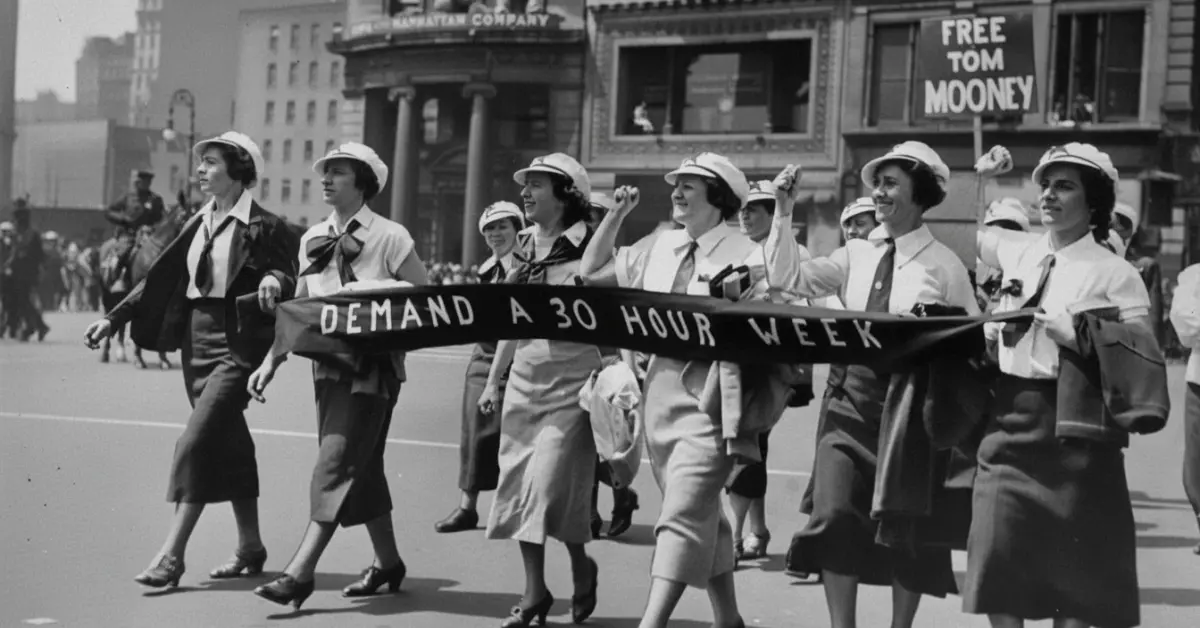
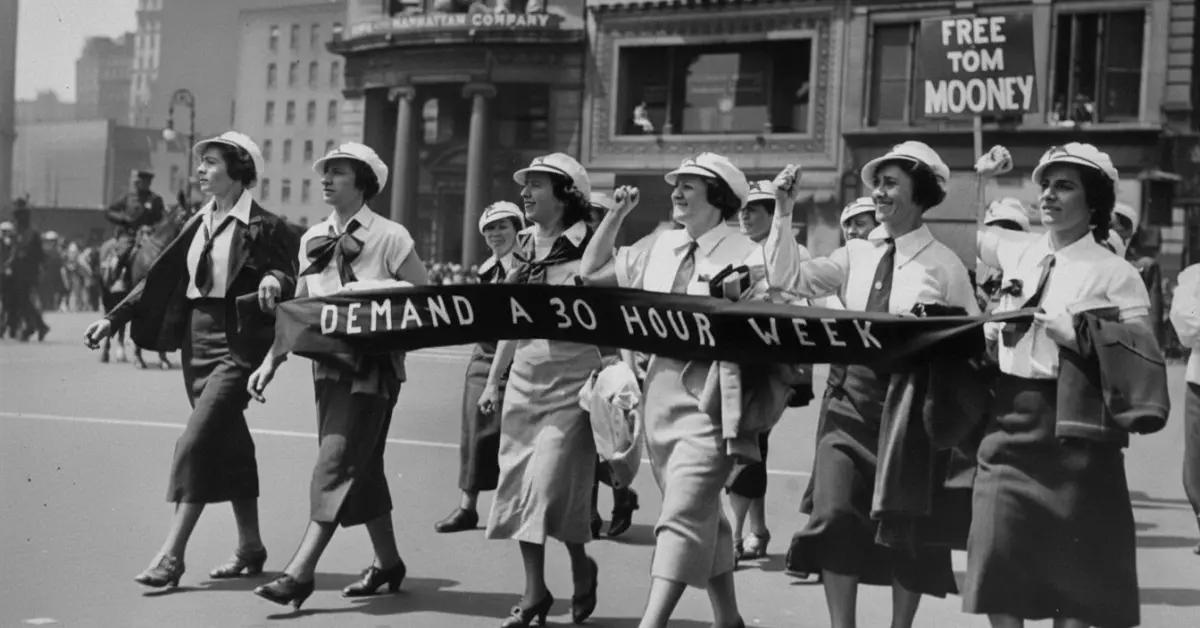
International Workers’ Day originated in the late 19th century, during a time when industrial workers were fighting for basic rights, including fair wages, safe working conditions, and the now-standard eight-hour workday.
Over time, May 1st became a global symbol of labor rights and the recognition of workers’ contributions across industries. Today, it is officially observed in over 80 countries and widely acknowledged worldwide.
However, beyond its historical roots, International Workers’ Day continues to reflect something essential in modern business:
Behind every product, there are people.
In industries like footwear and bag manufacturing—where precision, material handling, and craftsmanship are critical—this statement is more relevant than ever.
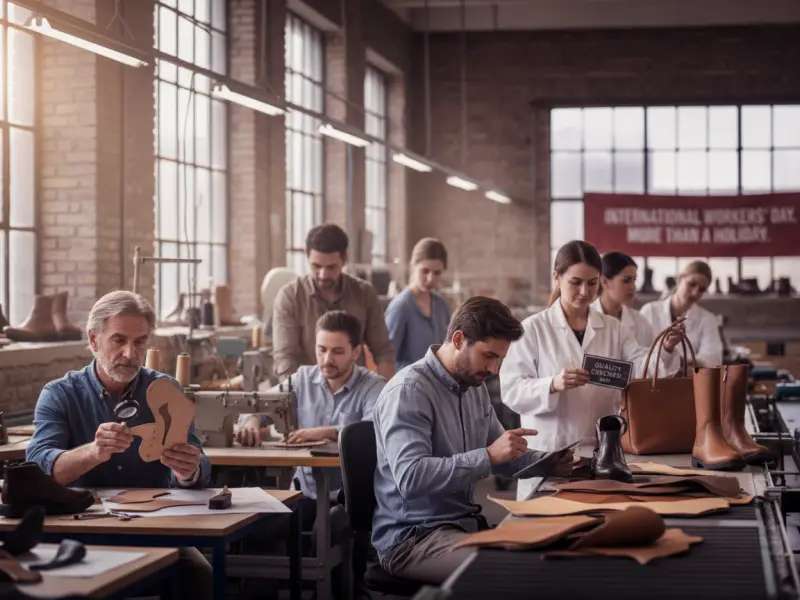
Why International Workers’ Day Still Matters in Manufacturing
In today’s globalized supply chain, brands often focus on cost, speed, and scalability. While these factors are important, they only tell part of the story.
Manufacturing is not just a system—it is a human-driven process.
Even with advancements in automation and machinery, the production of high-quality footwear and bags still relies heavily on skilled labor:
- Complex stitching requires manual precision
- Pattern development depends on technical experience
- Material selection involves expert judgment
- Quality control is based on trained inspection
Automation can improve efficiency, but it cannot replace craftsmanship.
This is why International Workers’ Day remains highly relevant: it highlights the human expertise that determines whether a product meets market expectations—or fails.
Behind Every Product: The People Who Make It Possible
At a professional manufacturing company like XINZIRAIN, the process of turning an idea into a finished product involves multiple specialized roles working together.
Key Roles in Footwear & Bag Manufacturing
1. Pattern Makers
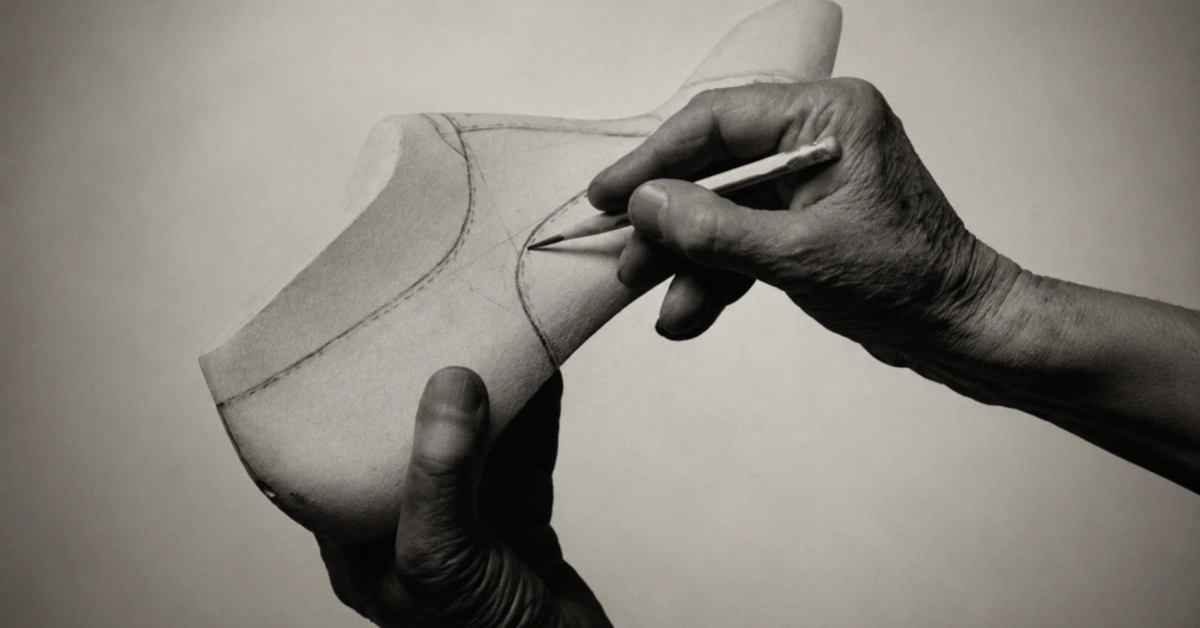
They transform design concepts or sketches into precise technical patterns that can be used in production. Their work determines fit, structure, and manufacturability.
2. Material Specialists
From leather selection to hardware sourcing, material experts ensure that every component meets both design intent and durability requirements.
3. Skilled Craftsmen
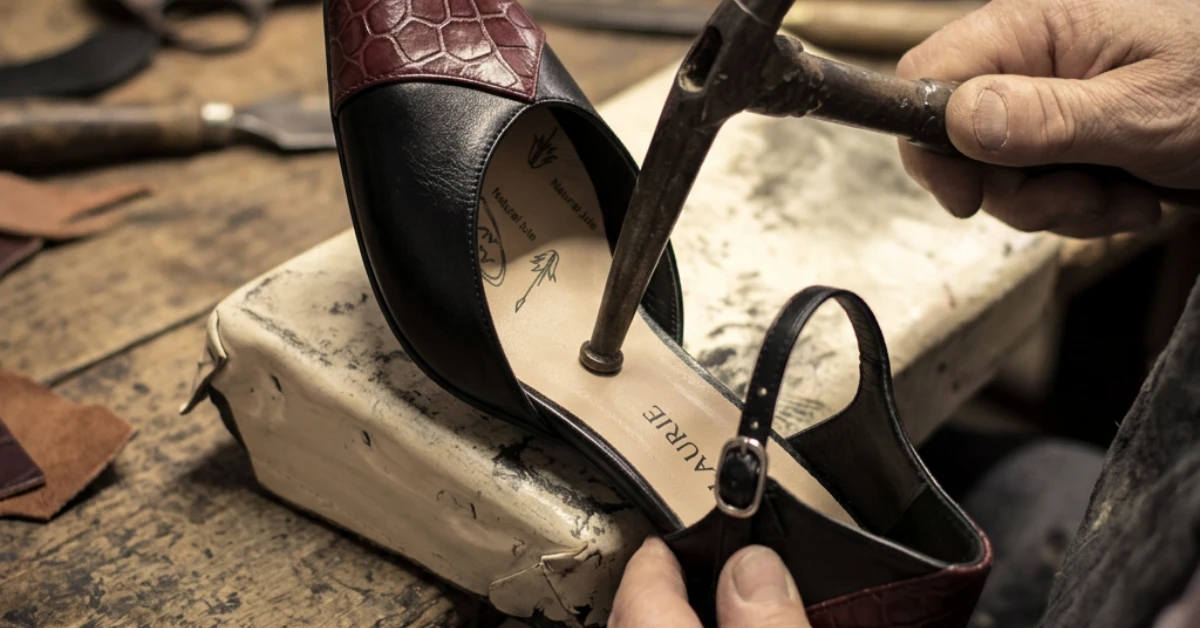
These are the technicians responsible for cutting, stitching, assembling, and shaping the product. Their experience directly affects consistency and finish.
4. Quality Control Teams
QC professionals inspect products at every stage—from raw materials to final packaging—to ensure compliance with EU and US standards.
Each role is critical. A single weak link can impact the entire product outcome.
This is why experienced manufacturers invest not only in machines, but in people.
Why Skilled Labor Defines Product Quality
In B2B manufacturing, especially for fashion brands, one of the biggest challenges is consistency. A sample may look perfect—but bulk production often fails to match.
The reason is simple:
Quality is not defined by equipment alone—it is defined by the people using it.
Examples from Real Production
- High Heels Manufacturing
The balance and comfort of a high heel depend on precise alignment between the heel, outsole, and upper. This requires experienced assembly workers—not just machinery. - Structured Handbags
Achieving a clean, rigid shape involves accurate reinforcement, edge painting, and stitching. These are highly skill-dependent processes. - Leather Finishing
The final appearance of leather products depends on cutting accuracy, stitching consistency, and finishing techniques—all performed manually.
For brands, this means:
Choosing a manufacturer is not just about price—it is about the stability and skill level of the workforce behind production.
Ethical Manufacturing and Global Expectations
In recent years, brands and consumers—especially in Europe and North America—have placed increasing importance on ethical manufacturing.
This includes:
- Safe working conditions
- Fair labor practices
- Transparent production processes
- Responsible sourcing
International Workers’ Day serves as a reminder that ethical manufacturing is not a marketing claim—it is a business requirement.
At HERRAINS, as part of the XINZIRAIN group, we operate under structured production management systems designed to align with international expectations:
- Organized production lines
- Standardized quality control procedures
- Clear workflow management
- Focus on long-term workforce stability
For B2B clients, this translates into:
- More reliable production timelines
- Better quality consistency
- Lower risk in scaling orders
From Concept to Delivery: A Team-Based Process
Successful product development is not a single step—it is a coordinated process involving multiple teams.
At HERRAINS, we provide a one-stop manufacturing solution, covering every stage:
Step 1: Concept & Design Input
Clients can provide sketches, reference images, or concepts.
Step 2: Technical Development
Our team translates ideas into production-ready designs, including materials and structure.
Step 3: Sample Development
Prototypes are created to test design, fit, and construction.
Step 4: Sample Confirmation
Adjustments are made until the sample meets expectations.
Step 5: Bulk Production
Production is executed with controlled processes and experienced teams.
Step 6: Quality Control & Delivery
Products undergo inspection before packaging and shipment.
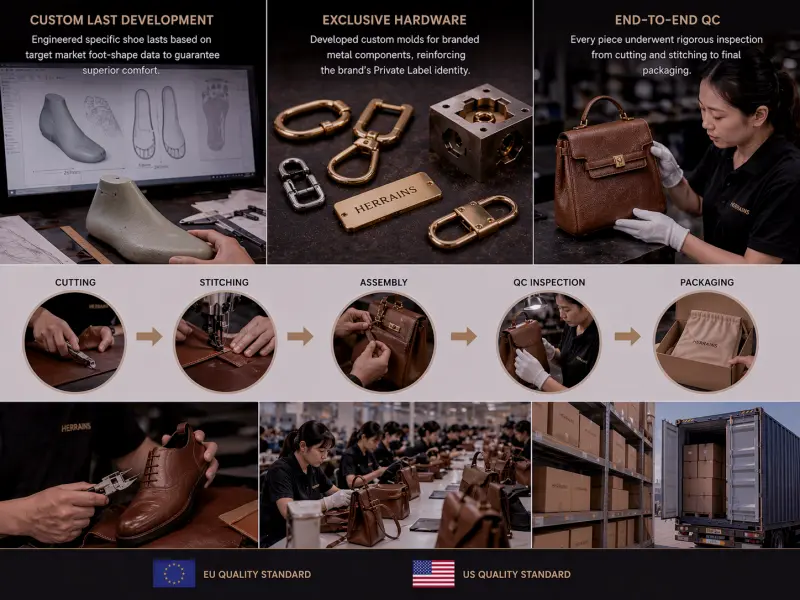
This integrated workflow ensures that every detail—from concept to final product—is handled within one system.
What This Means for Your Brand
For brands working with manufacturers, one of the most common challenges is inconsistency:
- Samples look good, but bulk production fails
- Communication breaks down during development
- Timelines are delayed
- Quality varies between batches
In most cases, the root cause is not the factory size or equipment—it is the lack of a stable, experienced team.
When evaluating a manufacturing partner, brands should consider:
- Does the factory have a stable workforce?
- Are there experienced technicians involved in development?
- Is the production process structured and transparent?
- Is quality control implemented at every stage?
At HERRAINS, we focus on building long-term partnerships by ensuring that our team, processes, and supply chain are aligned to support brand growth—not just single orders.
Labor Day Insight: Manufacturing Is About People
International Workers’ Day is not just a historical event or a public holiday.
For the manufacturing industry, it represents something fundamental:
Products are not made by machines alone—they are made by people.
For brands, recognizing this means making smarter sourcing decisions:
- Choosing partners with real production capabilities
- Prioritizing experience over short-term cost savings
- Building relationships with manufacturers who understand product development
Conclusion: More Than a Manufacturer—A Production Partner
In today’s competitive market, launching a successful product requires more than a good idea. It requires a reliable team capable of turning that idea into a consistent, high-quality product at scale.
At HERRAINS, backed by the manufacturing strength of XINZIRAIN, we provide:
- One-stop footwear and bag manufacturing solutions
- Integrated supply chain management
- Flexible production for growing brands
- Strong design and development support
- Quality aligned with international standards
We believe that long-term success in manufacturing comes from collaboration, transparency, and respect for the people behind every product.
Start Your Project with Confidence
If you are looking for a manufacturing partner who understands both craftsmanship and scalability, our team is here to help.
✔ Share your design or concept
✔ Develop samples with expert support
✔ Scale production with confidence
Send us your inquiry to start your project today
FAQ Section
What is International Workers’ Day?
International Workers’ Day is a global holiday observed on May 1st, recognizing workers’ contributions and labor rights.
Why is labor important in footwear manufacturing?
Because many processes—such as stitching, assembly, and quality inspection—require skilled manual work.
Can machines replace workers in bag manufacturing?
Machines improve efficiency, but craftsmanship and experience remain essential for quality.
What should brands look for in a manufacturer?
A stable workforce, structured production process, and strong quality control system.
How does labor impact product quality?
Experienced workers ensure consistency, durability, and accurate execution of designs.
What is ethical manufacturing?
It refers to responsible production practices, including safe working conditions and fair labor management.
Why do samples differ from bulk production?
Often due to lack of consistency in workforce or process control.
How can brands reduce production risks?
By working with experienced manufacturers that offer full-process management.