

Introduction
When discussing premium footwear construction, the term Goodyear welt is often associated with durability, craftsmanship, and luxury. Many assume it is directly tied to the Goodyear tire brand—and in part, that connection exists.
However, while the machinery was developed by Charles Goodyear Jr., the person who transformed this technology into a widely adopted manufacturing standard was a lesser-known but highly influential figure: Joseph Fenestrier.
This article explores the true history behind Goodyear welt construction, the industrial revolution of footwear in France, and how one entrepreneur shaped modern shoemaking.
What Is Goodyear Welt Construction?
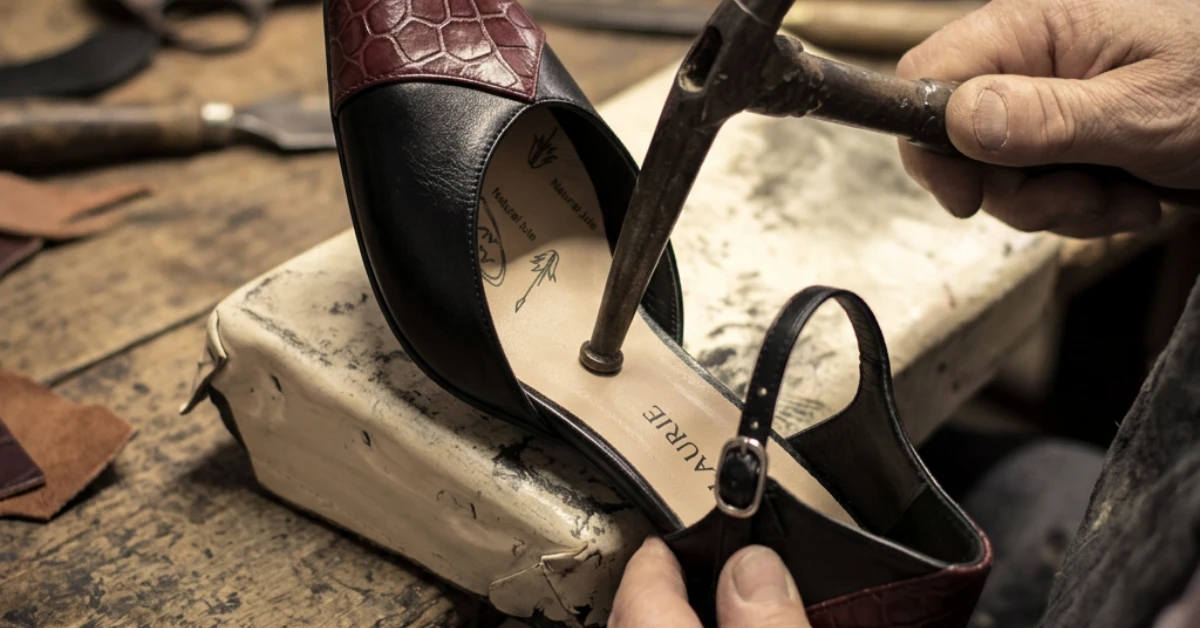
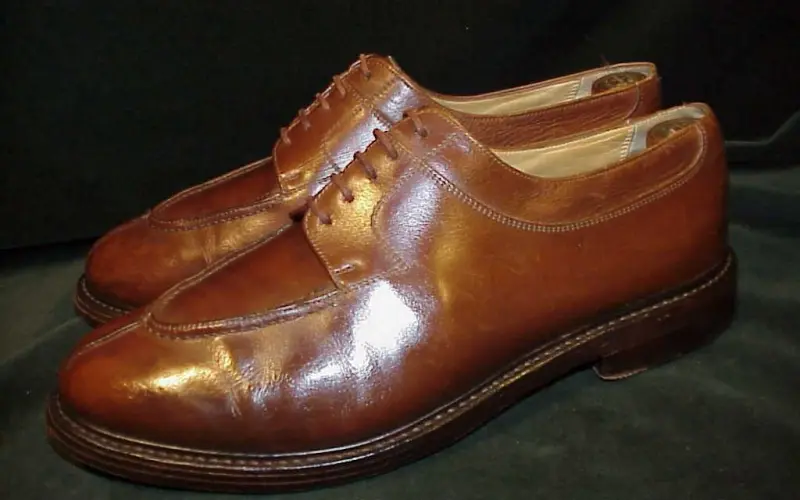
Goodyear welt construction is a method of shoe assembly that:
- Attaches the upper and insole to a welt strip
- Secures the outsole to the welt rather than directly to the upper
- Allows for resolving and extending the product lifespan
Why it matters:
- Superior durability
- Enhanced comfort over time
- Repairability (key for premium footwear)
- A hallmark of high-end craftsmanship
Today, it remains a benchmark in luxury and heritage footwear manufacturing.
The Inventor vs. The Innovator
The Machine Inventor: Charles Goodyear Jr.
The Goodyear welt machine was invented by Charles Goodyear Jr., son of Charles Goodyear (founder of Goodyear Tire). This invention mechanized what had previously been a labor-intensive hand process.
However:
Inventing a machine ≠ establishing an industry standard
The True Industrial Pioneer: Joseph Fenestrier
The widespread adoption of Goodyear welt construction can be credited to:
Joseph Fenestrier (1874–1916), France
He was among the first in Europe to:
- Introduce Goodyear machinery into factory production
- Scale the process industrially
- Position it as a commercial and branding advantage
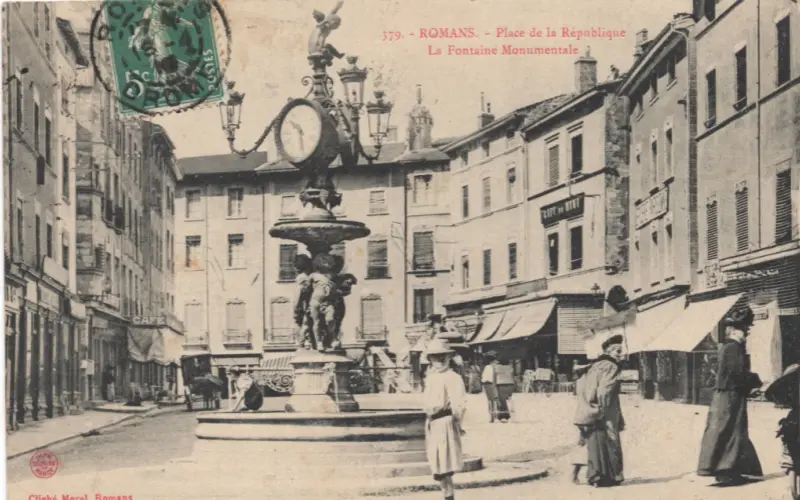
Romans-sur-Isère: The Birthplace of the French Footwear Industry
Joseph Fenestrier’s story is deeply tied to Romans-sur-Isère, a historic hub of leather and shoemaking in France.
Key milestones:
- Middle Ages – Established a leather tanning center
- 1850 – First wooden sole factory established
- 1864 – Railway connection enabled nationwide distribution
- Late 19th century – Industrialization accelerated production
This environment created the perfect conditions for manufacturing innovation.
From Butcher Shop to Footwear Empire
Joseph Fenestrier’s journey is remarkable:
- Born into a family of charcutiers (meat processors)
- Acquired a small shoe workshop in 1895 at age 21
- Initial production: ~80 pairs/day
Breakthrough Moment — 1901
Fenestrier:
- Expanded operations
- Introduced Goodyear welt machinery from the United States
- Shifted toward specialized, industrial production
This marked a turning point in European shoemaking.
The Rise of UNIC: A Global Footwear Brand
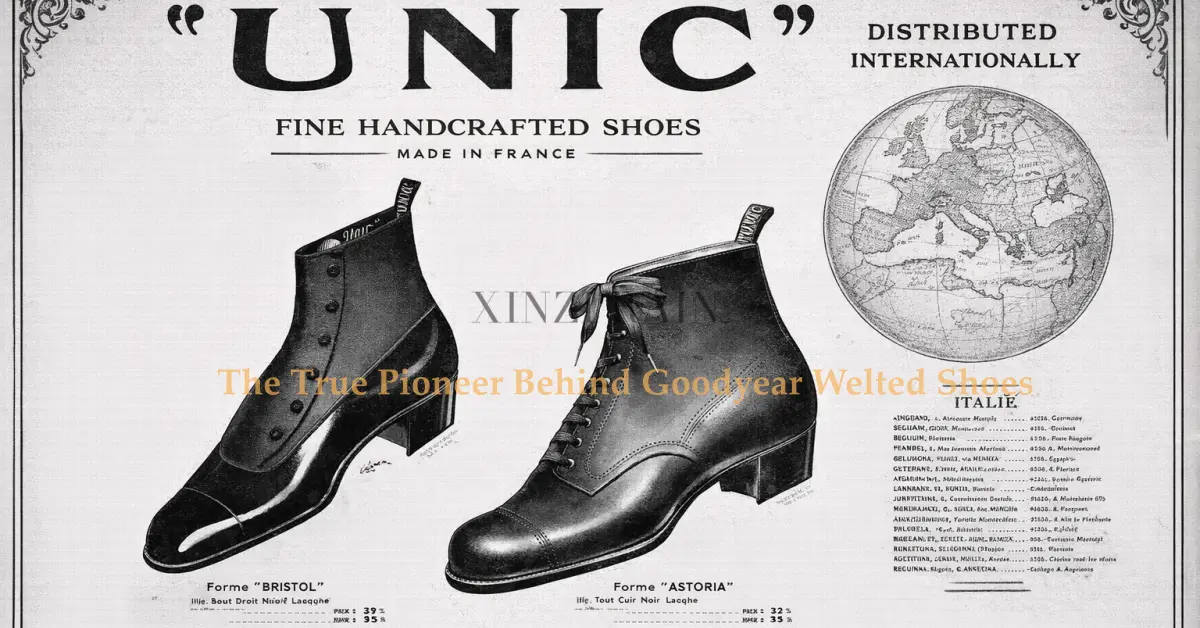
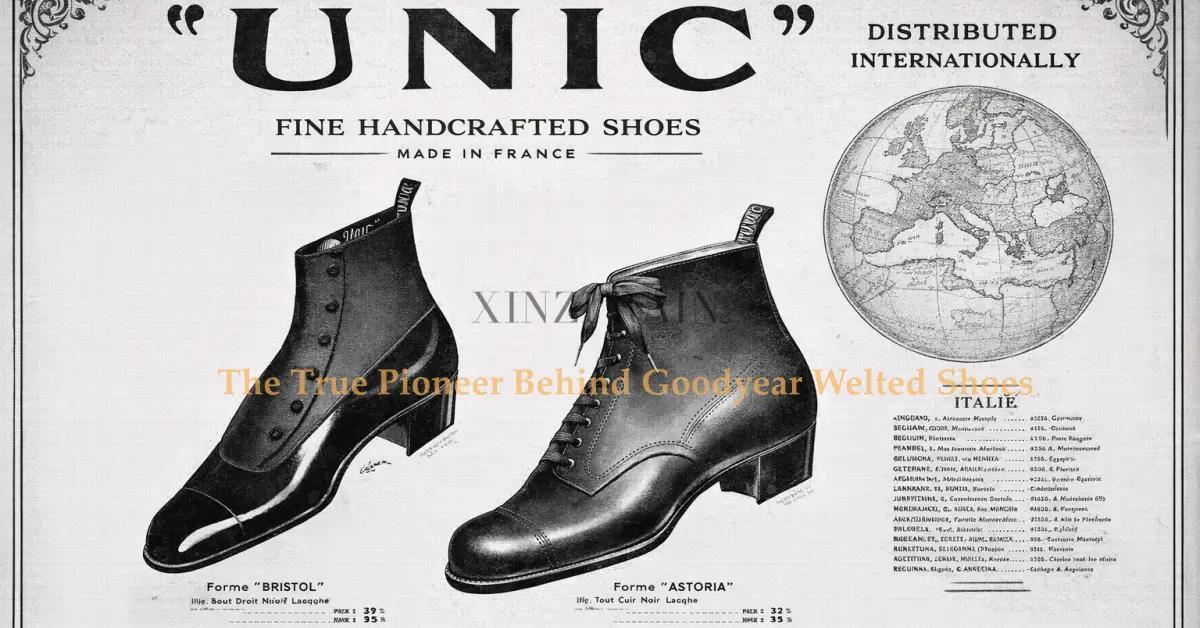
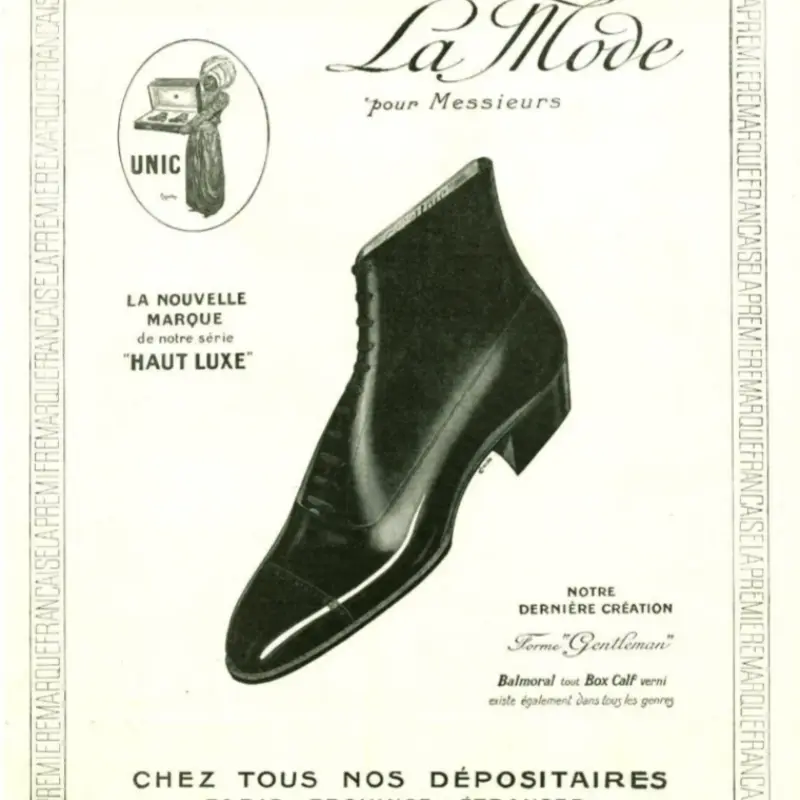
In 1907, Fenestrier founded the UNIC brand, which became a global success.
Key achievements:
- 1910 – Won Grand Prize at Brussels World Expo
- 1911–1914 – Continued awards across Europe
- 1915 – Participated as a jury member in the San Francisco Expo
Production scale:
- 500 pairs/day (early 1910s)
- 1,200 pairs/day by 1926
- 800+ workers across factories
Global reach:
- Europe
- Russia
- Middle East
- Egypt
- Asia
- United States
UNIC was one of the earliest examples of a truly international footwear brand.
Industrialization of Shoemaking: What Changed?
Fenestrier’s adoption of Goodyear technology triggered major shifts:
1. Standardization of Quality
Consistent stitching and construction across large volumes
2. Scalable Production
From artisan workshops to industrial factories
3. Brand Positioning
The construction method became a marketing differentiator
4. Supply Chain Expansion
Growth of supporting industries:
- Last-making factories
- Leather suppliers
- Machinery manufacturers
Beyond Manufacturing: Social Responsibility
UNIC also reflected early corporate responsibility:
- Financial support for large families
- On-site sports facilities for workers
- Internal fire brigades supporting local communities
This approach aligned with the broader European industrial culture of the time.
Legacy and Decline
After Fenestrier died in 1916:
- His family continued operations
- The brand expanded globally
- Eventually acquired and restructured multiple times
Final phase:
- Acquired by André Group (1969)
- Later integrated into other entities
- Gradually disappeared around the early 2000s
Despite its decline, the legacy remains deeply embedded in modern footwear manufacturing.
Why This History Matters for Modern Brands
Understanding this story provides valuable insights for today’s footwear businesses:
1. Technology Drives Differentiation
Just like Goodyear Welt once did, innovation still defines competitiveness
2. Manufacturing Is a Strategic Asset
Brands that understand production gain stronger control over quality and identity
3. Scalability + Craftsmanship = Success
The balance Fenestrier achieved is still the industry benchmark
How XINZIRAIN Applies These Principles Today
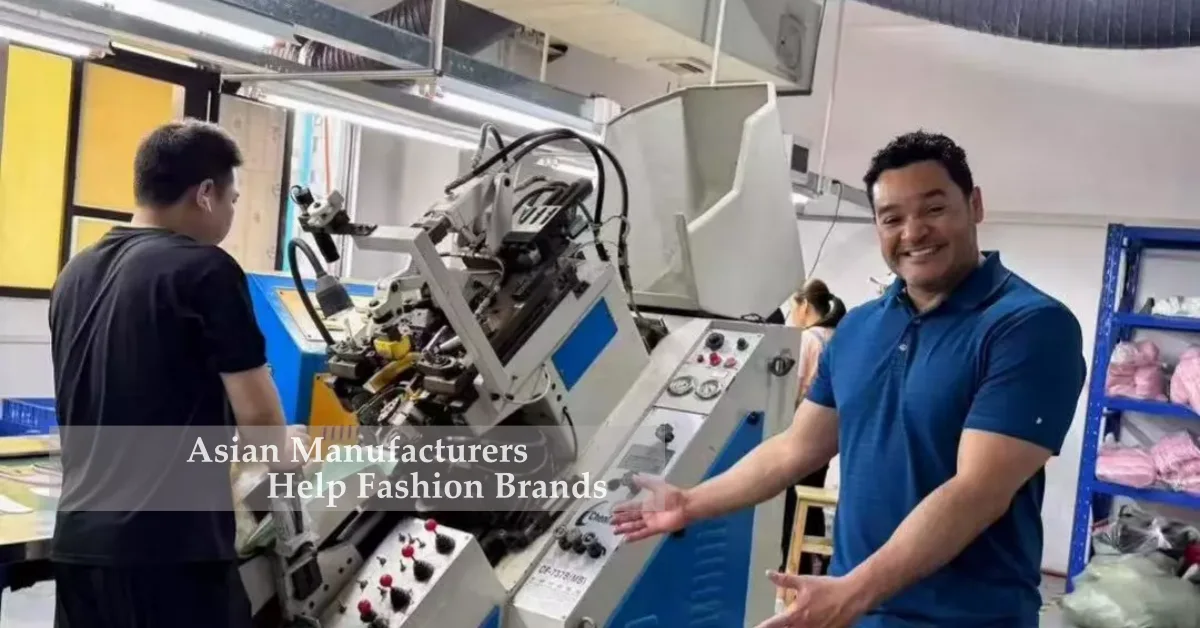
At XINZIRAIN, we follow a similar philosophy:
- Combine traditional craftsmanship with modern manufacturing
- Support custom footwear development from concept to bulk
- Offer scalable production for global brands
We understand that today’s brands need more than production—they need:
engineering + design + commercialization
Conclusion
While the Goodyear welt machine was an important invention, it was Joseph Fenestrier who transformed it into a global standard.
His work marked the transition from:
Craft → Industry
Local workshop → Global brand
And that transformation continues to shape the footwear industry today.
Author: XINZIRAIN Footwear Research Team
With over 25 years of experience in footwear manufacturing, XINZIRAIN specializes in custom shoe development and global production. Our team combines historical industry knowledge with modern manufacturing expertise to support brands worldwide.
About Our Brand
XINZIRAIN is the core brand of our manufacturing group, specializing in custom footwear development with over 25 years of industry experience. We support global brands with end-to-end solutions, from concept design and sampling to bulk production and quality control.
As part of our brand ecosystem, HERRAINS operates as our dedicated sub-brand for one-stop shoe and bag manufacturing solutions. It focuses on integrated development across footwear and handbags, helping brands streamline their supply chain and build cohesive product lines.
Whether you are developing a single product or a full collection, our team provides the expertise and manufacturing capability to bring your ideas to market efficiently.