
Quick Answer
Finding a reliable footwear manufacturer for an Oman brand requires more than comparing prices. The best manufacturing partner should offer strong product development capabilities, flexible MOQ options, consistent quality control, reliable communication, and experience exporting to international markets. For most Oman fashion brands, startups, and distributors, working with a manufacturer that provides OEM, ODM, and private label services can significantly reduce development risks and accelerate time-to-market.
Why Choosing the Right Footwear Manufacturer Matters
Whether you are launching a new footwear brand in Oman, expanding an existing retail business, or importing products for wholesale distribution, your manufacturing partner will directly impact your success.
A reliable manufacturer can help you:
- Reduce product development risks
- Improve product quality consistency
- Shorten lead times
- Control production costs
- Scale production as your business grows
- Build a stronger brand reputation
On the other hand, choosing the wrong supplier can lead to delayed shipments, inconsistent quality, communication issues, and costly inventory problems.
For Oman brands entering the footwear market, selecting the right manufacturing partner is one of the most important business decisions you will make.
Key Takeaways
- Don't choose a manufacturer based solely on price.
- Evaluate product development capabilities, not just production capacity.
- Verify quality control systems before placing bulk orders.
- Ask about MOQ flexibility and sampling processes.
- Review previous export experience and production capabilities.
- Look for manufacturers that can support long-term growth.
Understanding Your Footwear Manufacturing Needs First
Before contacting suppliers, brands should clearly define their requirements.
Different manufacturers specialize in different categories.
Common Footwear Categories
| Category | Typical Buyers |
|---|---|
| Fashion Sandals | Fashion brands, retailers |
| High Heels | Women's footwear brands |
| Loafers | Premium and business footwear brands |
| Sneakers | Streetwear and sports brands |
| Casual Shoes | Retail chains and distributors |
| Boots | Fashion and outdoor brands |
| Children's Shoes | Kids brands and wholesalers |
The clearer your product requirements are, the easier it becomes to identify suitable manufacturers.
What Makes a Reliable Footwear Manufacturer?
Not every factory is capable of supporting brand growth.
The best manufacturers act as development partners rather than simple suppliers.
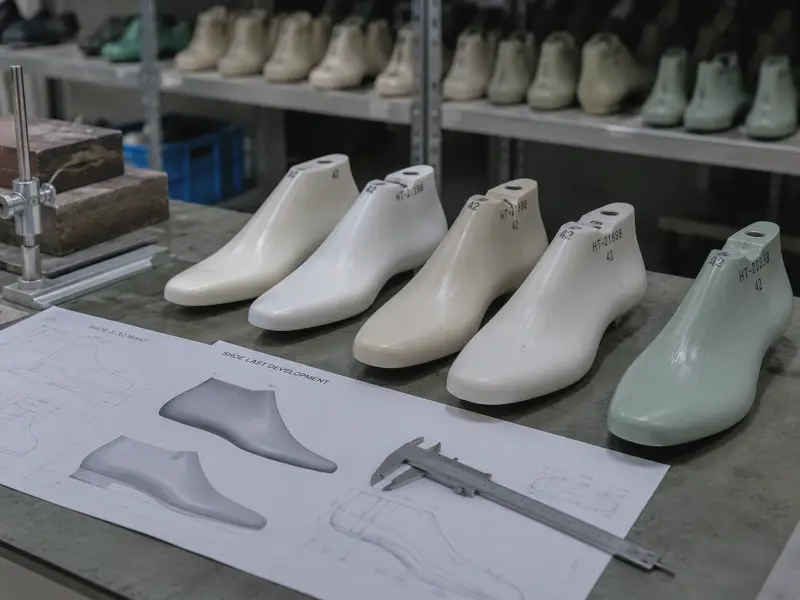
Product Development Capability
Many Oman brands do not have in-house footwear engineers or pattern makers.
A strong manufacturer should be able to assist with:
- Design refinement
- Tech pack review
- Material recommendations
- Pattern development
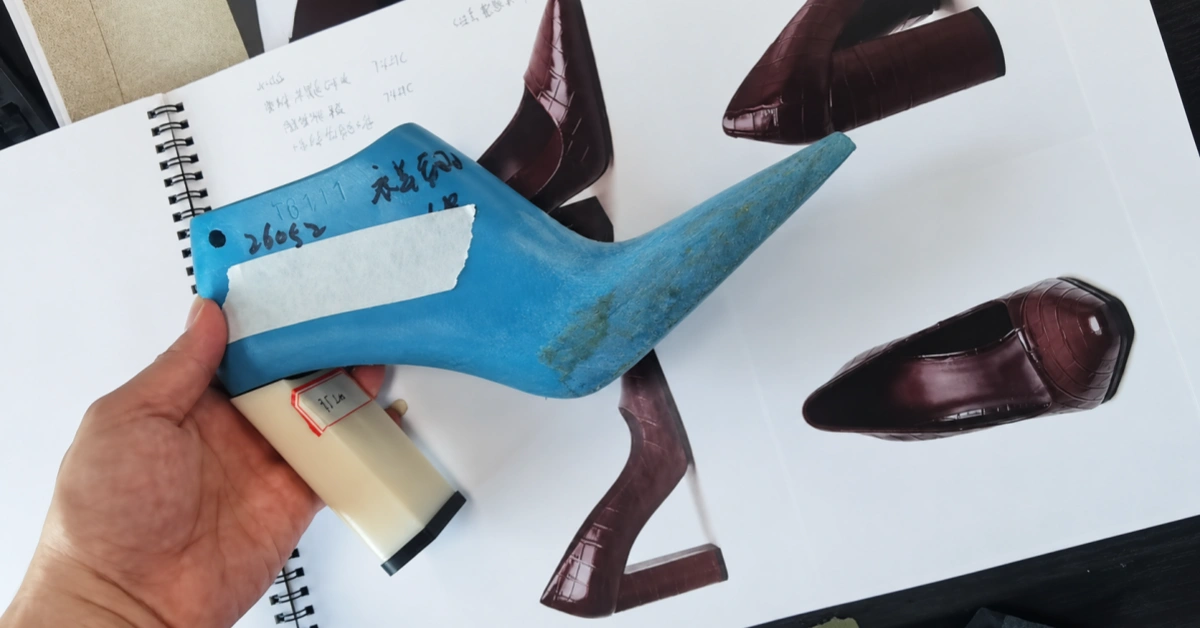
- Last development
- Sample production
- Cost optimization
This support becomes especially important for startups and emerging brands.
Expert Insight
Many successful footwear projects start with a simple sketch, reference image, or concept. The manufacturer's ability to transform that idea into a production-ready product is often more important than a small difference in unit price.
Evaluate Material Sourcing Capabilities
Material selection directly affects:
- Product quality
- Comfort
- Durability
- Brand positioning
- Production costs
A reliable footwear manufacturer should offer access to a wide range of materials.
Common Footwear Materials
| Material | Best For |
| Full-Grain Leather | Premium footwear |
| Top-Grain Leather | Fashion footwear |
| Suede | Casual and luxury styles |
| Mesh | Athletic footwear |
| Knit Fabrics | Lightweight sneakers |
| Vegan Leather | Sustainable collections |
| Rubber Outsoles | Durability and traction |
| EVA Outsoles | Lightweight comfort |
Manufacturers with strong sourcing networks can usually provide more flexibility in design and pricing.
Verify Quality Control Systems
One of the biggest concerns for Oman importers is quality consistency.
A reliable manufacturer should have a documented quality control process.
Key QC Stages
Incoming Material Inspection
Checking:
- Leather quality
- Material thickness
- Color consistency
- Hardware specifications
In-Process Inspection
Monitoring:
- Stitching accuracy
- Assembly quality
- Construction standards
Final Inspection
Verifying:
- Appearance
- Measurements
- Packaging
- Functional performance
Factories serving European and North American markets often have stricter quality management procedures.
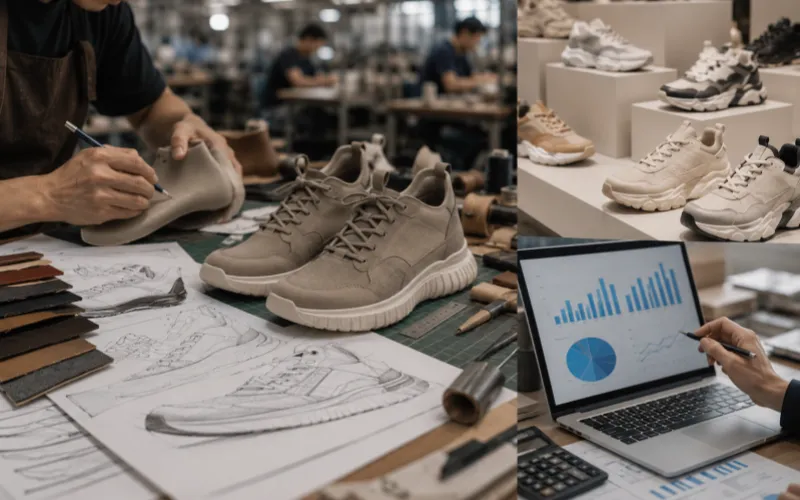
Ask About MOQ Requirements
MOQ is especially important for startups and growing brands.
Some factories only accept large-volume orders, while others offer more flexible production options.
Typical MOQ Reference
| Product Type | Typical MOQ |
| Custom Sandals | 50–100 Pairs |
| Fashion Footwear | 50–100 Pairs |
| High Heels | 100–200 Pairs |
| Sneakers | 300–500 Pairs |
| Custom Boots | 100–200 Pairs |
Low MOQ manufacturing allows Oman brands to:
- Test new products
- Reduce inventory risks
- Launch seasonal collections
- Validate market demand
Review Sampling and Development Timelines
Before placing bulk orders, brands should evaluate how efficiently a manufacturer handles sampling.
Typical Development Timeline
| Stage | Timeline |
| Material Sourcing | 3–7 Days |
| Sample Development | 20–25 Days |
| Sample Revisions | 7–15 Days |
| Bulk Production | 30–45 Days |
| Final QC | 2–5 Days |
Fast and accurate sampling can significantly improve speed-to-market.
Check Export Experience
Export experience matters.
Manufacturers that regularly ship to:
- Oman
- UAE
- Saudi Arabia
- Qatar
- Kuwait
- Europe
- North America
typically understand:
- International quality expectations
- Export documentation
- Packaging requirements
- Shipping coordination
This reduces operational risks for buyers.
OEM vs ODM: Which Is Better for Oman Brands?
OEM Manufacturing
OEM is ideal when:
- You already have a design
- You need custom branding
- You want full product control
ODM Manufacturing
ODM is ideal when:
- You need faster market entry
- You want to customize existing designs
- You have limited product development resources
Many growing Oman brands use a combination of both approaches.
Red Flags to Avoid When Choosing a Manufacturer
Be cautious if a supplier:
- Cannot explain their production process
- Refuses to discuss quality control procedures
- Provides unrealistic pricing
- Has unclear communication
- Cannot provide sample references
- Has limited customization capabilities
- Cannot explain lead times clearly
Reliable manufacturers are usually transparent about both capabilities and limitations.

Why Many Oman Brands Source Footwear from China
China remains one of the world's leading footwear manufacturing hubs because of its complete supply chain ecosystem.
Advantages include:
- Extensive material sourcing options
- Experienced OEM and ODM capabilities
- Fast sample development
- Flexible MOQ support
- Strong quality control systems
- Scalable production capacity
For brands seeking custom footwear manufacturing, China often provides a combination of flexibility, efficiency, and manufacturing expertise that is difficult to match elsewhere.
How HERRAINS Supports Oman Footwear Brands
HERRAINS, backed by XINZIRAIN's 25+ years of footwear manufacturing experience, helps brands develop and scale custom footwear collections through:
- Design-to-delivery support
- OEM manufacturing
- ODM development
- Private label production
- Material sourcing
- Sample development
- Quality control
- Custom packaging
- Global logistics support
Whether you are launching a new footwear brand or expanding an existing product line, our team can help transform your ideas into production-ready footwear.
Conclusion
The best footwear manufacturer is not necessarily the cheapest supplier. It is the partner that can consistently deliver quality products, support product development, communicate effectively, and grow with your business.
For Oman brands, evaluating product development capabilities, material sourcing, quality control, MOQ flexibility, and export experience will help reduce risk and improve long-term success.
Choosing the right manufacturing partner today can have a lasting impact on your brand's future growth.
Frequently Asked Questions
What is the best country for footwear manufacturing?
China remains one of the strongest options due to its complete footwear supply chain and manufacturing ecosystem.
What MOQ should startups expect?
Many manufacturers offer MOQs ranging from 100 to 200 pairs for certain footwear categories.
How long does footwear sampling take?
Most custom footwear samples take approximately 20–25 days to develop.
What information should I provide to a manufacturer?
Design sketches, reference images, tech packs, material preferences, sizing requirements, and target quantities.
Is OEM or ODM better for new brands?
ODM is often faster for startups, while OEM provides greater customization flexibility.
How can I verify a factory's quality?
Ask about quality control procedures, sample development processes, and export experience.
What materials are commonly used in footwear manufacturing?
Leather, suede, mesh, knit fabrics, vegan leather, EVA, TPU, and rubber.
Can manufacturers help with packaging?
Yes. Many OEM and private label manufacturers provide custom packaging services.
Do I need a tech pack to start?
No. Many manufacturers can assist with product development based on sketches or reference photos.
What should Oman brands prioritize when selecting a supplier?
Quality consistency, product development support, communication, MOQ flexibility, and long-term scalability.

Start Your Footwear Project
Looking for a reliable footwear manufacturer for your Oman brand?
Contact HERRAINS today to discuss your footwear concept, request a quotation, or begin sample development with our experienced OEM and ODM manufacturing team.