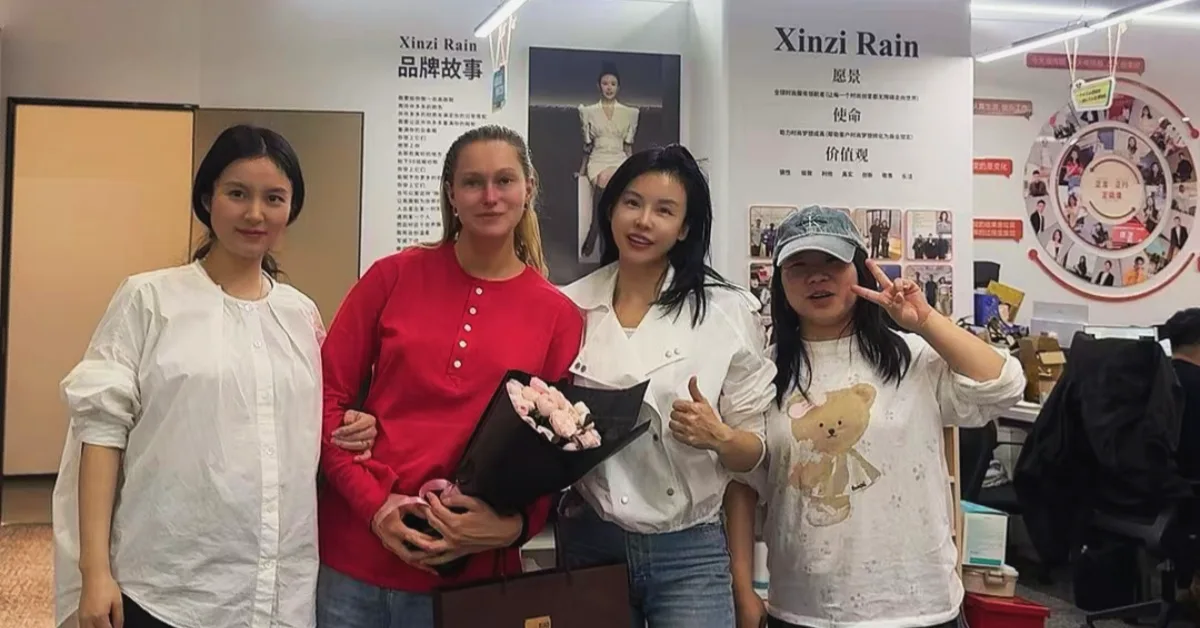

A Real Client Visit to HERRAINS After China's National Day Holiday
In October 2026, shortly after China's National Day holiday, HERRAINS welcomed a client from Russia for an in-person visit focused on footwear and product development.
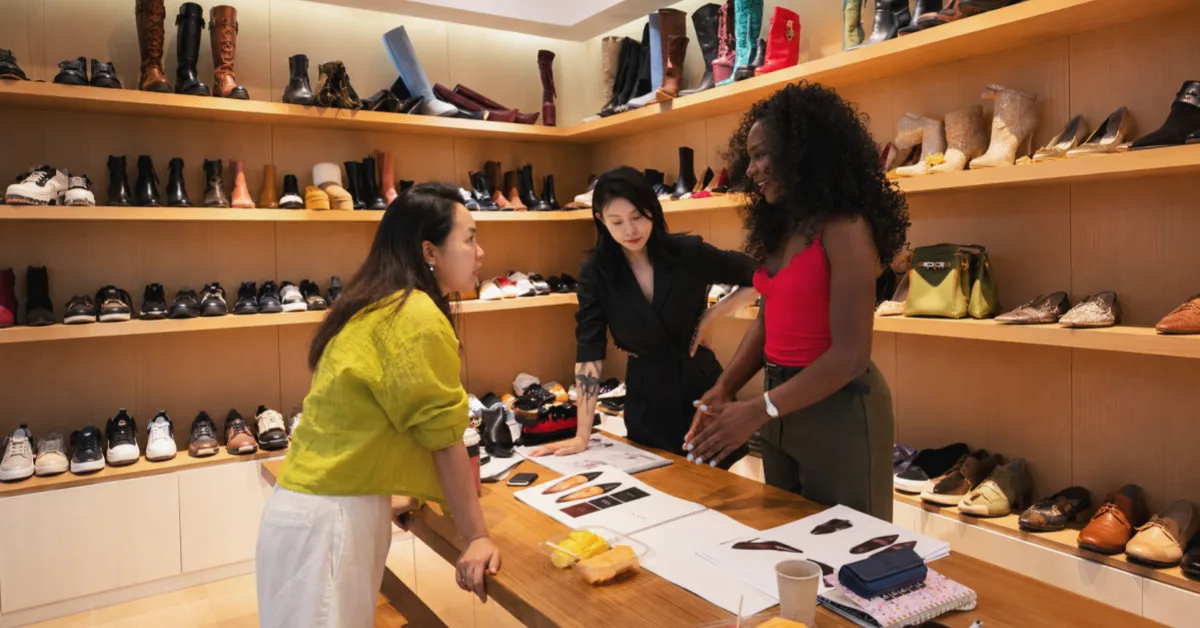
For a brand considering a new manufacturing partner, a visit is an opportunity to move beyond website descriptions, product photographs and online conversations. It allows both sides to discuss designs face to face, examine available materials, review physical samples and identify the practical questions that need to be answered before production can move forward.
The visit brought together several aspects of product development that are closely connected but often difficult to evaluate remotely: material selection, footwear design, sample presentation and communication between the brand and its manufacturing partner.
During the visit, the client examined a range of patterned materials, reviewed footwear samples and looked at product concepts presented on screen. The conversations also provided an opportunity for direct interaction with the HERRAINS team.
These details may appear straightforward, but they matter when developing a product that must reflect a brand's identity while remaining suitable for manufacturing.
A design can look convincing on a computer screen and still present challenges when translated into physical materials. A particular print may look different depending on the material surface, while a combination of colors and textures may require further evaluation before a final sample can be approved.
For this reason, HERRAINS considers direct communication an important part of the development process. The goal is not simply to present finished-looking products, but to help clients understand the decisions involved in turning a design concept into a manufacturable item.

Why Visit a Custom Footwear Manufacturer Before Placing an Order?
Choosing a custom footwear manufacturer involves more than comparing quotations or browsing a catalogue. A quotation can indicate an estimated cost, but it cannot fully demonstrate how a supplier approaches product development, material coordination or design communication.
For emerging brands, these questions are particularly important. They may have a clear creative direction but limited experience with footwear construction, material specifications, sampling requirements or production preparation.
An in-person visit creates space to discuss these issues in greater detail.
Moving beyond online product photographs
Product photographs are useful for evaluating general appearance, but they do not communicate every characteristic of a physical product. Material texture, surface variation, thickness, flexibility and the interaction between different components may require closer examination.
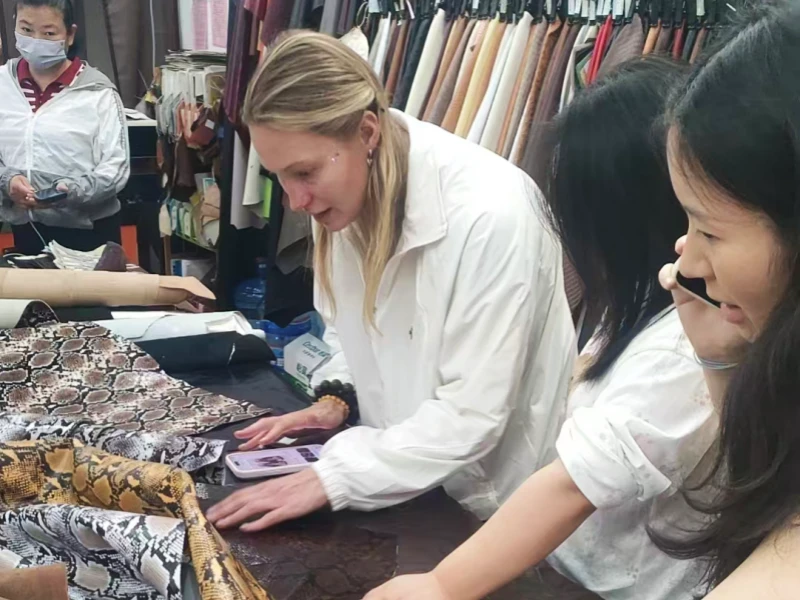
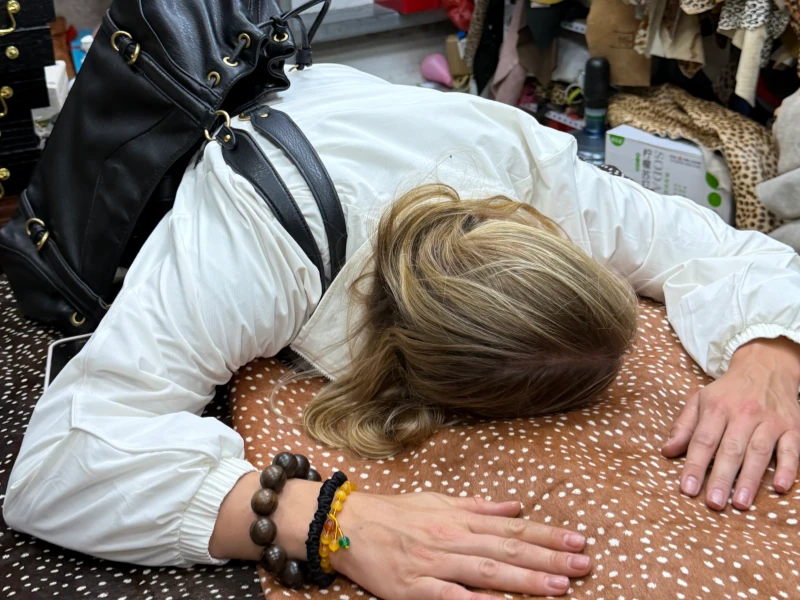
During the HERRAINS visit, the client reviewed patterned materials displayed throughout the material selection area. The collection included animal-inspired prints, contrasting color combinations and different surface patterns.
This provided a practical setting for discussing the relationship between visual direction and material choice. When a brand is developing a distinctive collection, the selected material is not merely a decorative element. It can influence the product's appearance, construction approach and overall positioning.
For example, a design based on a spotted or reptile-inspired pattern needs to be evaluated according to the actual material being considered. The pattern scale, contrast and surface finish can change the visual balance of the finished product.
Reviewing materials in person helps identify these considerations earlier, before decisions become fixed in a sample or production specification.
Understanding how design ideas are discussed
A reliable manufacturing relationship depends on how clearly both parties can communicate.
Clients may describe a product through reference photographs, sketches, digital renderings or verbal explanations. The manufacturing team then needs to understand which elements are essential, which can be adjusted and which require further technical evaluation.
An in-person meeting allows questions to be raised immediately. The client can point to a specific detail, compare alternatives and explain the intended visual effect without relying entirely on written descriptions.
For a brand assessing a custom footwear manufacturer, this communication process is part of the supplier evaluation itself. The quality of the conversation can reveal whether the development team understands the brief, asks relevant questions and recognizes the difference between a visual preference and a manufacturing requirement.
Custom Footwear Manufacturer in China: Reviewing Materials and Product Details
Material selection was one of the visible elements of this October visit. The photographs show the client examining patterned materials arranged throughout the selection area, including spotted, striped and other animal-inspired designs.
These materials demonstrate the variety of visual directions that may be considered when developing fashion footwear and accessories. They also illustrate why material decisions should be discussed in the context of a specific product rather than made independently from its design.
Pattern, color and surface character
A printed material can have a very different effect depending on its background color, pattern density and surface finish. A high-contrast pattern may become the dominant feature of a shoe, while a more restrained version may work as an accent alongside a solid-colored upper.
When developing a product, the brand and manufacturer need to consider how the selected material will interact with the silhouette and other components.
Questions may include:
-
Does the pattern scale suit the size and shape of the intended product?
-
Will the selected color combination preserve the intended visual direction?
-
How will the material work alongside other colors or surface textures?
-
Is the proposed material appropriate for the intended construction?
-
Does the final selection need to be confirmed through a physical sample?
These are practical development questions, not simply aesthetic preferences. Addressing them early can reduce avoidable changes during sampling.
Material selection should support the product concept
A common challenge in custom footwear development is that a reference image communicates appearance without fully explaining the materials or construction behind it.
A client may request a particular texture or finish, but the closest available material may not reproduce the reference exactly. In such cases, the next step is to compare suitable options and clarify which characteristics matter most to the brand.
The objective is not to change the original design direction without approval. It is to identify workable options while preserving the client's essential requirements.
For a custom footwear manufacturer, this distinction matters. Manufacturing feasibility should be discussed transparently, and proposed alternatives should be presented for the client's consideration rather than treated as automatic substitutions.
Reviewing Custom Western Boots: Turning Visual Direction into a Physical Product
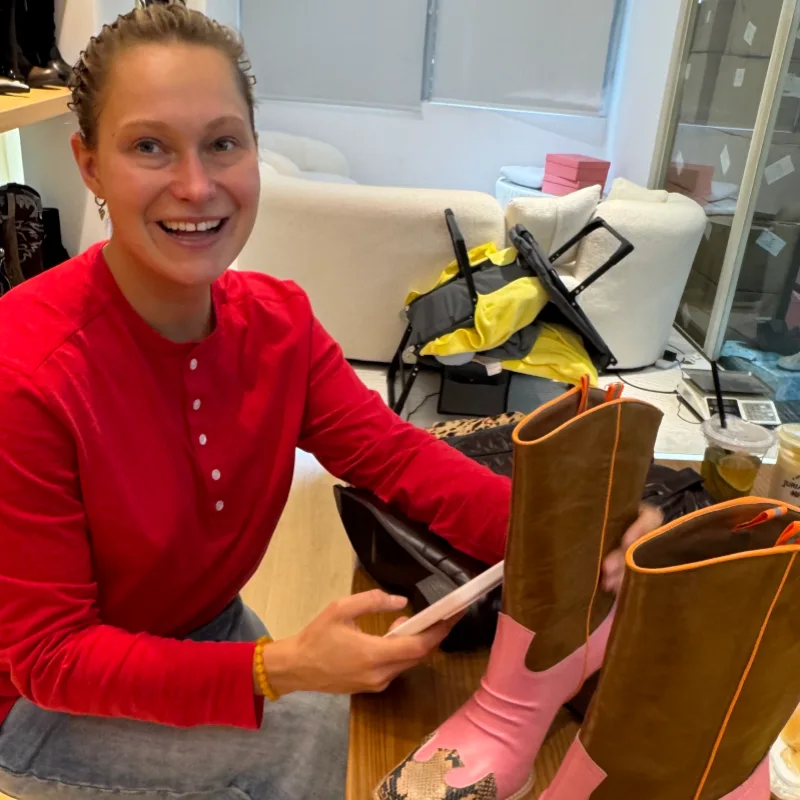
One of the clearest product examples documented during the visit was a pair of western-inspired boots featuring a pink lower section, a contrasting brown upper shaft, patterned toe details and a stacked heel.
The design combines several visual elements within a single product. The contrast between the pink and brown sections creates a strong color division, while the patterned toe introduces another layer of visual interest.
For a brand developing distinctive footwear, a design of this kind raises questions that cannot always be answered by looking at a single image.
Evaluating the relationship between materials and construction
When a boot combines different colors, textures or material types, the development team needs to consider how the components work together.
The placement of material boundaries, the appearance of joining lines, the consistency of color and the relationship between the upper and toe area can all affect the final result.
The visible sample provided a concrete reference for discussing these design relationships. It also offered a useful example of why product development involves more than reproducing a silhouette.
Before a similar design proceeds to production, its final specifications may need to address material selection, component construction, sizing, finishing details and other requirements specific to the product.
The exact requirements depend on the approved design and construction method.
A sample is a reference, not an automatic production approval
A physical sample helps a brand assess whether the product is moving in the intended direction. It can also reveal details that require clarification or adjustment.
However, viewing a sample does not automatically confirm that every specification has been approved or that the product is ready for bulk production.
A disciplined development process distinguishes between reviewing a sample, confirming the design, resolving outstanding issues and approving the final production specifications.
This distinction is important for brands working with a new supplier. It creates a clearer basis for deciding when development is complete and which details must remain consistent in subsequent production.
The western boot shown during the visit is therefore best understood as a real product reference within the discussion, rather than evidence of an unverified order or completed production run.
How a Custom Footwear Manufacturer Connects Design Review with Product Development
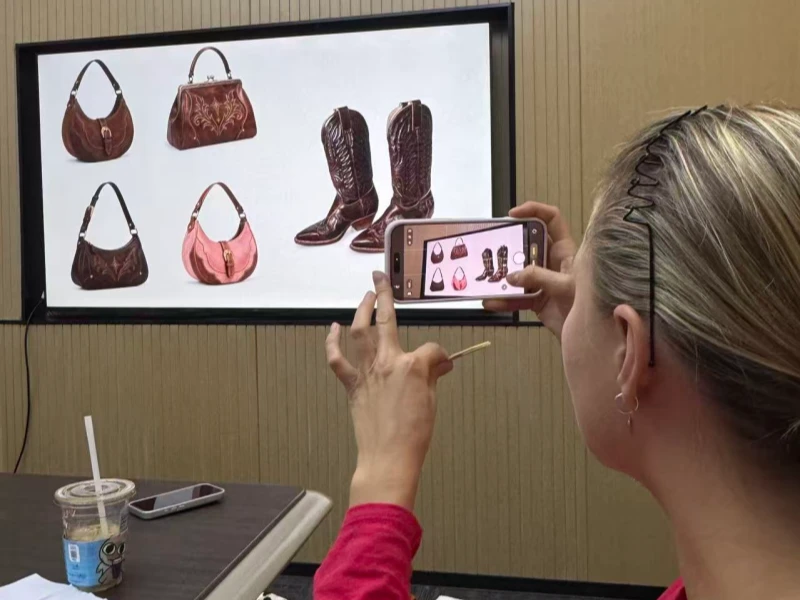
The visit also included reviewing footwear and handbag concepts displayed on a screen. The photographs show the client examining a presentation containing several handbag designs and western-style boots.
This is a familiar part of product development: visual concepts help establish the direction of a collection before every technical detail has been finalized.
For a brand, a digital presentation can communicate shape, color direction and the relationship between different products. For a manufacturer, it provides a starting point for identifying the information needed to develop a physical sample.
The two stages serve different purposes.
A rendering helps communicate what the product should look like. A physical sample helps the client assess how the selected materials, components and construction choices work together.
Moving between these stages requires clear communication.
For example, if a client wants several products to share a recognizable visual identity, the team may need to discuss which features should remain consistent across the collection and which can vary by product. Color combinations, material choices, hardware and surface patterns may all contribute to the final direction.
Not every design decision needs to be settled during an initial meeting. Some questions are better resolved through material comparisons or sample revisions.
What matters is that open questions are identified and followed up, rather than being treated as if they have already been resolved.
For HERRAINS, this is an important principle of custom product development: visual direction, material decisions and sample evaluation should remain connected throughout the process.
What Brands Should Evaluate During a Footwear Supplier Visit
A supplier visit is most useful when it helps a brand evaluate specific aspects of a potential manufacturing relationship.
The purpose is not simply to collect photographs or receive a general introduction. It is to determine whether the supplier can understand the product brief, communicate clearly and support the steps required to develop the intended product.
Material understanding
Brands should ask how material options are evaluated against their design requirements. If a product depends on a particular texture, print or color combination, the discussion should establish what can be confirmed from available materials and what requires further sampling.
Clients should also clarify whether a proposed material is confirmed for the intended application or remains an option that needs testing.
Sample development and revisions
A useful supplier discussion should establish how the sample process works, what information the client needs to provide and how feedback will be handled.
Reference images alone may not communicate every measurement or construction detail. Depending on the design, additional specifications, annotations or physical references may be needed.
It is equally important to clarify how changes are documented. If a detail is revised after a sample review, both sides should understand which version reflects the current requirements.
Communication and decision-making
A manufacturing partner needs to do more than receive instructions. The team should be able to identify unanswered questions, explain practical constraints and communicate when a decision requires further evaluation.
During a visit, brands can observe how the team responds to questions and whether the discussion remains focused on the product brief.
This does not guarantee future performance, but it provides useful information that cannot be obtained from a price list alone.
Production readiness
Sample approval and production readiness are related but separate milestones.
Before bulk production begins, the brand and manufacturer should establish the approved materials, construction details, size specifications, finishing requirements and applicable quality criteria.
The specific checklist depends on the product. A detailed design with multiple material combinations may require different checks from a simpler, more standardized style.
A responsible custom footwear manufacturer should make these requirements clear before production commitments are finalized.
Evidence beyond the meeting
A visit is one source of information, not a complete substitute for supplier due diligence.
Brands should also review relevant samples, confirm the scope of the manufacturer's services, discuss quality-control procedures and document important commercial and technical agreements.
Where production capacity, certifications, testing standards or previous customer results are important to the decision, those claims should be verified through appropriate evidence.
A productive visit helps establish the questions that need answers. It should not be used to imply that every aspect of a supplier has been independently verified.
Building Trust Through Face-to-Face Communication
The photographs from the October visit capture both product-focused discussions and informal moments between the client and the HERRAINS team.
There are images of material selection, product review, a meeting and a group photograph. Together, they document a real interaction between a prospective or existing business contact and the people involved in the discussion.
These moments matter because international manufacturing relationships often begin remotely. Email, messaging applications, digital presentations and sample photographs make communication possible across borders, but they cannot always replace the clarity of a direct conversation.
A client may need to explain why a particular detail is important to the brand. The manufacturer may need to clarify what additional information is required to evaluate it properly. Face-to-face communication can make these exchanges more direct and reduce the risk of different interpretations.
Trust, however, should not depend on hospitality or a photograph alone.
For a long-term partnership, trust is built through consistent communication, realistic expectations, documented decisions and the ability to address problems when they arise. The visit is one step in that process, providing an opportunity for both sides to understand each other more clearly.
For
A manufacturing relationship becomes stronger when both sides understand not only the product, but also the decisions behind it. The October visit gave the Russian client an opportunity to see materials and product concepts in person, while allowing the HERRAINS team to discuss the client's direction directly.
The next stage of any project depends on the specific requirements agreed between the parties. Design confirmation, sample development, material approval and production planning should each be handled with clear communication and documented decisions.
HERRAINS: A Custom Footwear Manufacturer Focused on Brand Development
HERRAINS works with brands seeking custom footwear development, OEM production and private label manufacturing. The objective is to help clients move from an initial product concept toward a clearly defined, manufacturable design.
For some brands, the process begins with a reference image and a general creative direction. Others arrive with established designs, material preferences and more detailed specifications. Each starting point requires a different level of discussion before the product can move forward.
Depending on the project, the development process may involve:
-
Reviewing the client's design references and intended product positioning.
-
Discussing suitable materials, colors, textures and components.
-
Clarifying construction details and identifying questions that require technical review.
-
Developing physical samples for evaluation.
-
Recording feedback and confirming agreed revisions.
-
Establishing final specifications and quality requirements before bulk production.
These steps are not identical for every product. A distinctive western boot, for example, may require different development considerations from a simpler flat shoe or sandal. The process should reflect the product's actual construction and the brand's requirements rather than follow a generic checklist without adjustment.
For HERRAINS, the purpose of these discussions is to establish a practical foundation for collaboration. Creative direction must be understood clearly, manufacturing questions must be addressed realistically, and important decisions must be confirmed before they become production requirements.
The October 2026 visit from Russia reflects this approach to communication. Reviewing physical materials, examining footwear samples and discussing digital product concepts created an opportunity to connect visual ideas with the practical questions involved in product development.
What This Visit Means for Brands Looking for a Manufacturing Partner
For international brands, choosing a supplier is a decision that affects more than the unit price of a product. It can influence development timelines, sampling costs, material consistency, production planning and the amount of coordination required from the brand's own team.
An in-person visit can help make this decision more informed, but it should be viewed as one part of a broader evaluation.
Brands should still establish clear commercial terms, confirm the specifications of the intended products, understand the sampling and approval process, and verify any claims about production capabilities or quality standards that are important to their business.
The most useful supplier relationship is one in which questions can be raised early, limitations are communicated honestly and changes are documented rather than left to interpretation.
This is particularly relevant for brands developing distinctive footwear. When a product depends on a specific material, unusual color combination or carefully defined silhouette, small misunderstandings can lead to unnecessary sample revisions or differences between the approved design and the final product.
Working with a custom footwear manufacturer should therefore involve more than sending a reference image and waiting for a quotation. It should be a structured exchange of design information, manufacturing knowledge and feedback.
The photographs from the October visit show the beginning of that exchange: a client reviewing materials, examining product examples and discussing designs directly with the team.
For HERRAINS, these real interactions are an important part of building business relationships across international markets. They provide a foundation for understanding the client's expectations before the next development decisions are made.
Planning Your Own Custom Footwear Project with HERRAINS
If you are developing a footwear brand, preparing a new collection or looking for a manufacturing partner for an existing business, the first step is to define the product you want to make.
You do not need to have every technical detail finalized before starting a conversation. However, sharing the information already available will help establish whether the project is suitable for further development.
Useful starting information includes:
-
Product category: For example, western boots, leather boots, loafers, sandals, flats or high heels.
-
Design references: Sketches, reference photographs, technical drawings or existing samples.
-
Material preferences: Leather, suede, printed materials or other proposed materials.
-
Brand positioning: Your intended customer, retail price range and overall design direction.
-
Initial order expectations: Your estimated quantity, size range and target launch schedule.
-
Development stage: Whether you are exploring an initial concept, preparing a first sample or developing an established collection.
The more clearly these details are communicated, the easier it becomes to identify the questions that need to be resolved before sampling and production.
HERRAINS works with brands to discuss custom footwear development and manufacturing requirements. If you have a product concept you would like to explore, share your design references and project details with our team.
Ready to discuss your next footwear collection?
Contact HERRAINS to discuss your custom footwear project, review your development requirements and determine the appropriate next steps.
Discuss Your Custom Footwear Project
Frequently Asked Questions
1. Why should a brand visit a custom footwear manufacturer in person?
An in-person visit allows a brand to examine physical materials and samples, discuss design requirements directly and better understand the supplier's working approach. It complements online communication and other supplier due diligence.
2. Can HERRAINS develop footwear from a client's own design?
HERRAINS works with brands on custom footwear development and OEM manufacturing. Project feasibility depends on the design, materials, construction requirements and available development resources. Clients should share their references and specifications for an initial assessment.
3. What should I prepare before contacting a footwear manufacturer?
Prepare any available sketches, reference photographs, product specifications, preferred materials, estimated quantities and target launch dates. If some details are undecided, identify them so they can be discussed during the initial consultation.
4. Why is material selection important in custom footwear development?
Materials affect the product's appearance and may influence its construction, finishing and manufacturing requirements. Evaluating material options against the intended design helps brands make better-informed decisions before finalizing a sample.
5. Does reviewing a sample mean the product is ready for bulk production?
Not necessarily. A sample must be evaluated against the agreed requirements. Outstanding revisions, material choices, sizing details and quality criteria should be resolved before final production approval.
6. How can a brand evaluate a manufacturing partner beyond the initial visit?
Review relevant samples, clarify the supplier's actual capabilities, discuss quality-control procedures and document technical and commercial agreements. Any important claims about certifications, testing or production capacity should be verified through appropriate evidence.
HERRAINS is a footwear and handbag manufacturing partner serving brands that need custom product development, OEM manufacturing and private label production. We focus on helping clients clarify product requirements, evaluate design options and establish a practical path from concept to production.
If you are looking for a custom footwear manufacturer in China, contact HERRAINS to discuss your design, material preferences and manufacturing requirements.