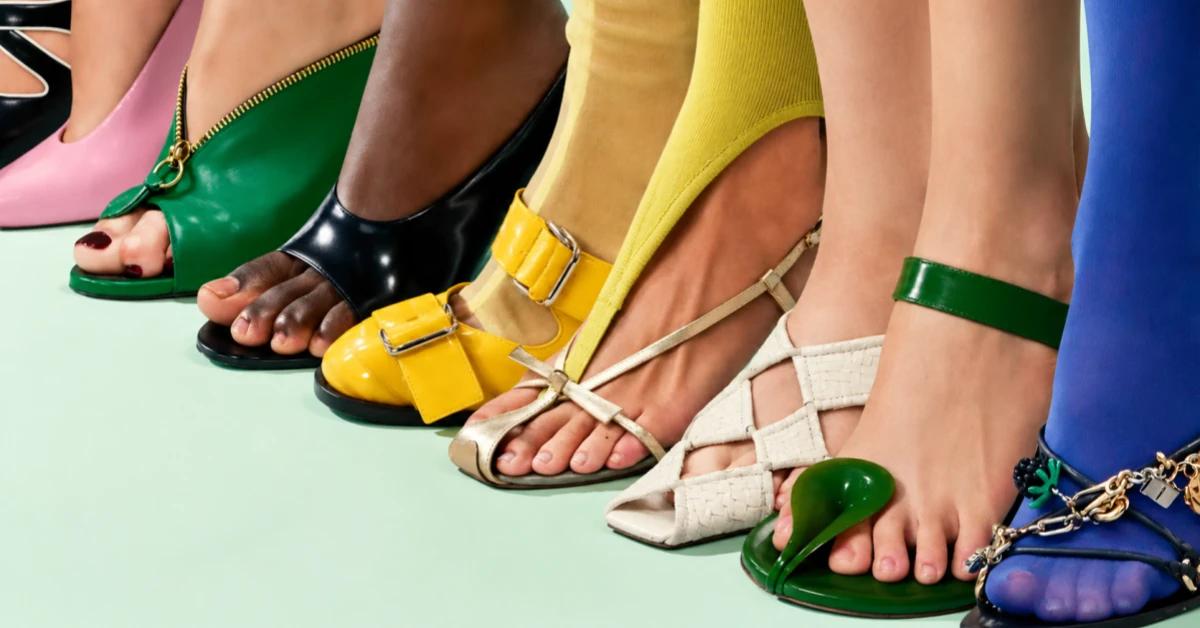

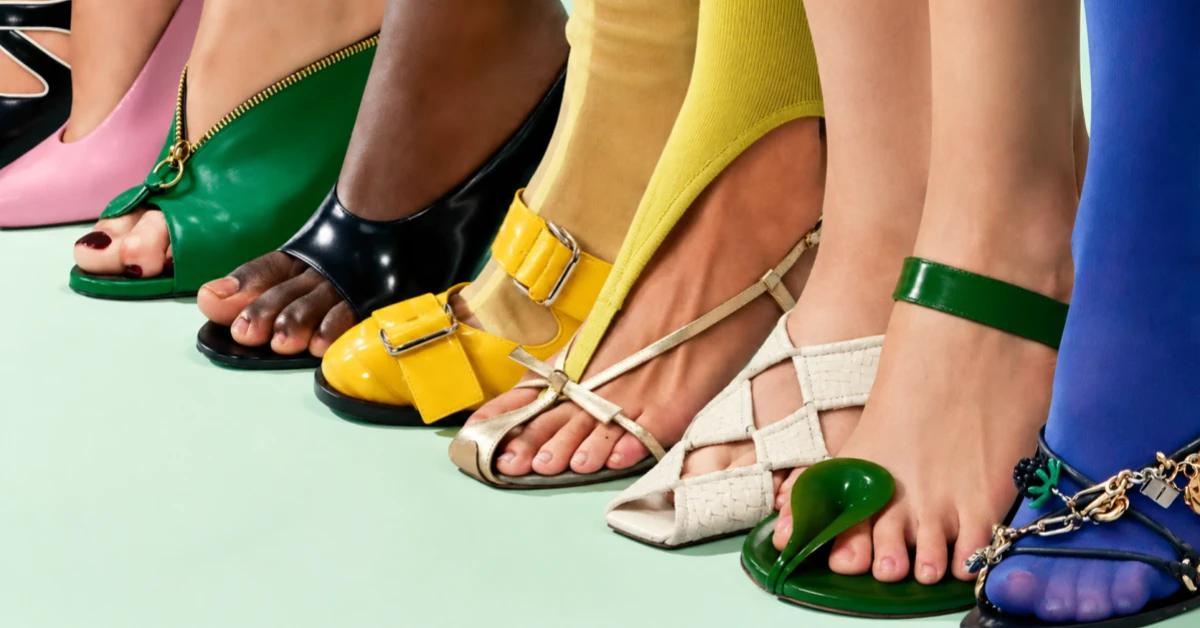
The Spring/Summer 2027 season closed across New York, Milan, Paris and London with a clear signal: footwear is no longer a finishing detail. It has become the narrative core of the look.
For independent fashion brand founders and designers considering their next collection, the runway is not just inspiration — it is a product development map. The shapes, heel structures and construction methods shown this season will define what buyers expect on the market floor in early 2027. If you are planning a first sample or scaling an existing line, understanding these trends now gives you a six-to-nine-month development advantage.
Why the 2027 Spring/Summer Footwear Trends Matter More Than Most
Footwear is absorbing demand that used to flow toward handbags. As luxury bag prices continue to climb, consumers are shifting toward footwear as a more accessible expression of the same aesthetic ambition. A well-designed shoe carries the same desire signal as a statement bag — at a price point that feels within reach.
The result is a season where footwear carried unusual weight on the runway. At several shows, the shoes commanded as much editorial attention as the clothing. For emerging brand founders, this is the window.
2027 Spring/Summer Footwear Trends: Minimal vs. Maximal
SS27 did not commit to a single direction. Instead, it presented a deliberate tension between two poles — and a rich middle ground that is often more commercially relevant than either extreme.
Minimal pole: Hermès anchored the season with flat sandals described as "air" — bare, fine-strapped, wound at the ankle. The message was reduction: footwear returning to the body rather than overpowering it.
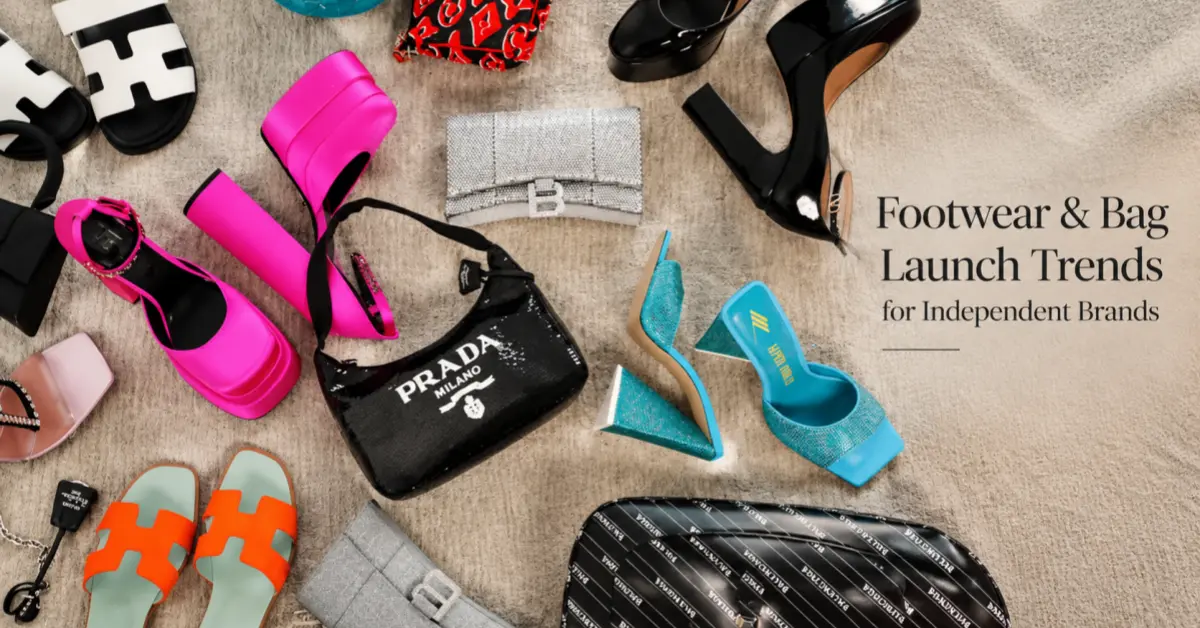
Maximal pole: Prada revived its 2007 curved banana heel. Givenchy ran a diagonal gold zip across the vamp. Saint Laurent pushed sculptural serpent heels and jewel embellishment into the territory of wearable art.
The middle ground — where most commercial opportunity lives — includes:
- Ballet flats with athletic soles: the "sneakerina" hybrid, now showing significant search volume growth
- Mary Janes, mules and loafers recut with low heels, pointed toes or open backs
- Proportional play: familiar silhouettes made unfamiliar by adjusting toe box length, heel placement or strap weight
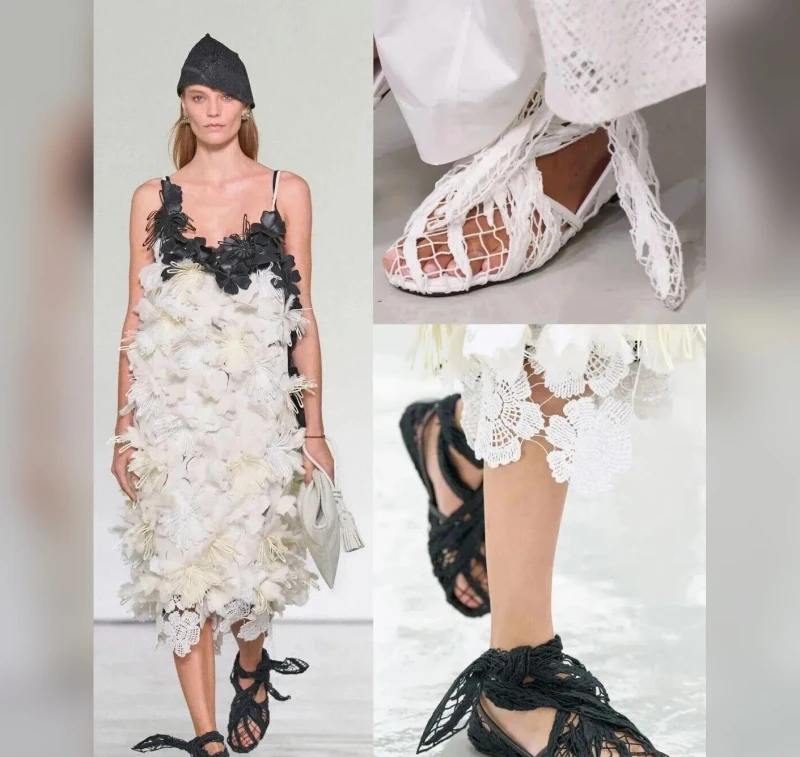
16 Brands, Four Runway Cities: Key Observations
Part One covers Balenciaga through Jacquemus. Part Two will cover the remaining 16 brands.
Balenciaga
Silhouette deconstruction continues. Watch the toe box geometry and platform sole relationship — useful reference for structured casual footwear development.
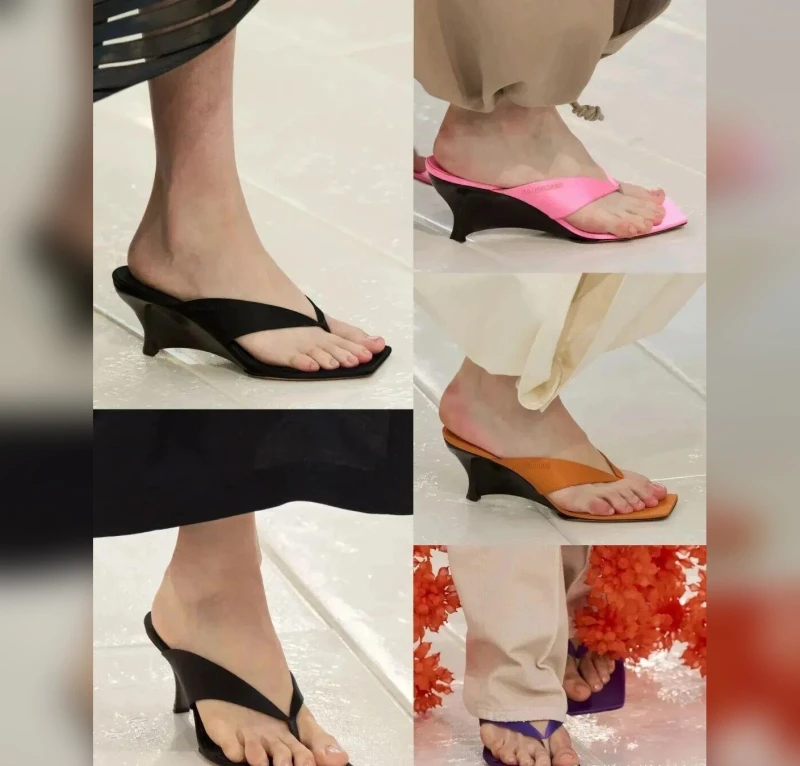
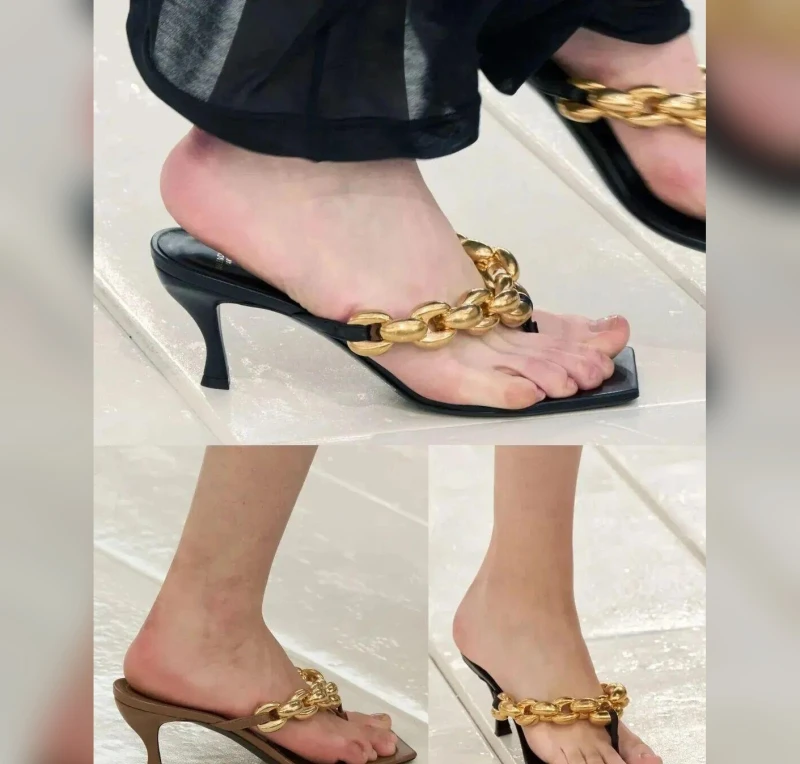
Bottega Veneta
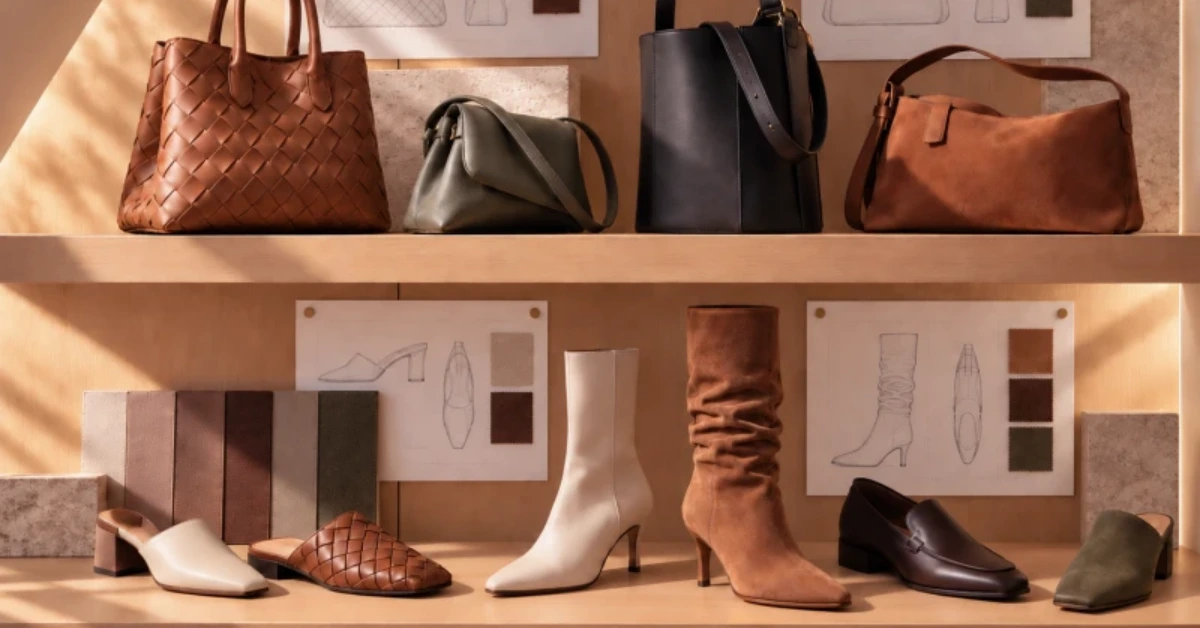
Leather weave construction applied to footwear, not just bags. If you are developing a coordinated shoe-and-bag collection, this season's Bottega provides strong material and texture alignment references.
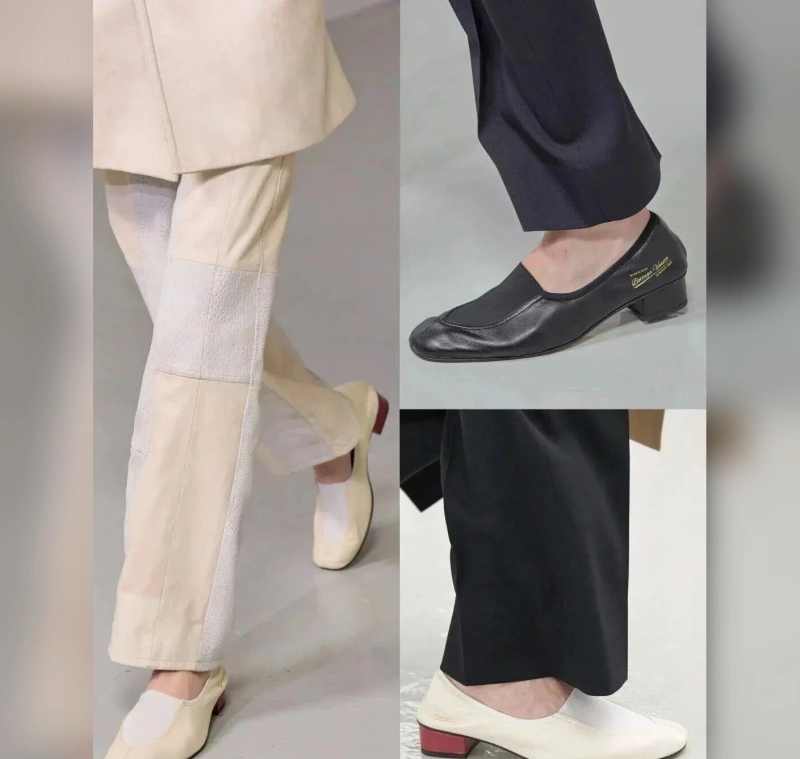
Burberry
Country-to-city transition: outdoor construction language (lugged soles, reinforced uppers) delivered in refined materials. Relevant for brands targeting UK and Northern European markets.
Calvin Klein
Architectural minimalism. Clean lines, restrained color. Strong reference for private label brands positioning in the premium basics space.
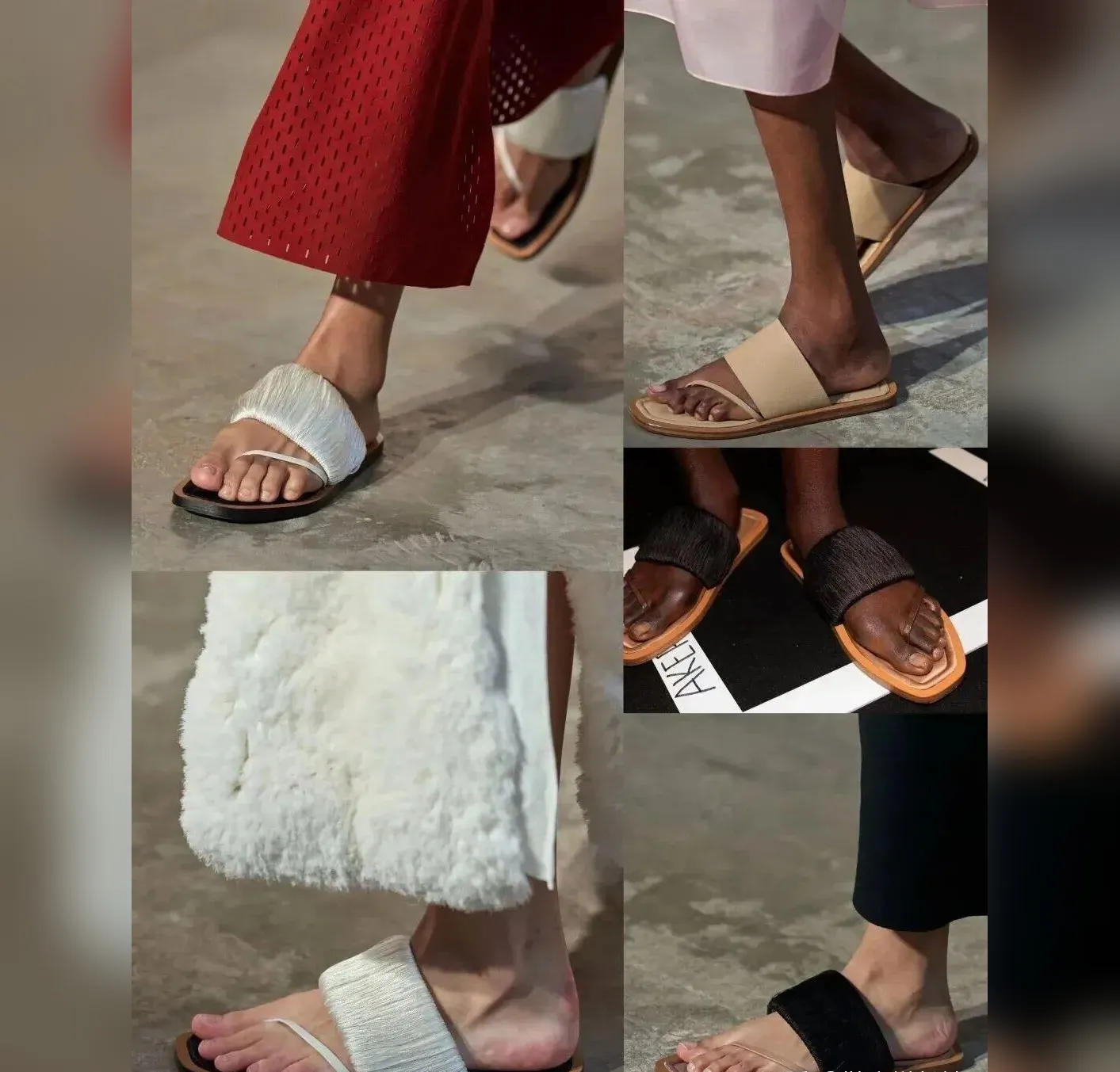
Celine
Consistent with the house's long-term direction: precise cuts, tonal color, functional elegance. Reliable benchmark for designing for the professional women's market.
Chanel
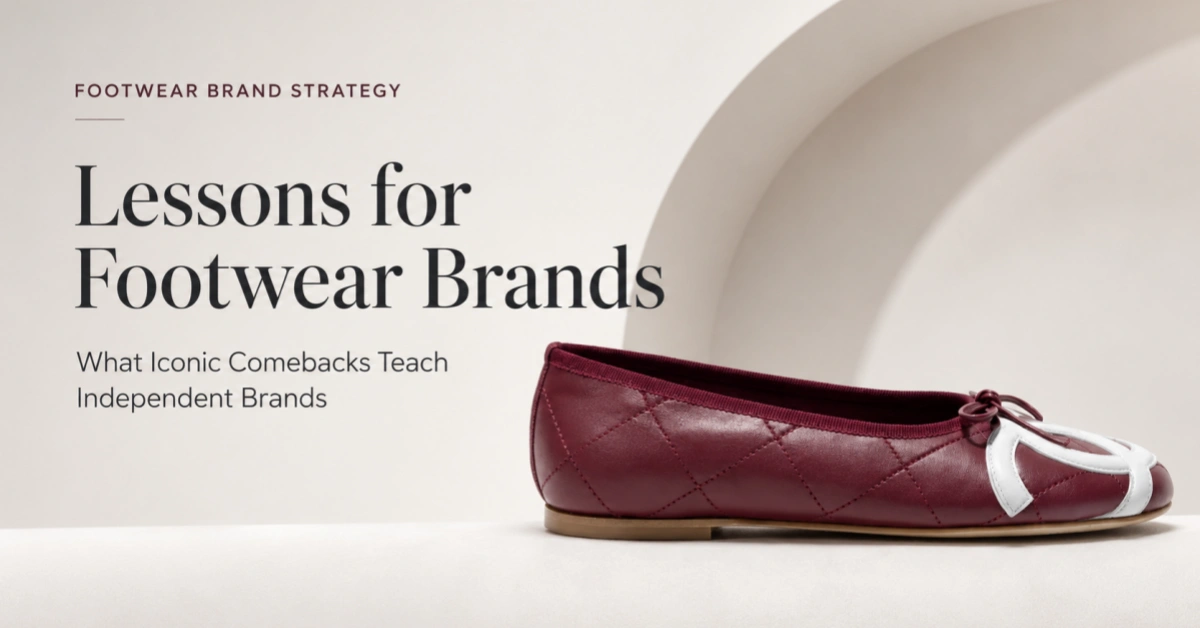
Two-tone slingbacks remain, but with updated toe shapes and refined heel proportions. The Chanel shoe continues to be one of the clearest models for how classical construction can absorb seasonal updates without losing brand identity.
Chloé
Bohemian refined: natural materials, earthy tones, casual silhouettes elevated by construction quality. Strong reference for designers working in the sustainable or artisanal-adjacent space.
Dior
Feminine technical: the D-shaped toe, refined block heel and careful ankle strap placement continue. Note the consistent investment in heel tip design across seasons — a detail that significantly affects the perceived quality of a shoe.
Dries Van Noten
Pattern and material collision: Dries pushed unexpected combinations of textile and leather, open and closed construction. Useful reference for designers building a distinct visual identity rather than following a trend.
Fendi
The baguette logic applied to footwear: hardware and clasp-adjacent details on sandals and mules. For brands looking to develop coordinated collections, Fendi's cross-category hardware consistency is instructive.
Ferragamo
Gancini hardware continues to evolve. The heel profile — stable, refined, with clear brand attribution — is a strong case study in how a structural element can function as brand equity.
Gabriela Hearst
Sustainability without visual compromise. Clean construction, considered materials, nothing performative. Relevant for brands that want to communicate responsibility through quality rather than messaging.
Givenchy
The diagonal zip as a design statement: a structural element repositioned as the primary visual moment. Useful reference for founders thinking about how a single construction detail can define a shoe's identity.
Gucci
Multiple directions held in one collection: classic horsebit alongside experimental silhouettes. Useful for understanding how a brand can serve different consumer segments within one season.
Hermès
The minimal anchor of the season. Fine straps, flat construction, bare-foot sensibility. For brands developing sandal or warm-weather lines, this is the high-end benchmark for restraint.
Jacquemus
Extreme proportions — very small, very bold — executed with commercial awareness. Jacquemus continues to demonstrate that a strong point of view drives demand more reliably than trend-following.
What These 2027 Spring/Summer Footwear Trends Mean for Your Brand
The "sneakerina" hybrid is moving from runway to retail
Ballet flat base + athletic sole construction is already showing search volume increases. If you are considering a hybrid silhouette for SS27, the development window for sampling is now. The construction challenge is sole attachment and flex point alignment — both solvable with the right factory partner.
Heel structure is the new differentiator
Sculptural, curved, serpentine and architectural heels dominated the maximal end of the season. For brands in the mid-to-high price tier, the heel profile is increasingly the primary brand signal. This requires development investment: last modification, heel mold, stability testing. Worth the cost if your brand lives in this territory.
Coordinated shoe-and-bag collections are gaining runway credibility
Bottega Veneta, Fendi and others pushed cross-category material and hardware alignment harder than in previous seasons. If you are developing footwear and bags under one brand, SS27 provides strong creative justification to align construction language across both categories.
Minimalism requires more precision, not less development time
The Hermès and Calvin Klein end of the spectrum may look simple, but simplicity at premium price points demands tighter material specification, more exacting last development and closer QC at every production stage. Do not underestimate the sampling investment required to hit clean minimalism consistently.
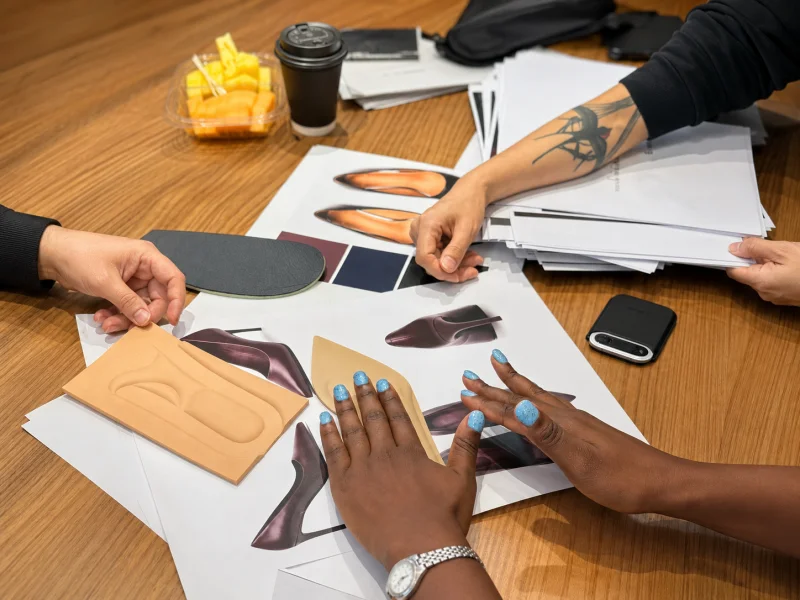
From Runway to First Sample: Where to Start
The gap between a runway reference and a production-ready sample is where most emerging brands lose time — and money. The typical failure points are:
- Selecting a heel structure without verifying that your factory has the last or mold capability to build it
- Committing to a material before confirming its availability at your target price point
- Beginning development without a clear feasibility review of construction complexity vs. your first-order MOQ
If any of the silhouettes or structures from SS27 have caught your attention, the right next step is a design feasibility review — not a quote request.
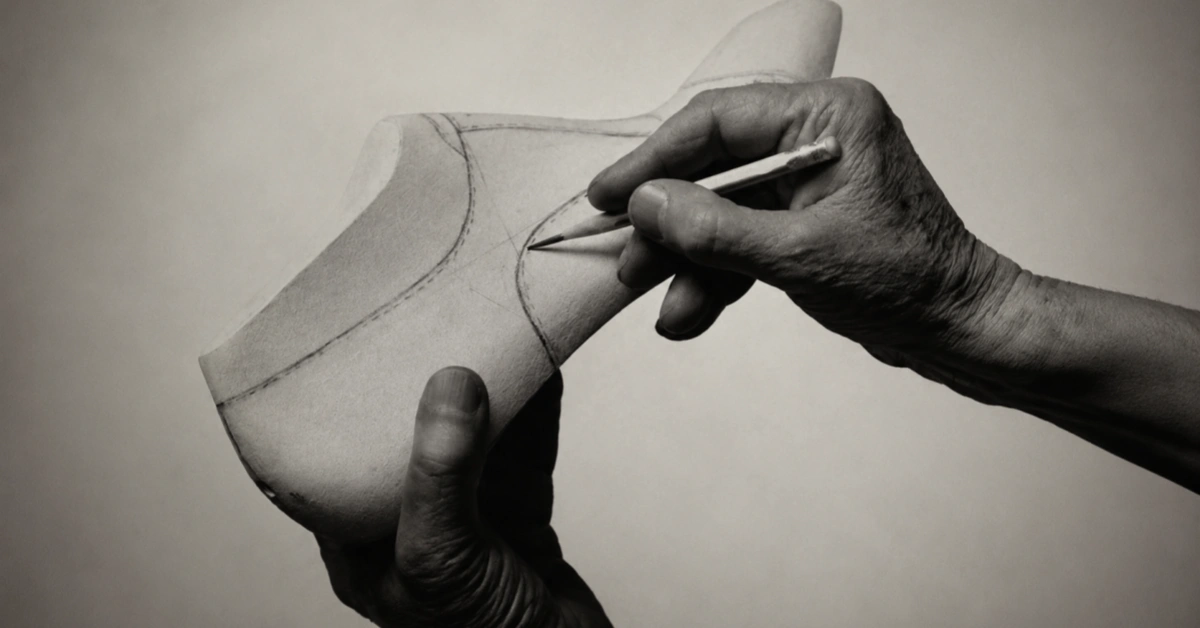
A feasibility review looks at whether your chosen structure can be built at the quality level you need, within the cost frame your market will support, at the quantities that make commercial sense for a first order.
Submit your reference images or sketches for a free design feasibility review →
10 FAQ: 2027 Spring/Summer Footwear Trends and Brand Development
Q1: Which SS27 trends are most commercially viable for an independent brand launching a first collection?
A: The "sneakerina" hybrid and the refined low-heel mule are the strongest commercial entry points. Both have clear consumer demand signals, manageable construction complexity and realistic first-order MOQs for emerging brands.
Q2: How long does it take to develop a sculptural heel style from reference to production sample?
A: Expect 6–10 weeks for a new heel structure requiring custom mold development. If you are adapting an existing heel profile, 4–6 weeks for a first sample is realistic. Build this timeline into your collection calendar now if you are targeting SS27 deliveries.
Q3: What is the "sneakerina" silhouette, and can it be produced at small quantities?
A: The sneakerina combines a ballet flat upper with an athletic or lug sole. Construction-wise, the key challenge is the sole attachment and flex. Yes, it can be produced at first-order quantities — typically starting from 100–200 pairs per style — with the right factory partner.
Q4: How do I know if a heel structure I saw on the runway is buildable at my price point?
A: You need a construction feasibility review. Send us your reference image. We will assess last requirements, mold costs, material specifications and the minimum quantity needed to make the structure financially viable for your brand.
Q5: Should I develop footwear and bags together for SS27, or focus on one category first?
A: If your brand identity supports both, developing them together allows you to align construction language and materials — which SS27 rewards. If you are at the very beginning, focus on the category where your design vision is clearest, then extend to the second category once sampling is approved.
Q6: What materials were dominant in SS27 footwear that I should be sourcing now?
A: Fine smooth leathers for minimal styles, textured and woven leathers for the Bottega-influenced direction, and unexpected textile-leather combinations for the editorial tier. Natural and earthy tones dominated mid-market positioning. Source materials now if you are targeting any of these directions — lead times for specialty leathers run 8–12 weeks.
Q7: How do runway trends translate into what buyers actually order?
A: With a 6–9 month lag. Runway shows influence editorial and social media immediately, but retail buyer orders follow 2–3 seasons later. The commercial sweet spot is one season behind the runway edge — informed by the trend but translated into a wearable, producible product.
Q8: What does it cost to develop a custom heel mold for a sculptural design?
A: Heel mold development typically ranges from USD 800–2,500 depending on complexity and material (resin vs. steel). This cost is amortised across your production run. For first orders under 300 pairs, the mold cost will represent a meaningful share of your unit cost — factor this into your pricing model.
Q9: Can I use a runway image as a reference for my own design development?
A: Yes — as a structural and aesthetic reference. You cannot reproduce a trademarked silhouette or protected design element directly. We recommend using runway references to define construction goals (heel height, toe shape, strap placement) and then developing your own design language around those structural parameters.
Q10: How do I choose between working with a factory directly and working with a brand development partner like Herrains?
A: Working with a factory directly gives you more control over pricing but requires you to manage the full development process: last sourcing, material specification, QC criteria, sampling rounds and production communication. A development partner handles that infrastructure and adds a feasibility layer before you commit to sampling costs. For first-time founders or brands entering a new product category, the development partner model typically reduces total risk.
Related Reading
- How to Validate Your Footwear Design Before Sampling
- Transparent Sample Development: What to Expect
- First-Order Production Planning for Shoe and Bag Brands
- Custom Shoe and Bag Matching Collections
Ready to develop your SS27 collection? Share your reference images and we will review design feasibility, material direction and production readiness at no cost.