

Every year, a wave of trend reports lands in a founder's inbox: runway recaps, Pinterest boards, "top 10 shapes for next season." Almost none of it says what an independent brand actually needs to know — which of these directions is worth a real production commitment, and which is a scroll-stopping photo that will not sell past the first drop.
This guide is not a moodboard. It is a filter. We look at the early, credible signals shaping 2027 footwear and bag trends for new brands, and translate each one into a real question: is this buildable at your MOQ, sellable at your price point, and worth the sample cycle it will cost you? We help you pick your 2027 launch styles — validated trends, not guesswork.
Why "What's Trending" Is the Wrong First Question
Ask a founder what shoes to launch in 2027 and most will describe a picture from their feed. That is a starting point, not a decision. A trend becomes a viable product only after it survives four questions that have nothing to do with how it looks on a runway:
- Can it be built at your order volume? A woven texture that requires hand-assembly may not be commercially viable at 300 units.
- Does it fit your customer's actual habits? An oversized carryall is only "on trend" if your buyer actually wants to carry more, not just look at more.
- What does it cost to sample versus to be wrong? Chasing three unrelated trends at once triples your sample risk for one launch.
- Will it still sell in month six? A trend with a six-week shelf life is a content moment, not a collection anchor.
This is the difference between "looking at trends" and having a validated pick. The rest of this guide runs 2027's strongest footwear and bag directions through that filter.
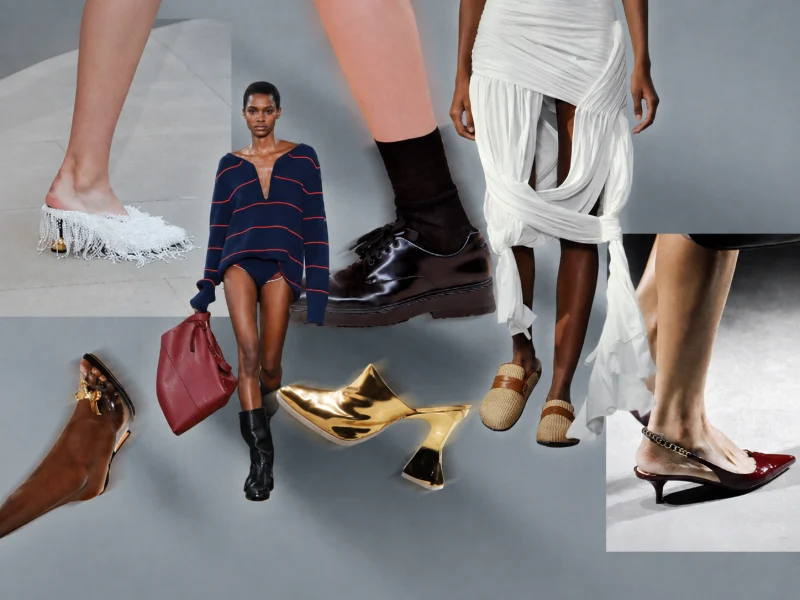
2027 Footwear Trends Worth Building: 4 Directions That Pass the Filter
Industry forecasting from AEC and Trendstop's AW27/28 footwear briefing points to four themes shaping the season — each translated below into what it means for a new brand's first or next production run.
Comfort-First Construction, Not Just Comfort Marketing
Stretch uppers, sock-like constructions, and embossed jacquards that hug the foot are moving from performance footwear into everyday styles. For a new brand, this is a durable direction because comfort is a repeat-purchase driver, not a seasonal photo op. Trending shoe styles to sell in 2027 in this category include knit-panel sneakers, stretch-collar boots, and low-heel styles with sock-fit uppers.
Filter check: stretch and knit constructions typically require less tooling variation than a hard structural shoe, which makes this one of the more MOQ-friendly 2027 directions for a first order.
Repairable and Modular Details
Interchangeable layers and mechanically assembled components — seen in modular designs like Camper's Roku — signal a shift toward footwear that visibly communicates durability. A new brand does not need a fully modular shoe to use this signal; a replaceable strap, a swappable insole, or a visible mechanical fastening detail can borrow the same story at a fraction of the tooling cost.
Filter check: full modularity is a high-tooling-cost bet best suited to brands already past their first 1,000 pairs. Sketch-stage founders should borrow the visual language, not the full engineering.
Sensory Materials and Tactile Surfaces
Micro-relief textures, quilted surfaces, and materials chosen for how they feel as much as how they photograph are a defining thread for AW27/28. Caramel, cinnamon, chocolate, berry red, and deep mauve are emerging as the leather tones to watch, paired with technical black and petrol green as anchor bases.
Filter check: a tactile material swap on an existing last is one of the lowest-risk ways to apply a 2027 footwear trend — you are changing the surface, not re-engineering the structure.
Reinterpreted Nostalgia
70s and 90s references reworked with contemporary proportions — micro-heels, mixed-era material pairings, and deliberately imperfect finishes — are translating into shapes that feel familiar enough to sell immediately, while still reading as new.
Filter check: nostalgia-driven silhouettes tend to have longer commercial life than pure novelty shapes, because the reference point is already culturally proven.
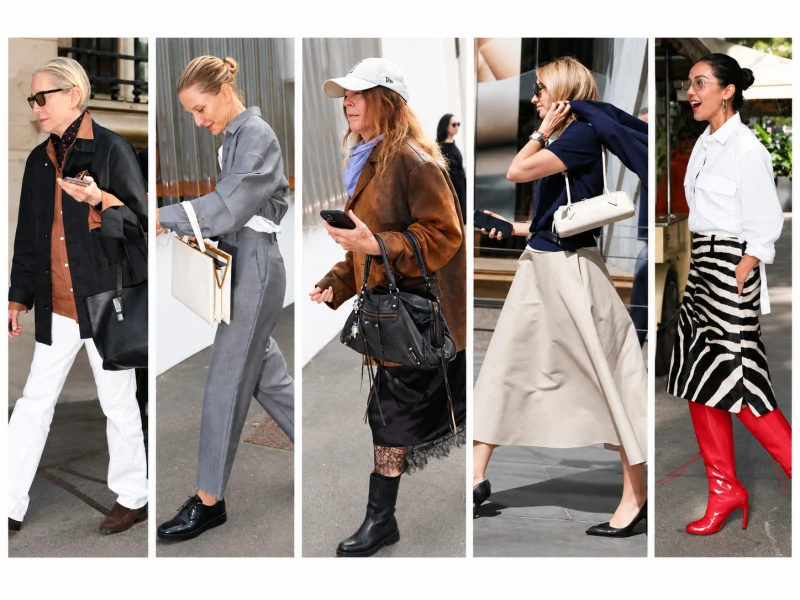
2027 Bag Trends Worth Building: 5 Directions That Pass the Filter
Early Resort 2027 and Spring/Summer 2027 signals point to a handbag market balancing practicality with stronger personality. Five directions stand out for independent brands evaluating what to launch next.
Oversized Shoulder Bags and Practical Carryalls
Demand for bags that carry more without reading as basic luggage remains one of the clearest signals for 2027. For a new brand, the risk is not the trend itself but scaling a small pattern up without re-checking weight distribution, strap comfort, and reinforcement.
Filter check: start with one core oversized size rather than producing every colorway at maximum dimensions — this controls both material cost and packaging volume.
Slouchy Top-Handle and Hobo Shapes
Soft structure is outperforming both rigid construction and shapeless fabric bags. The commercial risk here is a sample that looks "unfinished" rather than intentionally relaxed — the difference comes down to controlled reinforcement at the handle and base, not the softness of the main material.
East-West and Elongated Silhouettes
Wider-than-tall proportions are adaptable across price points, from slim zipper shoulder bags to structured doctor-bag shapes. This is one of the more forgiving 2027 directions for a first order because the same pattern logic can flex across several finished styles.
Woven, Raffia, and Handcrafted-Looking Surfaces
Texture is becoming a core identity marker rather than a seasonal accent. The commercial risk is treating "handwoven-looking" as one material choice when it is actually several different production methods — woven strips, laminated panels, or embossing — each with a different cost and lead time.
Filter check: apply woven texture to a front panel, handle, or trim before committing to a fully woven body construction.
Convertible, Commuter-Focused Design
Filter check: one bag expected to work for commuting, travel, and daily use is a durable functional trend, not a passing shape. Detachable straps, laptop compartments, and adjustable gussets solve a real problem — which is why this direction tends to outlast single-season silhouette trends.
Not Sure Which 2027 Direction Fits Your Brand?
We help you pick your 2027 launch styles — validated trends, not guesswork. Share your target customer and price point, and we will confirm which of these directions is buildable at your order volume before you commit to a sample.
Create A Shoe Line → Create A Bag Line →
How to Turn a Trend List Into a Launch Decision
A trend report becomes useful the moment you stop asking "what's popular" and start asking "what should we build first." That decision depends on three inputs most trend content skips entirely.
| Input | Why It Changes the Answer |
|---|---|
| Your current MOQ tier | A modular or fully woven design may not be commercially viable below 500–1,000 units; a material or color update to an existing shape usually is. |
| Your existing best-seller | Applying one 2027 trend to a proven shape is lower risk than launching an entirely new silhouette built around a trend alone. |
| Your sample budget | Chasing three unrelated directions at once (a woven bag, a modular shoe, and a sculptural clutch) triples your sample cycles for one launch window. |
Used this way, a 2027 trend list is not a moodboard — it is a shortlist of testable hypotheses, ranked by how cheaply they can be proven wrong before bulk production.
The Enablement Approach: Picking Trends vs. Chasing Them
There is a meaningful difference between a factory that will produce whatever a trend report shows you, and a partner that tells you which of those trends will actually convert for your specific brand. Chasing every direction in this guide would require developing nine separate products across two categories — an unrealistic and expensive way to launch.
An enablement approach starts from the opposite direction: it takes your current product, your customer, and your order volume, and filters the trend list down to the one or two directions worth a real sample. That is the difference between "here is what's trending" and "here is what you should pick your 2027 launch styles from, given what you already have."
This is also why trend adoption works best as a material, color, or proportion update to a shape you already know sells — rather than a wholesale reinvention of your line every season. Learn more about how this staged approach connects to validating a new product before you sample it.
Frequently Asked Questions
Both. The footwear directions come from AEC and Trendstop's published AW27/28 briefing. The bag directions are early signals from Resort 2027 collections and current reporting — the full Spring/Summer 2027 runway cycle had not yet concluded at the time of writing. Treat both as strong planning signals, not a finished record of the season.
Comfort-first constructions (stretch or sock-fit uppers) and a tactile material update to an existing shape are the lowest-risk starting points for a first or second production run, because they require less new tooling than modular or fully reinterpreted silhouettes.
Knit-panel sneakers, stretch-collar boots, sock-fit low heels, and shoes finished in caramel, chocolate, or petrol-green tones are among the styles with the strongest early commercial signal for 2027.
No. A visible mechanical fastening detail, a swappable insole, or a replaceable strap can borrow the same durability story at a fraction of the tooling investment a fully modular shoe requires.
An east-west or slouchy shoulder bag tends to be the most forgiving starting point, because the same pattern logic can flex across several finished colorways and sizes without requiring custom hardware or molds.
It depends on the method. Fully hand-woven bodies carry higher labor cost and longer lead time; woven or embossed panels applied to a front piece, handle, or trim can capture the same visual trend at a lower cost and MOQ.
Most independent brands are better served by committing to one or two directions per launch rather than spreading sample budget across several unrelated trends, which multiplies both cost and risk without multiplying sell-through.
Yes, and this is usually the lower-risk path. Applying a new material, color, or proportion to a shape that already sells reduces both sample cost and the time needed to get to market.
A trend worth building solves a real, repeatable customer need (comfort, capacity, durability) and can be produced within your current MOQ tier. A trend to skip is usually decorative-only, requires disproportionate tooling investment, or has a shelf life shorter than your production lead time.
Share your current product line, target customer, and order volume through Create A Shoe Line or Create A Bag Line, and the development team will confirm which direction in this guide is realistically buildable before you commit to a sample.
Conclusion: Pick, Don't Chase
2027's footwear and bag trends offer more viable directions than most brands can or should build in a single season. Comfort-first construction, repairable details, tactile materials, and reinterpreted nostalgia are shaping footwear; oversized carryalls, slouchy shapes, east-west proportions, woven surfaces, and convertible design are shaping bags. The founders who benefit from this list are not the ones who chase every direction — they are the ones who pick the one or two that fit their customer, their MOQ, and their existing best-seller, then commit a sample to proving it.
Want a Second, Technical Opinion Before You Sample?
Get in touch with the Herrains development team before you commit to a sample. We will tell you which 2027 direction is realistically buildable at your MOQ.
Talk to the Development Team →