

For fashion brand founders, choosing the right handbag manufacturer in China is less about price — and more about finding a partner who can translate your design intent into a consistent, market-ready product.
The question isn't simply "can they make bags?" It's: can they build your brand?
China remains one of the world's most established handbag manufacturing ecosystems — not only for its mature leather supply chains, but for its growing capacity to support private label development, OEM/ODM services, and first-order brand launches for international fashion labels.
However, not all manufacturers are equally suited to working with brand-stage clients. This guide walks through the key evaluation criteria that matter to fashion founders, and introduces manufacturers with proven development capability for international B2B partnerships.
Have a handbag design concept? Submit your reference image or sketch for a free design feasibility review.
Review My Design →What Fashion Brands Should Evaluate in a Handbag Manufacturer
Most sourcing guides focus on price, capacity, and lead time. Those matter — but for brand founders developing an original collection, the more important questions are about design partnership, process transparency, and IP security.
Design Development Capability
Can the manufacturer work from a sketch or reference image — not only a finished Tech Pack? This determines whether they're a development partner or a production executor.
Sampling Transparency
Is the sampling process trackable with defined milestones? How many revision rounds are standard before reaching production-ready quality?
Material Sourcing Depth
Does the factory have established relationships with premium leather suppliers and specialty hardware vendors — or are they limited to standard catalog materials?
First-Order MOQ Flexibility
Does the manufacturer support brand-stage clients starting with smaller first orders — or do minimum quantities require capital commitments most new brands cannot sustain?
Lead Time Reliability
Are production milestones documented and communicated — or is lead time communicated only as a single delivery estimate with no visibility in between?
IP & NDA Protection
Does the factory sign mutual NDAs with meaningful terms? Is there a controlled environment for handling original design files and technical documents?
Compliance Alignment
For brands targeting European or North American markets, REACH compliance, ethical sourcing standards, and material traceability are non-negotiable baseline requirements.
Post-Launch Scale Support
Can the manufacturer support repeat-order growth, seasonal production cycles, and eventually VMI arrangements — as your brand moves from first order to established collections?
Trusted Handbag Manufacturers in China for Fashion Brands
The following manufacturers have demonstrated OEM/ODM capability and experience working with international fashion brands on custom handbag development.
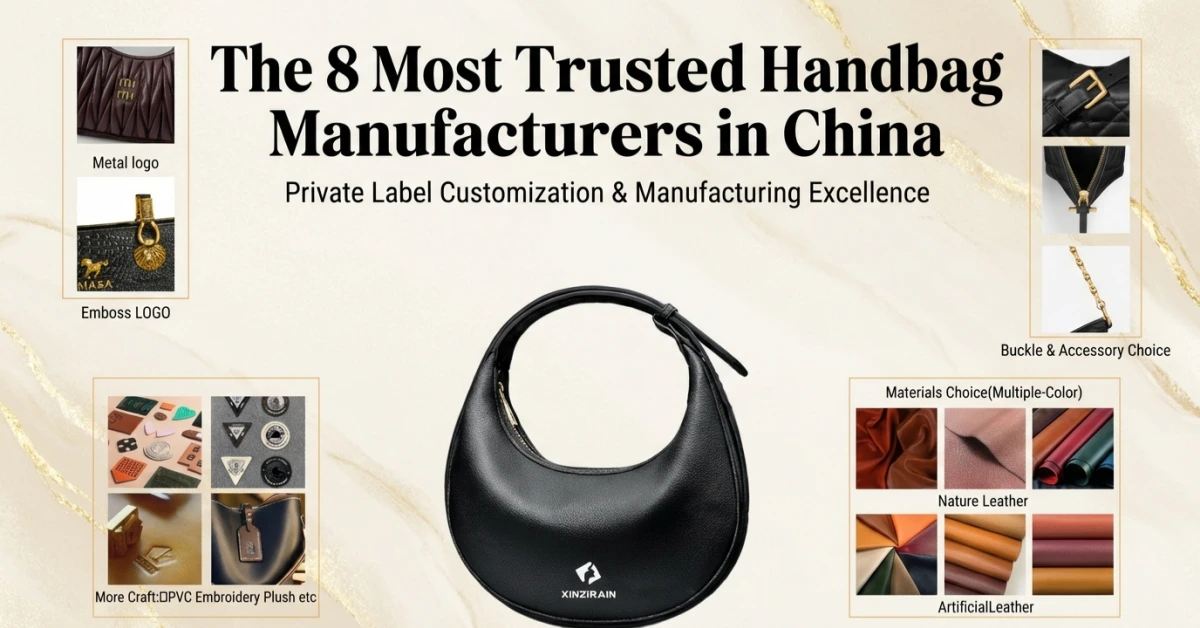
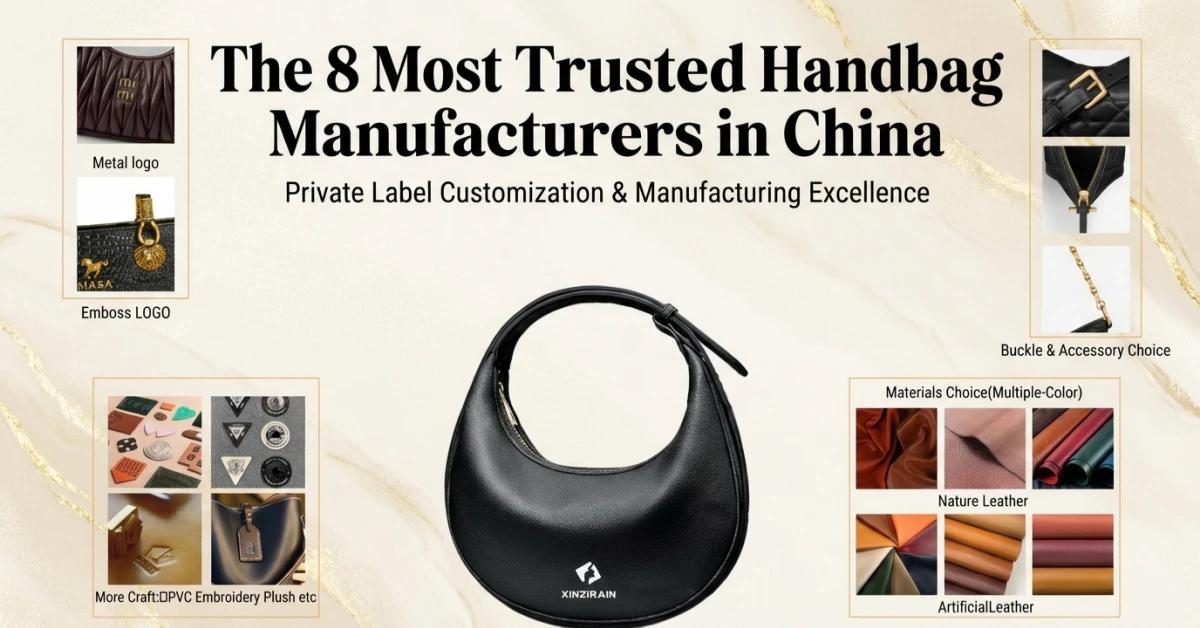
XINZIRAIN (Herrains)
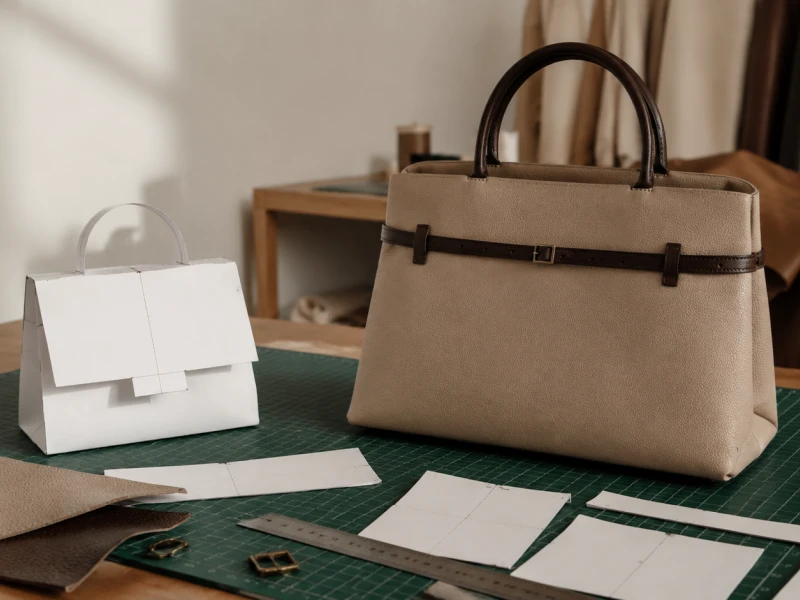
XINZIRAIN works with independent fashion brands and emerging designers who have a design direction but need a manufacturing partner to make it commercially viable and production-ready.
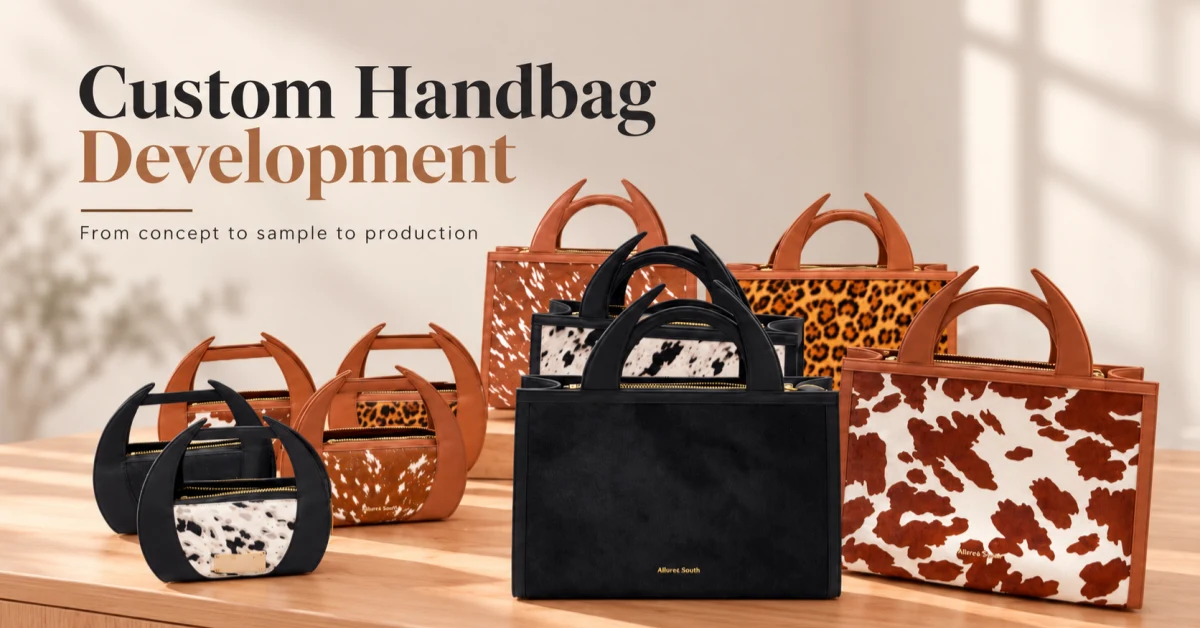
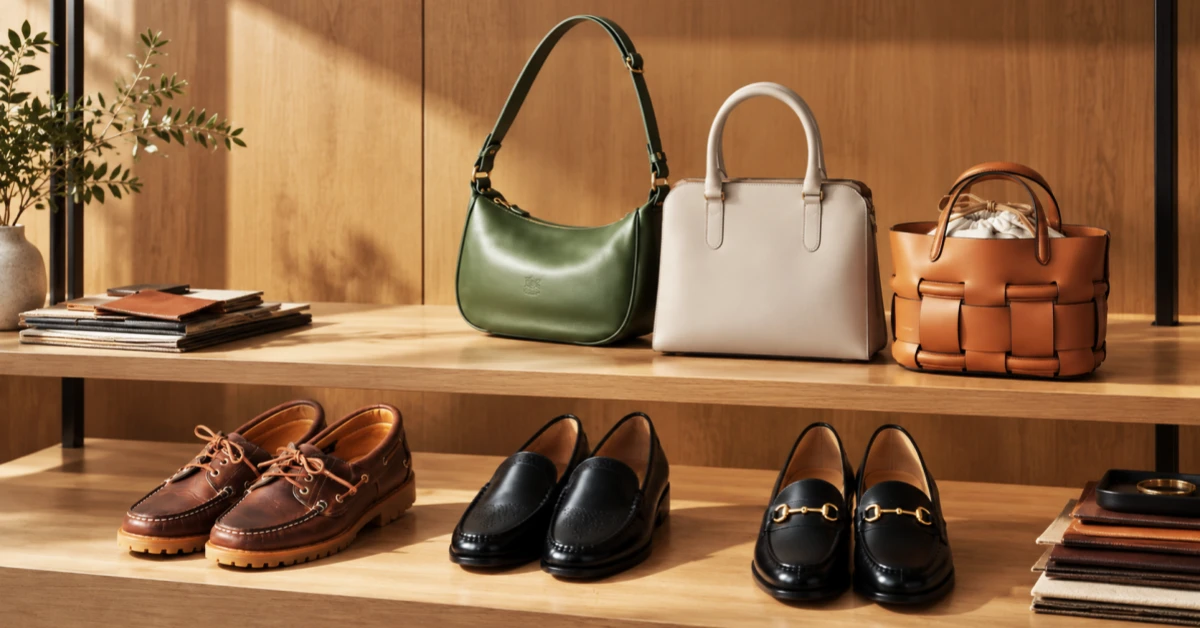
Rather than acting as a transactional factory, XINZIRAIN operates as a brand launch partner — guiding clients through design feasibility review, material selection, sampling milestones, and first-order readiness before bulk production begins. The studio supports both handbag-only collections and coordinated shoe-and-bag sets from a single production ecosystem.
What sets XINZIRAIN apart for brand-stage clients:
- Sketch-stage entry: accepts projects from reference image or initial sketch, not only finished Tech Packs — reducing the barrier to entry for first-time founders
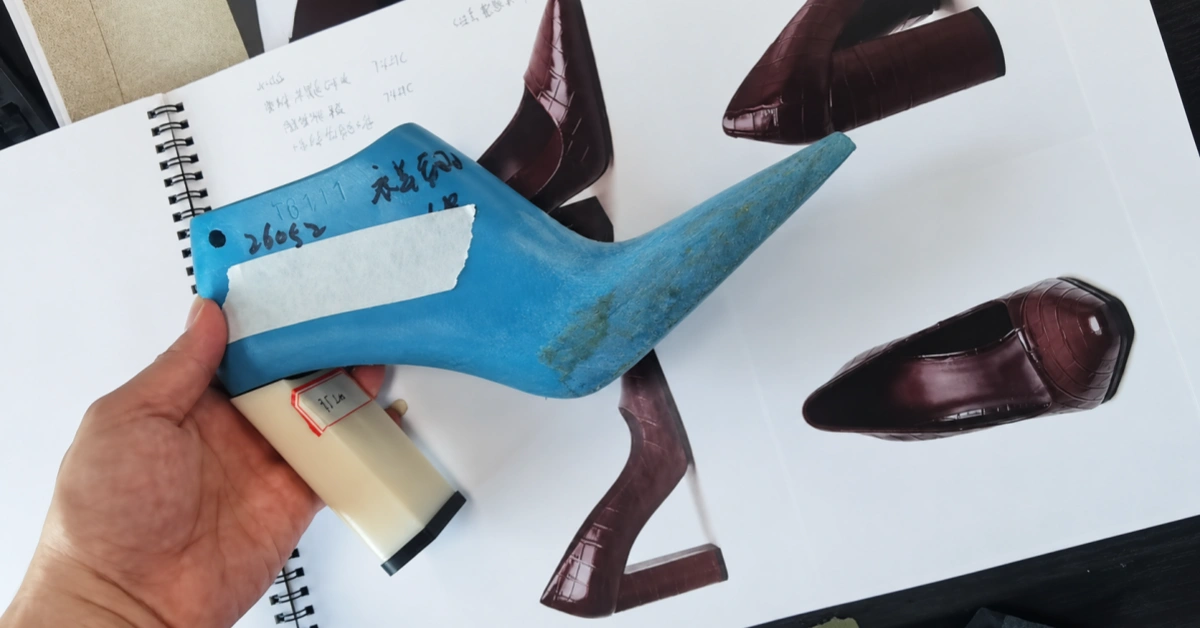
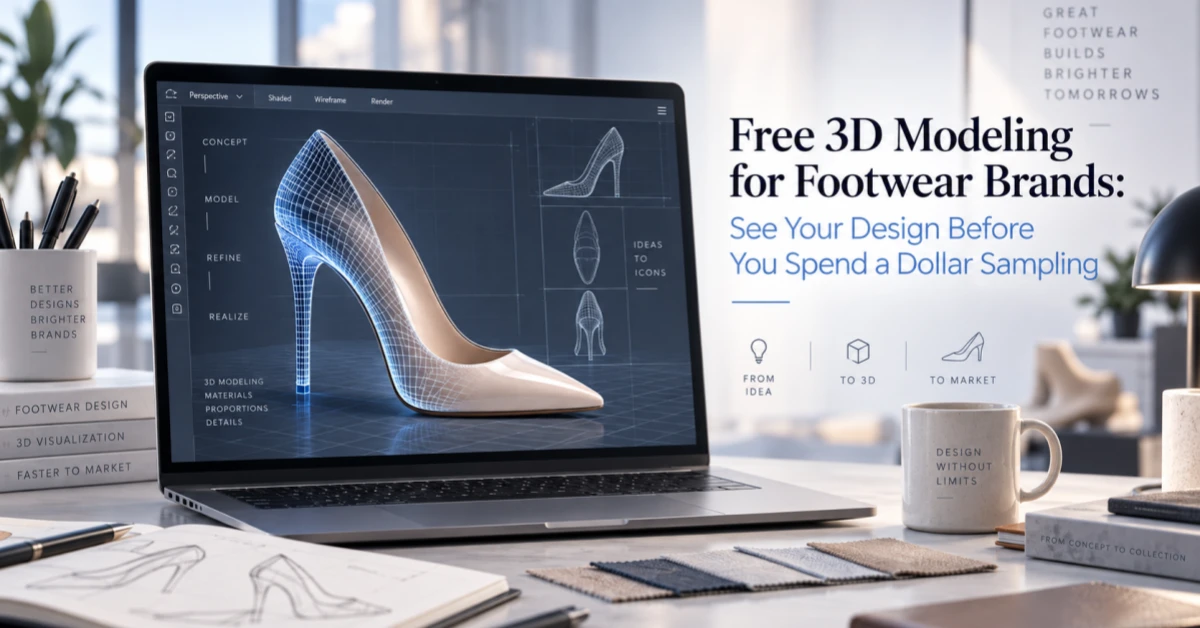
- 72-hour 3D prototyping: structure and proportion are validated digitally before physical sampling begins, reducing costly revision rounds
- NDA-protected development: mutual NDAs and controlled design file access safeguard original designs throughout the development process
- Scalable from first order: supports 100-piece first orders with documented scale-up pathways to 500+ as the brand grows
- One-stop shoe & bag: for designers building coordinated collections, footwear and handbag development are managed under the same production team, ensuring hardware and material consistency
- REACH & compliance-ready: production aligned with EU/US market requirements for ethical and material standards
Handbag categories: Tote Bags · Structured Handbags · Shoulder Bags · Crossbody Bags · Clutches & Evening Bags · Small Leather Goods
SLBAG
SLBAG supports custom and white-label handbag production for global buyers. Suitable for brands and wholesalers seeking cost-efficient, export-ready manufacturing at higher volume thresholds.
Handbag types: Tote Bags · Shoulder Bags · Crossbody Bags · Wallets & Leather Goods
Autron Industry
Guangzhou-based manufacturer emphasizing craftsmanship, refined finishing, and material selection. A strong option for brands targeting luxury leather handbag production with higher per-unit investment tolerance.
Handbag types: Leather Tote Bags · Shoulder Bags · Crossbody Bags · Clutches
Yabo Bags
Custom bag manufacturer producing handbags alongside functional bag categories. Suitable for buyers seeking a versatile bag manufacturer beyond fashion handbags alone.
Bag types: Handbags · Tote Bags · Backpacks · Travel & Functional Bags
B.S. Bag Factory
Guangzhou-based OEM factory specialising in private-label and OEM projects with stable production workflows. A practical choice for importers seeking a straightforward OEM handbag manufacturing relationship.
Handbag types: Tote Bags · Shoulder Bags · Crossbody Bags
J.D. Handbag Factory
Experienced OEM manufacturer supporting custom handbag development and bulk production. Well-versed in international B2B cooperation requirements. A reliable option for brands seeking stable handbag manufacturing in China.
Handbag types: Tote Bags · Shoulder Bags · Crossbody Bags
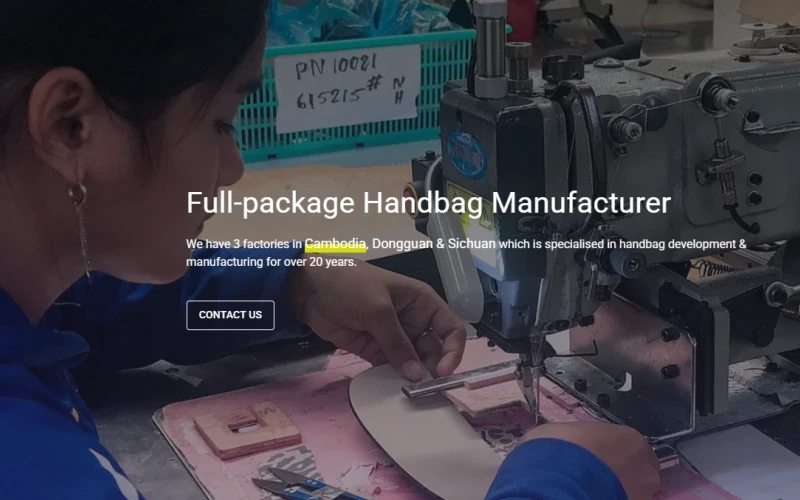
Handbagio
Focuses on OEM, ODM, and wholesale handbag production for private-label brands. Accommodates different order sizes and fashion styles. Suitable for brands seeking flexible handbag sourcing options.
Handbag types: Tote Bags · Shoulder Bags · Crossbody Bags · Fashion Handbags
BagsRain
BagsRain is a China-based handbag-focused OEM/ODM manufacturing platform, operating as a dedicated bag manufacturing division within a broader production ecosystem. Its specialisation in fashion handbags allows for better alignment with European and North American market trends.
Handbag types: Tote Bags · Shoulder Bags · Crossbody Bags · Fashion Handbags · Small Leather Goods
How These Manufacturers Compare for Brand-Stage Clients
Use this summary to identify which manufacturer aligns with your current stage and priorities:
| Manufacturer | Best For | Minimum Order | Design Entry | Brand Incubation |
|---|---|---|---|---|
| XINZIRAIN | Founder / Designer brand launch | 100+ | Sketch / Ref image | Full-chain ✓ |
| SLBAG | Volume OEM / white-label | 500+ | Tech Pack required | — |
| Autron Industry | Luxury leather positioning | 300+ | Design stage | Partial |
| Yabo Bags | Multi-category sourcing | 300+ | Tech Pack required | — |
| B.S. Bag Factory | Straightforward OEM import | 500+ | Tech Pack required | — |
| J.D. Handbag | Stable bulk OEM | 500+ | Tech Pack required | — |
| Handbagio | Flexible sourcing | 300+ | Tech Pack required | — |
| BagsRain | Handbag-specialist OEM/ODM | 200+ | Design stage | Partial |
Why a Coordinated Shoe & Bag Collection Requires a Unified Manufacturing Partner
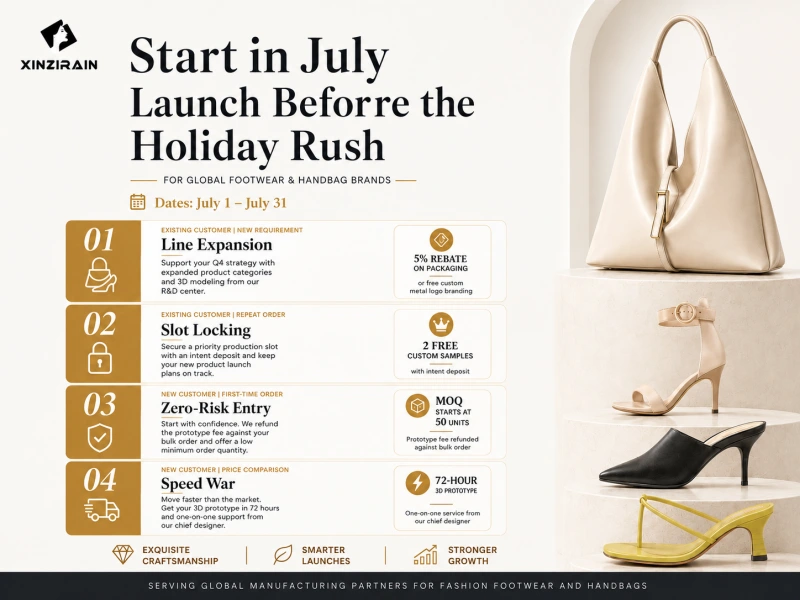
For brands building a complete women's collection, sourcing footwear and handbags separately introduces a significant risk: inconsistent hardware finishes, mismatched leather grains, and staggered delivery windows that make coordinated campaign photography and seasonal launches difficult to execute.
The hidden cost of split-sourcing: When a shoe and bag are made in different factories using different hardware suppliers, matching metal finishes, leather textures, and edge treatments requires extensive back-and-forth — often adding 4–6 weeks to the development timeline and introducing variation that undermines visual brand consistency.
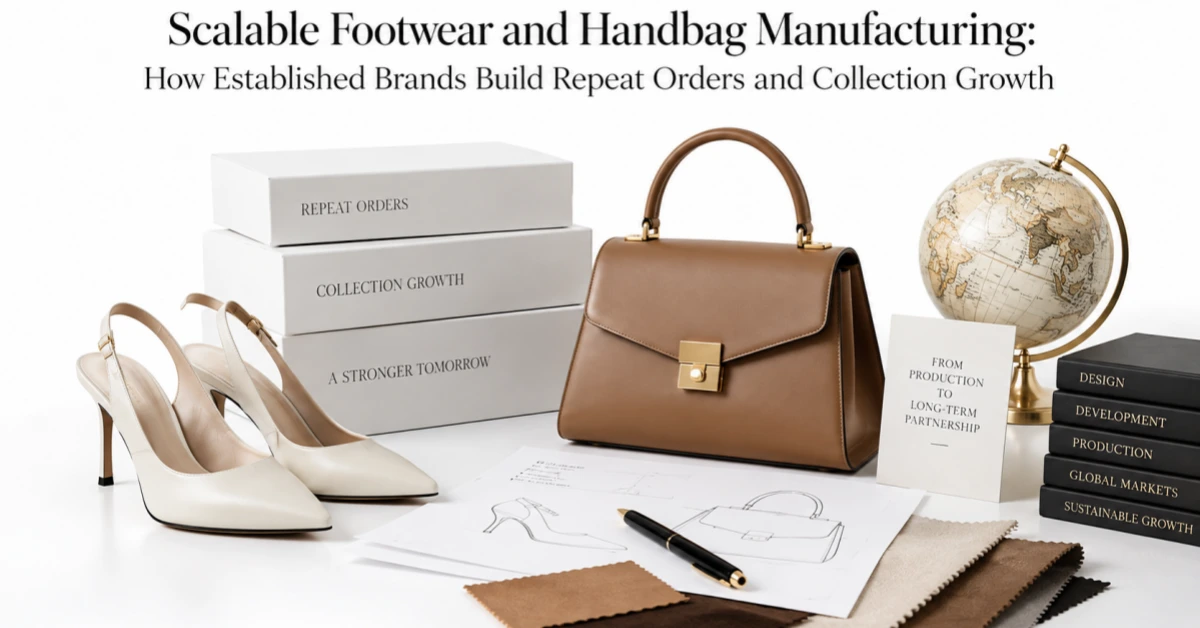
XINZIRAIN's unified manufacturing ecosystem handles both footwear and handbag development under the same production team — ensuring that hardware sourcing, leather selection, and delivery milestones are coordinated from the start.
Key advantages of unified shoe & bag development:
- Hardware specifications (buckles, zippers, clips) are matched across categories from the same supplier
- Leather grain and finish are aligned across a collection before sampling begins
- A single project coordinator manages both categories, reducing communication overhead
- 72-hour 3D prototyping validates both shoe and bag structure simultaneously
- Production and delivery windows are synchronized for collection-launch readiness
Ready to evaluate if your design is production-ready?
Submit your reference image, sketch, or mood board. Our development team will review design feasibility, material direction, MOQ range, and sampling timeline — at no cost.
Start Sample Development ConsultationOr explore: Brand Launch Support →
Conclusion: Finding the Right Manufacturing Partner for Your Brand Stage
China's handbag manufacturing ecosystem offers significant depth — from high-volume OEM factories to design-stage development partners capable of supporting brand founders from sketch to first commercial order.
The most important question is not which manufacturer is the "best" in absolute terms, but which is best suited to where your brand is right now: your design readiness, your first-order size, your market positioning, and your long-term growth trajectory.
For brands at the design and launch stage, a manufacturing partner with genuine development capability — not just production capacity — makes the difference between a sample that represents your vision and one that requires repeated costly revisions.
Frequently Asked Questions
Ask whether they accept projects from sketches or reference images, or only from finished Tech Packs. A manufacturer with genuine design development capability will review your concept and provide a feasibility assessment — identifying structural, material, or construction challenges before sampling begins.
A professional development process includes a pre-sample design confirmation, a first prototype review, structured revision rounds with documented change logs, and a final production-approval sample. Budget for 2–4 revision rounds; the number depends on design complexity and how clearly the brief is defined at the start.
Require a mutual NDA before sharing any design files or reference images. Ask the manufacturer how design files are stored and who has access during sampling. Reputable manufacturers use isolated project folders and restrict access to the production team assigned to your account.
For development-capable manufacturers working with brand-stage clients, first-order MOQs typically range from 100 to 300 pieces per style. Higher-volume factories may require 500+. Clarify MOQ before committing to a sampling relationship to avoid misaligned expectations at the production stage.
Request material swatches alongside your first sample. Specify the leather grade, origin, and finish you require in the brief. For genuine leather, ask for documentation of the tannery source. Evaluate the sample's edge finishing, stitching tension, and hardware attachment — these are the most common points where bulk production diverges from the approved sample.
At minimum: a signed NDA, a material confirmation sheet listing leather grade and hardware specs, a sample cost breakdown, a revision log after each sample round, and a pre-production approval document before bulk manufacturing begins. Manufacturers who cannot provide these documents during sampling introduce significant quality risk in bulk.
Yes — increasingly so. For REACH compliance (EU chemical standards), recycled or GRS-certified materials, and ethical sourcing documentation, ask manufacturers directly for their current certification status and material traceability process. Not all factories maintain these standards; confirm before sampling if compliance is a market requirement for your brand.
For a well-briefed project with reference images and material direction provided upfront, a first sample typically takes 3–5 weeks. Factor in 2–3 revision rounds for a total development timeline of 8–14 weeks to reach bulk production approval. 3D prototyping services can shorten this by identifying structural issues before physical sampling begins.
OEM (Original Equipment Manufacturing) means the manufacturer produces to your design specifications — you own the design, they execute it. ODM (Original Design Manufacturing) means the manufacturer offers existing designs that you select, customize, and brand. For independent fashion brands, OEM is generally the preferred route to ensure design originality and brand differentiation.
Established brands typically work on 6-month production calendars aligned to retail seasons, with material pre-orders (VMI) for core leathers and hardware to reduce lead times. Repeat-order management benefits significantly from a production partner who maintains approved material records from previous seasons — reducing re-sampling and ensuring consistency across collections.