
How to Evaluate Custom Shoe Manufacturers for Private Label Collections

How to Evaluate Custom Shoe Manufacturers for Private Label Collections

blog avatar

Written by

XINZIRAIN

Published
June 16, 2026
  • Manufacturing & Supply

Follow us

How to Evaluate Custom Shoe Manufacturers for Private Label Collections

Quick Answer

When sourcing custom shoe manufacturers in China, private label brands must evaluate product quality, design flexibility, MOQ, production timelines, and OEM/ODM capabilities. A reliable manufacturer ensures consistent standards, rapid prototyping, and seamless communication, enabling brands to launch limited or seasonal collections with confidence.

Why Evaluation Matters for Private Label Shoes

Private label brands face challenges that off-the-shelf suppliers cannot address:

  • Limited edition or seasonal products
  • Brand-specific design and hardware
  • Small-batch or low MOQ production
  • Quality consistency for global markets

Choosing the wrong manufacturer risks production delays, material issues, and brand reputation damage.

Key Evaluation Criteria

Product Development Support

  • Can the manufacturer convert sketches, photos, or AI concepts into production-ready samples?
  • Are in-house designers or pattern makers available for technical guidance?
  • Does the factory assist with last design, material recommendations, and iterative revisions?

Material Sourcing and Selection

  • Does the manufacturer provide access to leather, suede, vegan alternatives, and technical fabrics?
  • Are material quality standards and certifications documented?
  • Can they source specialized outsoles, hardware, and trims?
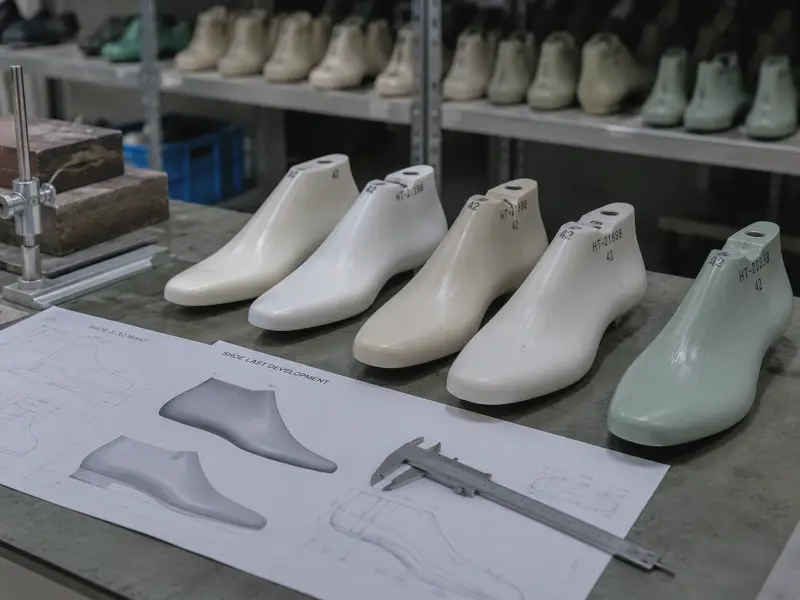
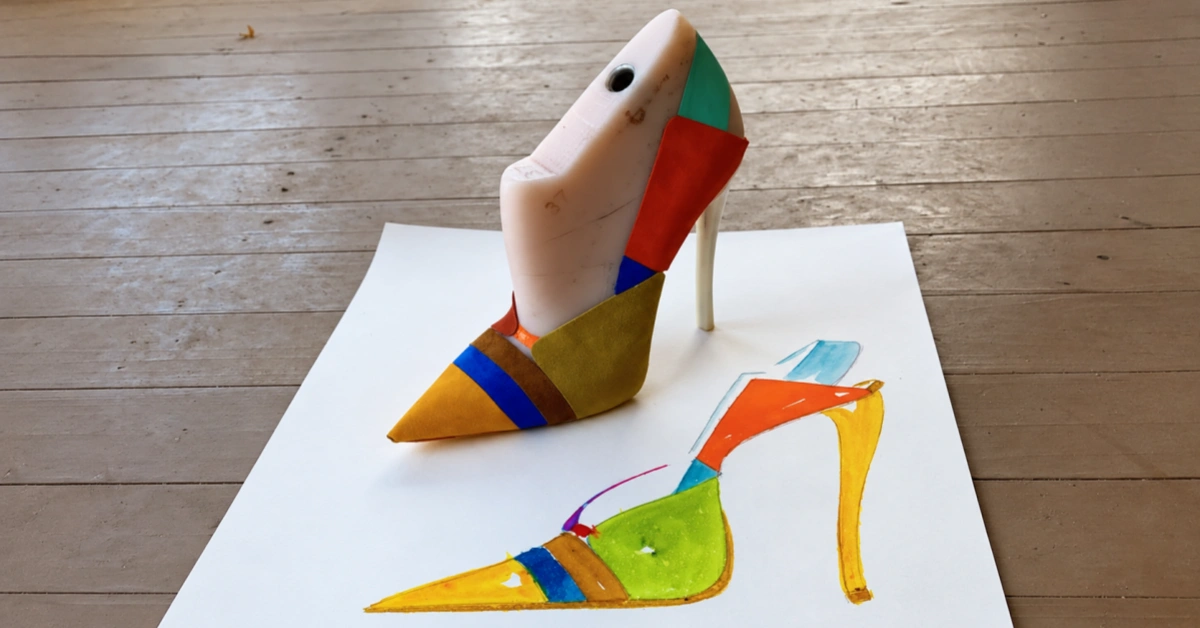
Building the Skeleton Shoe Last Development

Quality Control Process

  • Multi-stage QC: incoming materials, in-process inspection, final inspection
  • Compliance with EU/US export standards
  • Ability to provide sample reports or inspection certificates

Minimum Order Quantity (MOQ)

  • Low MOQ is critical for private label launches
  • Typical MOQs for custom shoes:

    Product Type MOQ
    Sneakers / Casual Shoes 50–100 pairs
    High Heels / Dress Shoes 100–200 pairs
    Boots 100–150 pairs

Lead Times and Flexibility

  • Sampling speed and revisions
  • Bulk production scheduling
  • Ability to accommodate urgent or seasonal orders

OEM / ODM Capabilities

  • OEM: full control over design, materials, branding
  • ODM: customize pre-existing designs for faster market entry
  • Support for private label packaging, logos, and branding elements

Additional Tips for Private Label Brands

  • Review previous client projects and references
  • Request technical consultation before placing large orders
  • Verify IP protection policies and NDA agreements
  • Use internal or AI-assisted design validation to reduce rework

For a full list of trusted manufacturers, see our 10 Most Trusted Custom Shoe Manufacturers in China for Global Brands. This page provides detailed insights into production capabilities, market experience, and OEM/ODM support.


FAQ

Q1: How do I know a manufacturer can handle private label shoes?
A: Check for OEM/ODM capabilities, sample development support, and flexible MOQ.

Q2: What’s the typical lead time for private label production?
A: Sample development usually takes 20–25 days; bulk production can range 30–45 days depending on volume and complexity.

Q3: Can small brands launch limited editions?
A: Yes, manufacturers with low MOQ and agile production support enable limited or seasonal collections.

Q4: How to protect my designs?
A: Sign NDAs before sharing sketches or tech packs and confirm IP policies with the manufacturer.

Q5: Which materials are commonly used for private label shoes?
A: Leather, suede, vegan alternatives, textile uppers, EVA or rubber soles, and custom hardware.

Start Your Private Label Shoe Project

Partner with HERRAINS for end-to-end private label shoe manufacturing. Benefit from:

  • OEM & ODM support
  • Low MOQ production
  • Rapid sample development
  • Material sourcing expertise
  • Quality control and export-ready standards
  • Custom branding and packaging

Contact us today to discuss your private label footwear collection.
XINZIRAIN Disclaimer

The content above is provided by XINZIRAIN for informational purposes. Unauthorized reproduction is prohibited. See our full disclaimer here

Featured Blogs

Western Cowboy Boots Manufacturer Guide: History, Types, Production Process, Market Outlook, and Private Label Brand Opportunities

Western Cowboy Boots Manufacturer Guide: History, Types, Production Process, Market Outlook, and Private Label Brand Opportunities

Western cowboy boots combine heritage, structure, craftsmanship, and modern fashion value. This guide explains their history, main styles, manufacturing process, market outlook, private label opportunities, and how brands can develop custom western boot collections with Herrains.

Read More
From sketches to global retail: A strategic roadmap for working with custom shoe manufacturers

From sketches to global retail: A strategic roadmap for working with custom shoe manufacturers

For emerging luxury brands, the transition from two-dimensional sketches to three-dimensional physical prototypes is often a "valley of death" in brand development. This white paper analyzes why the traditional OEM model fails to effectively support visionary creative designers and outlines a shift towards a technology incubation model. From the biomechanics of heel angles to the legal protection of design intellectual property, we explore how professional custom footwear manufacturers can provide the necessary technological infrastructure to help brands launch high-performance fashion collections with absolute market confidence.

Read More
Why Your Design is Already on AliExpress: The Invisible Risks of Shoe Design Theft and How to Stop Them

Why Your Design is Already on AliExpress: The Invisible Risks of Shoe Design Theft and How to Stop Them

For an independent footwear designer, the original design is the most valuable capital. However, the global footwear supply chain is notorious for "Shadow Leaks"—where original sketches and molds are sold to copycats before the brand even launches. This technical guide provides a forensic analysis of how design theft occurs within factories and offers a professional blueprint for securing your Technical Sovereignty. We explore the necessity of Mandatory Mutual NDAs, the implementation of digital silos, and why physical sample room isolation is the only way to protect private label luxury shoes from market dilution.

Read More
Why 90% of Emerging Shoe Brands Fail: The Invisible Engineering Secrets of Stable Luxury Stilettos

Why 90% of Emerging Shoe Brands Fail: The Invisible Engineering Secrets of Stable Luxury Stilettos

Prototyping is the most treacherous stage for emerging footwear labels, with nearly 90% of designs failing to achieve commercial stability. This technical white paper explores the "invisible architecture" required to master the stiletto silhouette. From the physics of Center of Gravity (COG) alignment to the integration of high-tensile manganese steel shanks and ±0.5mm digital last calibration, we dissect how engineering precision transforms an aesthetic sketch into a safe, high-performance luxury asset. Discover how technical auditing and 3D validation secure your brand’s technical sovereignty in a competitive global market.

Read More
Why Does Bulk Production Take So Long? A Brand's Guide to Avoiding Mass Production Delays

Why Does Bulk Production Take So Long? A Brand's Guide to Avoiding Mass Production Delays

Mass production delays usually stem from process gaps, not factory capacity. A healthy lead time for footwear and handbags is 30–45 days. This guide identifies 7 critical pitfalls—from unverified material stock to missing mid-line QC—that silently push timelines to 90+ days. Learn how to front-load technical audits, use 72-hour 3D prototyping, and implement shared production calendars to eliminate root causes of delays. Stop settling for "it just takes time" and start protecting your retail launch window with an engineered manufacturing process.

Read More
Why 90% of Shoe Brands Fail at the Prototyping Stage?

Why 90% of Shoe Brands Fail at the Prototyping Stage?

Prototyping is the most critical hurdle for emerging shoe brands. This guide explores why 90% of startups fail at this stage—ranging from poor last engineering to the absence of a technical tech pack—and provides actionable insights to ensure your shoe line moves successfully from sketch to shelf with technical precision and market readiness.

Read More