

“Eco-friendly leather” shows up more and more in product descriptions, branding decks, and sourcing emails. But what does it actually mean? Is it just a marketing label, or is there a real difference compared with traditional leather and synthetic materials?
Leather has long been loved for its durability, structure, and premium look—especially in custom shoes and bags. Yet conventional leather production often relies on chrome tanning, heavy chemical use, high water consumption, and opaque supply chains. At the same time, cheap synthetic “leather alternatives” can create their own environmental problems, especially when they are made from fossil-based plastics that never truly break down.
Eco-friendly leather sits at the center of this conversation. It aims to keep the performance and aesthetic of leather while reducing environmental impact and aligning with a more sustainable development mindset.
This article breaks down what eco-friendly leather is, how it differs from other leather types, how it is made, and how brands can apply it in custom footwear and bag manufacturing. We’ll also look at different “eco” claims—vegan leather, PU, microfiber, recycled leather—and finish with a practical call to action for brands working with Xinzirain to build more sustainable collections.
What Is Eco-Friendly Leather?
Eco-friendly leather is an umbrella term for leather and leather-like materials that are developed and produced with a lower environmental footprint compared with conventional leather or low-grade synthetics. The focus is not only on the final material, but on the entire lifecycle:
How raw materials are sourced
Which chemicals and processes are used
How much water and energy production consumes
How the material behaves at end of life
Eco-friendly leather can be:
Real leather processed using more sustainable methods
Plant-based or bio-based “leather alternatives”
Recycled leather or recycled synthetic leather
Next-generation lab-grown or bio-engineered materials
In other words, eco-friendly leather is less about a single recipe and more about a design principle: make leather and leather substitutes that support sustainable development, reduce resource use, and minimize harm to people, animals, and ecosystems.
Why Does Eco-Friendly Leather Matter?
Traditional leather production and cheap synthetic leather both carry environmental challenges:
High water use in conventional tanning and finishing
Toxic chemicals such as chrome salts, solvents, and formaldehyde
Animal welfare concerns and lack of traceability
Plastic-based synthetics (PVC, some PU) that are not biodegradable and shed microplastics
Eco-friendly leather aims to respond to those issues by introducing:
Cleaner tanning technologies
Bio-based or recycled inputs
Lower-impact chemistry
Increased transparency across the supply chain
For brands developing custom shoes and bags, this is no longer a niche topic. Retailers, consumers, and regulators in Europe, North America, and beyond are actively asking what is in their materials and how they are made. Choosing eco-friendly leather and communicating it clearly can strengthen brand reputation, support long-term sourcing stability, and align with global sustainable development goals.
Key Characteristics of Eco-Friendly Leather
While different categories of eco-friendly leather use different technologies, they usually share several core features:
- More responsible sourcing
- Use of certified hides, agricultural by-products, plant-based fibers, or recycled inputs
- Reduced toxicity
- Chrome-free or metal-free tanning, water-based finishes, and lower-VOC chemistry
- Lower environmental impact
- Less water and energy use, reduced greenhouse gas emissions where possible
- Improved end-of-life profile
Higher potential for recycling or, in some cases, partial biodegradability
Compatibility with modern design
Suitable for custom shoes and bags, small-batch collections, and private-label manufacturing
Eco-friendly leather should not just sound good in a brochure; it must perform in real-world products, from daily-use backpacks to premium heels and structured totes.
Main Types of Eco-Friendly Leather
There is no single “eco leather.” Instead, brands can choose from multiple material families, each with its own strengths and limitations.
Plant-Based and Bio-Based Leather Alternatives
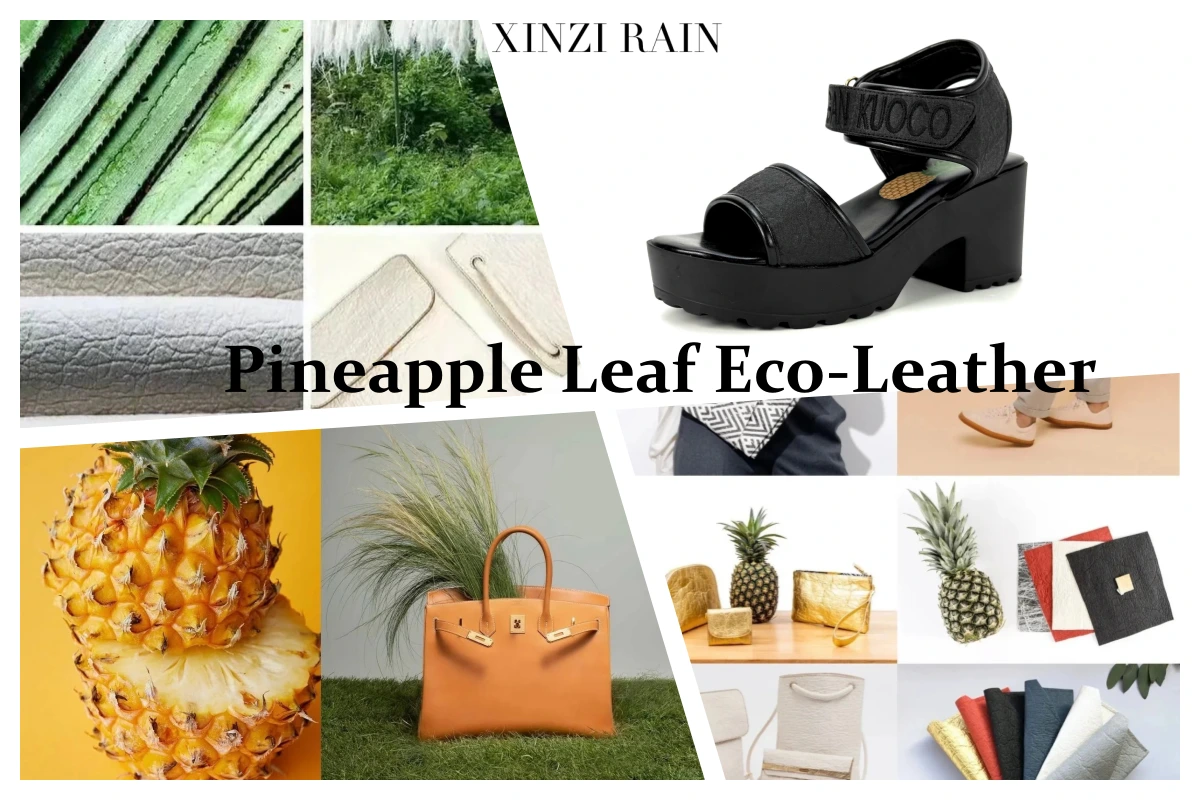
These materials use fibers or biomass from plants or fungi, often derived from agricultural waste streams. Examples include:
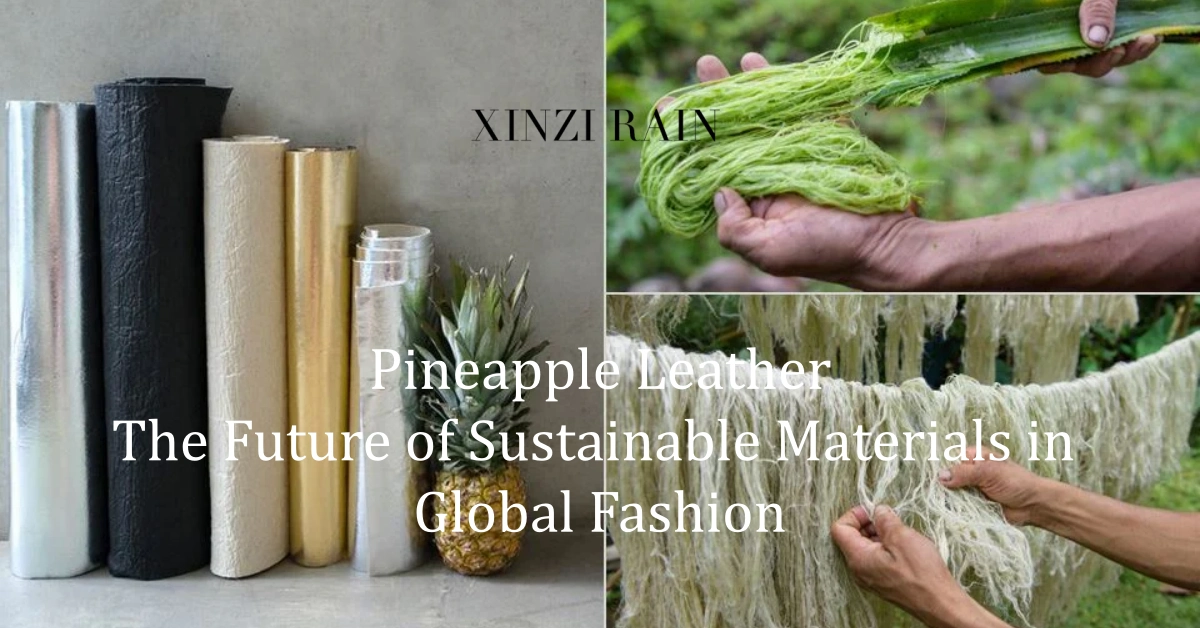
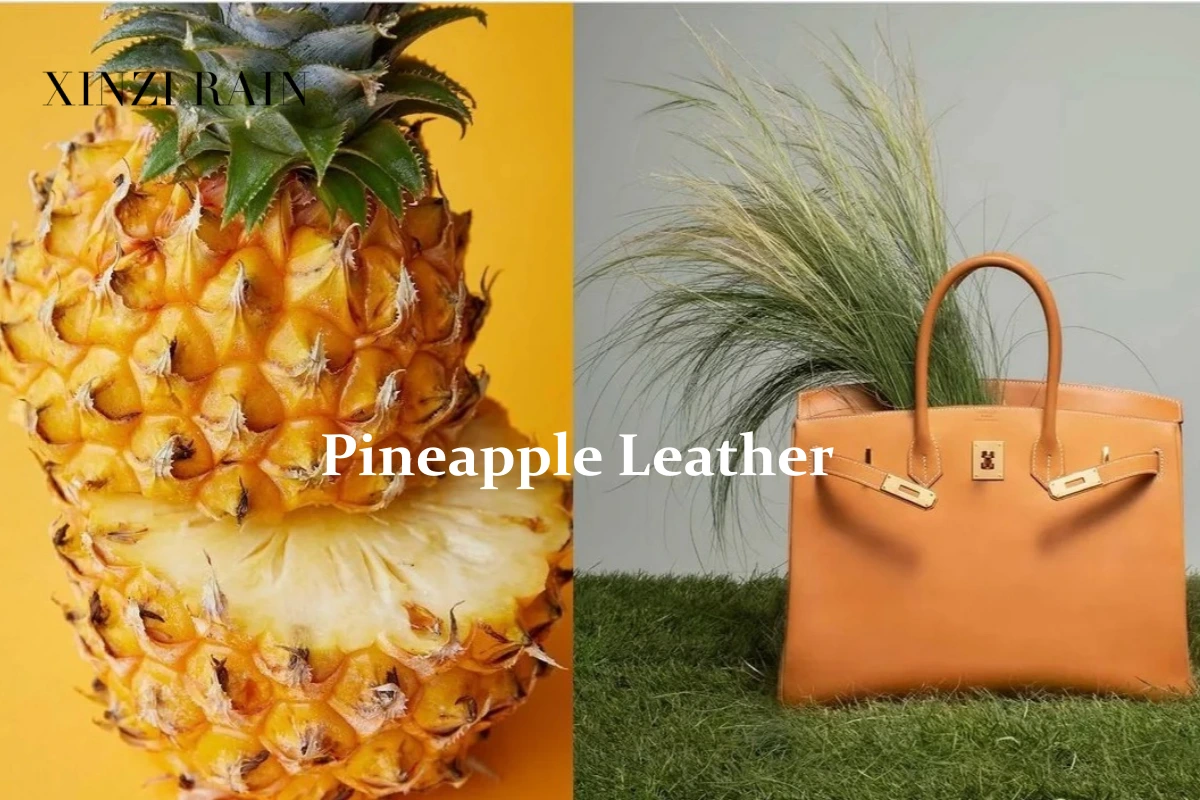
- Pineapple-leaf leather (often marketed as Piñatex)
- Mushroom-based leather made from mycelium
- Apple-peel or fruit-waste leather from juice and food industry by-products
Typical process:
- Agricultural by-products are collected, cleaned, and processed.
- Fibers are bound together using plant-based or partially synthetic binders.
- The surface is finished (often with a water-based coating) to create a leather-like look and feel.
Applications:
Fashion bags, sneakers, casual shoes, small leather goods
Ideal for vegan-positioned or “next-generation materials” collections
Recycled Leather
Recycled leather uses off-cuts from tanneries or post-consumer leather waste:
- Scraps are collected and shredded.
- They are combined with binders (ideally more eco-friendly adhesives).
- The mixture is pressed and finished into sheets.
Benefits:
Reduces landfill waste
Makes use of existing leather resources
Can be cost-effective for certain custom bag and small accessory projects
Limitations:
Generally not as durable as full-grain leather
Surface and grain can feel more engineered than natural
Bio-Engineered and Lab-Grown Leather
Bio-fabricated leather uses cell culture, fermentation or other biotechnology to grow leather-like materials without traditional herds:
Cells are cultivated in controlled environments
Sheets of collagen-like or mycelium-based material are formed
The material is tanned and finished with lower-impact processes
This area is still emerging, but it is central to future sustainable development in fashion.
Eco-Friendly Vegan Leather
“Vegan leather” simply means it contains no animal products. It can be eco-friendly—but not always. Traditional vegan leather often uses PVC or standard PU, which can cause environmental issues.
Eco-friendly vegan leather typically:
- Incorporates bio-based or recycled content
- Uses water-based PU or lower-impact coatings
- Reduces solvents and hazardous additives
For brands creating custom vegan shoes and bags, it is essential to ask how the vegan leather is made—not just whether it is animal-free.
How Does Eco-Friendly Leather Perform?
For designers and buyers, the key questions are always the same: does it look good, feel good, and last?
Durability
Many eco-friendly leathers deliver strong durability, especially premium pineapple-leaf, mycelium, or high-quality recycled leather materials. For custom shoes and bags, it is important to work with a manufacturer who can match the material choice to the product’s use case—e.g., daily-use tote vs. occasional clutch vs. everyday sneaker.
Aesthetic Versatility
Advanced finishing allows eco-friendly leather to achieve:
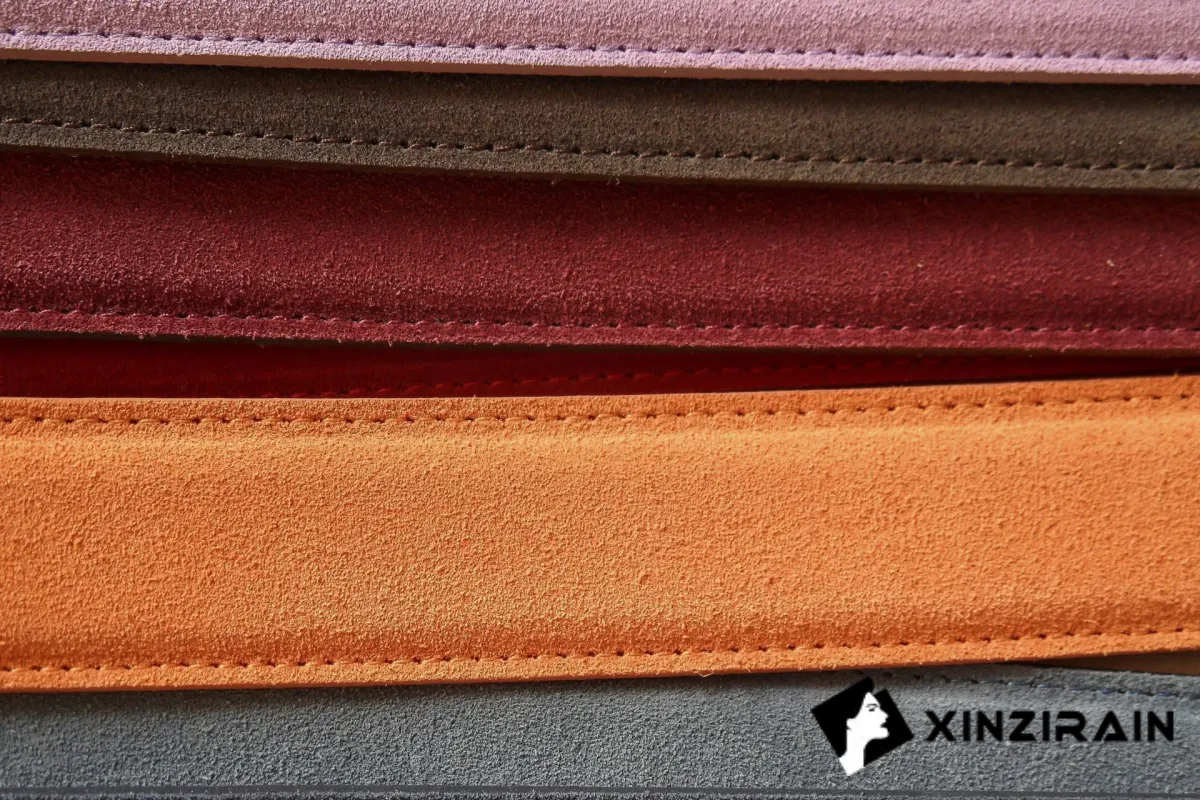
- Smooth, polished surfaces
- Soft, matte finishes
- Embossed textures that resemble traditional grain
This is critical for brand-aligned custom bag programs and signature shoe uppers.
Comfort and Handfeel
Materials like mushroom-based leather can be exceptionally soft and flexible, ideal for garments and soft handbags. Plant-based and recycled options can also be engineered for a pleasant handfeel, especially when combined with high-quality linings in custom footwear.
Breathability and Waterproofing
Some eco-friendly leathers, especially those based on natural fibers, can offer better breathability than fully plastic synthetics. Waterproofing typically comes from coatings; for more sustainable solutions, brands should look for water-based finishes and avoid heavy solvent systems where possible.
End-of-Life Considerations
Not all eco-friendly leather is fully biodegradable, but:
Many plant-based leathers are partially biodegradable
Some high-quality eco-friendly leather systems are designed to have lower microplastic release
Recycled leather and recycled synthetics help extend resource life
For brands serious about sustainable development, planning how materials behave at end of life is increasingly important.
How Is Eco-Friendly Leather Made? A Quick Process Overview
Different eco-friendly leathers use different production routes, but several common principles appear repeatedly:
Use of by-product or waste streams where possible
Stricter control over chemicals and water use
Preference for water-based coatings and reduced solvent emissions
Greater transparency and traceability
For example:
Plant-based leather: agricultural waste → fiber processing → binding → coating → finishing
Recycled leather: scrap collection → shredding → mixing with eco-binders → pressing → surface finishing
Eco-friendly vegan leather: recycled textile or plastic backing → water-based PU or bio-based coating → embossing and coloring
These approaches are increasingly being integrated into custom shoes and bags manufacturing, especially for brands that want both design freedom and sustainability stories.
What Is “Premium” Eco-Friendly Leather?
Premium eco-friendly leather refers to high-grade sustainable materials that deliver:
- Strong durability
- Refined, high-end appearance
- Consistent performance in luxury products
- Proven lower-impact production methods
These materials often appear in:
Designer handbags, structured totes, and travel bags
Premium custom shoes, including sneakers, loafers, heels and boots
High-end accessories such as wallets, belts and small leather goods
Examples of premium eco-friendly leather families include pineapple-based materials with distinctive texture, mushroom-based materials with incredibly soft handfeel, and fruit-waste leathers with a sleek, polished surface. Many of these are now used in capsule collections by global luxury brands and innovative custom bag labels.
Eco-Friendly Recycled Leather: Pros and Cons
Recycled leather is an important part of the eco-friendly leather landscape.
Benefits:
Reduces waste from tanneries and factories
Uses existing leather resources instead of new hides
Often more affordable than full-grain leather
Suitable for structured bags, small goods, and some footwear components
Limitations:
Typically not as robust as high-quality full-grain leather
Grain and handfeel can be more uniform and less “natural”
Performance depends heavily on binder chemistry and production quality
When integrated thoughtfully, recycled leather can be a valuable tool in a sustainable development strategy, especially for lining materials, internal components, and certain custom bag panels.
Eco-Friendly Vegan Leather: Beyond “No Animals”
Eco-friendly vegan leather is a non-animal material designed to mimic leather while minimizing environmental impact.
Main categories include:
Plant-based vegan leather (pineapple, mushroom, apple, cactus, etc.)
Recycled vegan leather (from plastic bottles, textile waste, or other post-consumer materials)
Bio-engineered vegan leather (using lab-grown or fermentation-based processes)
Benefits:
No animal products (strong appeal for ethical and vegan consumers)
Potential to use renewable or recycled feedstocks
Versatile for custom shoes and bags designs
Limitations:
Some eco-vegan leathers still rely partly on synthetic binders
Durability varies widely between suppliers
Premium eco vegan options can be more expensive than basic synthetics
Brands should always look beyond the “vegan” label and ask about carbon footprint, chemistry, and recyclability to evaluate whether a vegan leather is truly eco-friendly.
Is PU Leather Eco-Friendly?
Standard PU leather is a synthetic material made from polyurethane on a base fabric (often polyester). Traditional PU is not automatically eco-friendly:
It is derived largely from fossil fuels
It is not biodegradable
Production can involve significant chemical and energy use
However, newer generations of eco-friendly PU leather aim to improve:
Use of recycled backing fabrics and partially bio-based components
Water-based PU systems instead of solvent-based coatings
Energy-efficient production methods and better emissions control
For brands developing custom shoes and bags, PU can be part of an eco-friendly strategy if it is sourced from responsible suppliers and combined with durable designs that extend product life.
Is Synthetic Leather Eco-Friendly?
Synthetic leather (artificial leather) includes PVC, PU and microfiber systems. Traditional synthetic leather:
Relies on petrochemicals
Is generally not biodegradable
Can shed microplastics over time
However, eco-designed synthetic leather can incorporate:
Recycled plastics or textiles
Water-based chemistry
Reduced energy and emissions in production
The key is to treat synthetic leather as one tool in a wider sustainable development strategy: prioritize longevity, reparability, and responsible sourcing rather than single-use, ultra-cheap products.
Is Microfiber Leather Eco-Friendly?
Microfiber leather is a high-performance synthetic material made from ultra-fine fibers (usually polyester and polyurethane). It is known for:
- High durability
- Good abrasion resistance
- Very consistent appearance
- From an environmental perspective:
- It is still fossil-based and not biodegradable
- It can contribute to microplastic pollution if poorly managed
- Production requires careful control of chemicals and emissions
More sustainable microfiber solutions are emerging, using:
- Recycled polyester
- Water-based PU coatings
- Lower-energy manufacturing processes
For high-wear custom shoes, some brands use microfiber leather strategically where long life and performance justify the material, while balancing it with lower-impact options in other product lines.
Eco-Friendly Leather and Custom Shoes & Bags: Why It Matters
For brands designing custom shoes and bags, material choice is a powerful lever:
Eco-friendly leather can support brand storytelling and ESG goals
Sustainable development strategies increasingly influence buyer selection
Retailers may prioritize suppliers who can document eco-friendly leather choices
Consumers are more aware of material transparency and ethical sourcing
Working with a manufacturing partner who understands eco-friendly leather—how it behaves, how it is sourced, and how to apply it correctly—is essential for turning concept into commercial product.
Xinzirain: Eco-Conscious Custom Footwear & Bag Manufacturing in China
China is one of the world’s most important hubs for footwear and bag production—and it is also a key driver of innovation in eco-friendly materials and cleaner manufacturing.
Xinzirain is a specialized custom shoes and bags manufacturer that integrates eco-friendly leather concepts into real, market-ready products. For international brands and designers, this combination of manufacturing strength and sustainable thinking offers several advantages:
Cost-effective scaling for eco-friendly collections
Access to a wide range of eco-friendly leather, vegan leather, recycled leather and next-gen materials
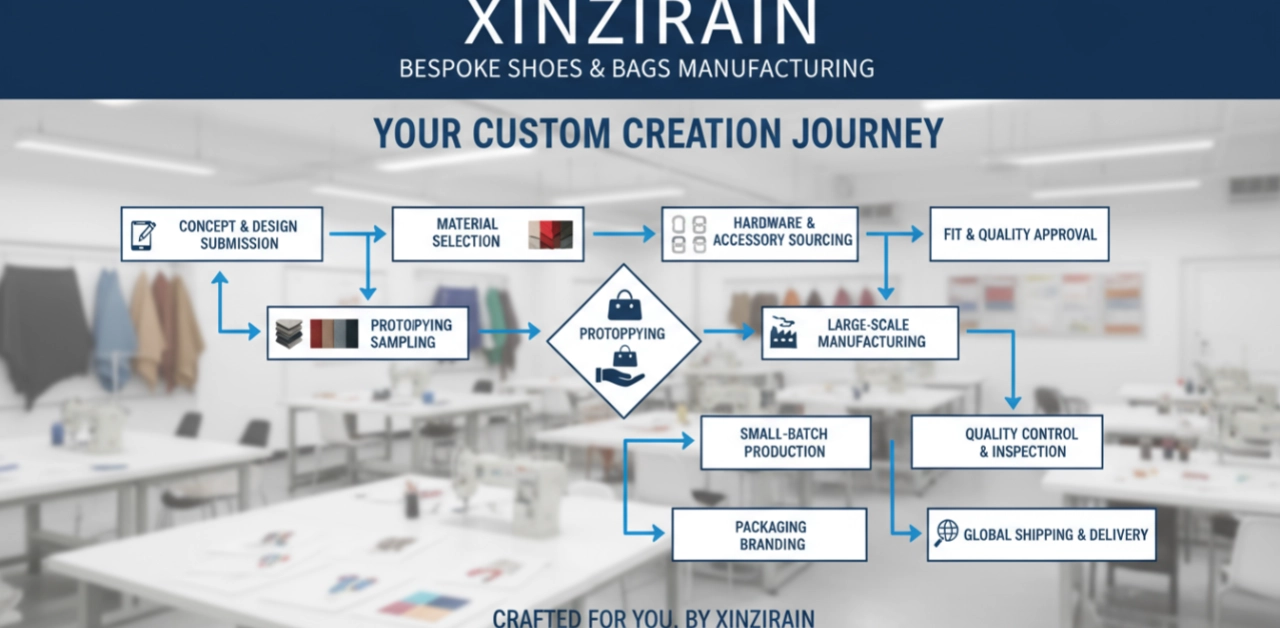
Strong development support for custom shoes and bags, from sketch to sample to bulk production
Growing alignment with global sustainable development expectations
Xinzirain’s approach focuses on:
Material curation: helping clients choose the right eco-friendly leather system for each project
Design-to-manufacturing translation: adapting designs to suit plant-based, recycled or eco-PU materials
Quality and longevity: ensuring eco-friendly leather products remain durable, comfortable and commercially viable
Whether your brand is building a capsule collection of vegan handbags or a full line of custom eco-sneakers, working with a partner like Xinzirain turns theory into tangible product.
Conclusion: Eco-Friendly Leather as a Path to Sustainable Development
Eco-friendly leather is more than a trend; it is one of the most practical tools available today to align fashion—and especially custom shoes and bags—with sustainable development principles. By rethinking how leather and leather alternatives are sourced, processed, and used, brands can:
Reduce environmental impact
Improve transparency and ethics
Offer modern consumers materials that match their values
Build collections that last longer and perform better
As regulations tighten and awareness grows, choosing eco-friendly leather for custom footwear and bag projects will increasingly become a strategic necessity rather than a niche option.
If your brand is ready to explore eco-friendly leather for your next collection of custom shoes and bags, Xinzirain is ready to help. As a dedicated custom footwear and bag manufacturer with a strong focus on sustainable development, Xinzirain can guide you through material selection, sampling, and production—so your designs not only look beautiful, but also step more lightly on the planet.
Reach out to Xinzirain to develop your next eco-friendly leather collection, and let’s build a more sustainable future for fashion—one pair of shoes and one bag at a time.
Related posts:
What Is Bridle Leather and whyIt's Popular for Belts and Bags?
Pineapple Leather:XINZIRAIN'SNew Step Toward SustainableShoe & Bag Manufacturing
Is Sustainable Footwear andBag Manufacturing the Futureof Fashion?