

In the world of footwear and handbag manufacturing, the quality of your leather can make—or completely break—your product. Even the most thoughtful design or advanced construction becomes meaningless if the leather cracks, fades, stretches, stains, or collapses after only a few weeks of use.
For emerging brands and experienced designers alike, leather selection is one of the most misunderstood yet decisive steps in product development. A tiny mistake here can lead to:
- Bags losing shape after one season
- Shoes wrinkling excessively or cracking
- Uneven color absorption
- Complaints, returns, and brand reputation damage
- Production delays and wasted development cost
This guide explains how to choose the right leather, how to evaluate quality like a professional, and how to avoid the costly “quality flip” that many brands experience when launching their first collections.
As a global footwear and handbag manufacturer, Xinzirain works closely with Italian, French, and LWG-certified tanneries, helping brands navigate material selection with confidence. Below is the same expert framework we use in real OEM/ODM projects.
Start With Purpose: What Is the Leather Expected to Do?
Choosing leather isn’t just about look and feel—it’s about function. Before touching any swatch, ask:
What stress will the leather experience?
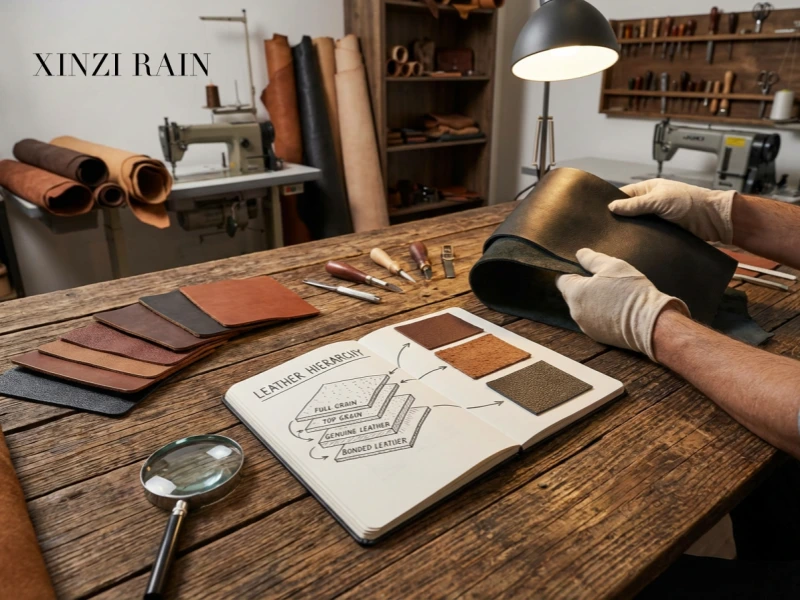
A structured tote needs a leather with body and stiffness.
A soft shoulder bag needs pliability and gentle drape.
High heels need tight grain and strength over the toe box.
Sneakers need stretch control and abrasion resistance.
What is the product’s lifecycle expectation?
Luxury pieces must age beautifully; entry-level pieces must be durable and cost efficient.If purpose is unclear, leather selection will fail.
Understand the Leather Hierarchy (This Alone Prevents 70% of Quality Issues)
Not all leather is created equal. In fact, many brands don’t realize the leather they “think” they bought…is not actually the leather they received.
Here’s a quick professional breakdown:
Full-Grain Leather (Highest Level)
Best for: luxury handbags, premium footwear, structured designs.
- Tight, natural grain
- Ages beautifully (“patina”)
- Highest durability
- Expensive, but worth it
Quality Insight: If you want your product to compete with premium brands, full-grain is the standard.
Top-Grain Leather
Best for: commercial leather goods with smoother surfaces.
- Sanded to remove imperfections
- More uniform appearance
- Slightly lower durability
- More affordable
Genuine Leather
Best for: entry-price products where cost is key.
- Split layers of hide
- Lower strength and fiber density
- Not suitable for high-stress areas (like straps or toe boxes)
If you use “genuine leather” on a handbag strap → cracking is highly likely.
Bonded Leather (Avoid for Quality Products)
Made from shredded leather fibers + adhesives.
Unsuitable for quality footwear or bags.
Prone to peeling, cracking, and delamination.
Evaluate the Leather Like a Professional (Simple Tests, Huge Impact)
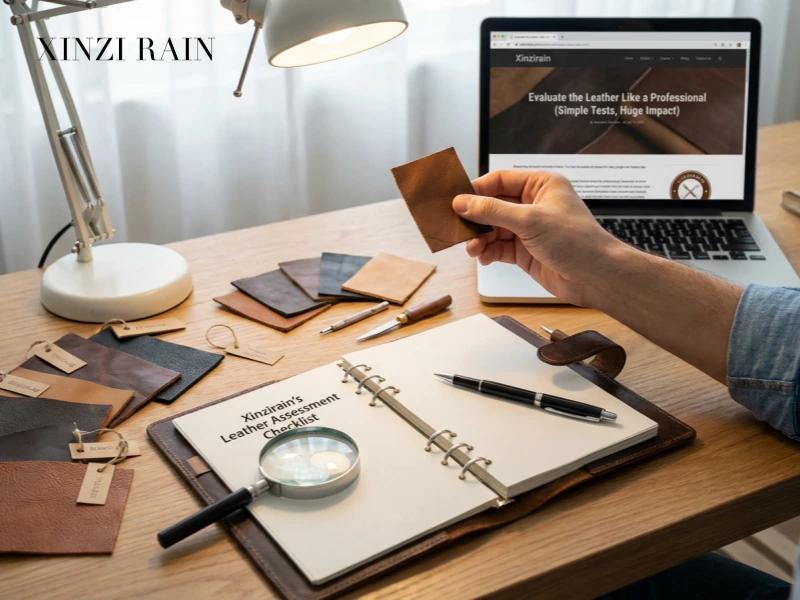
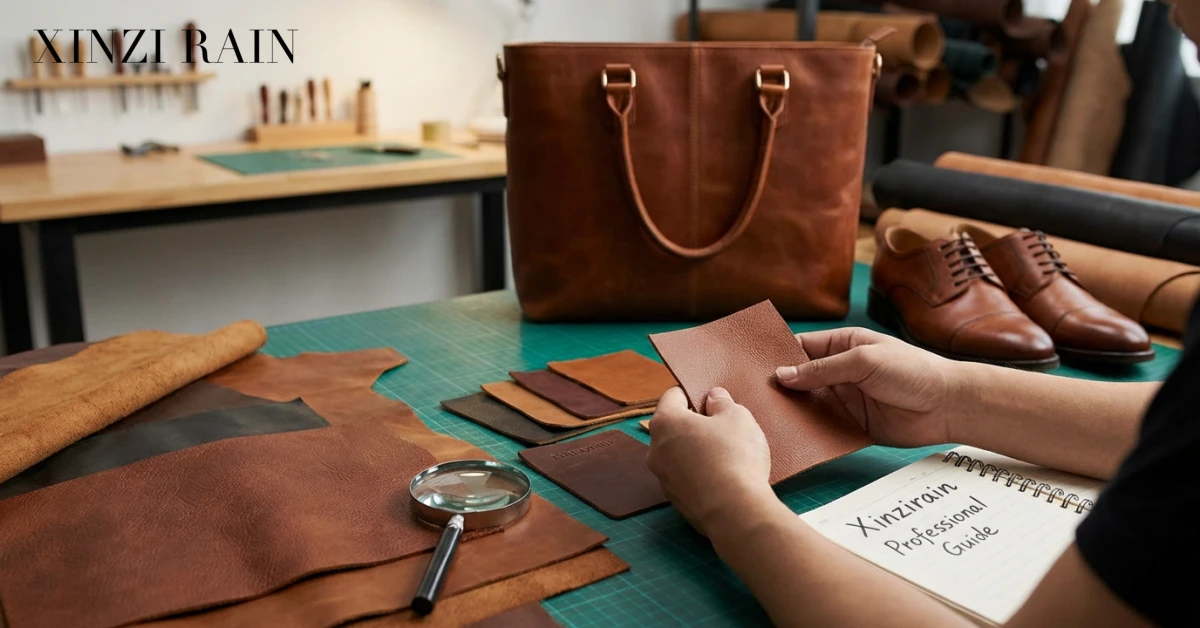
Xinzirain’s development team uses the following assessment checklist during sampling:
The Stretch Test
Gently pull the leather.
- If it stretches too much → bag will collapse / shoes will deform.
- If it feels weak → straps may crack.
Strong leather rebounds without leaving wrinkles.
The Grain Test
Examine the surface..Tight grain = strong and durable.Loose grain = likely to wrinkle excessively.Uniform, fine grain is preferred for luxury goods.
The Fold Test
Fold the leather and hold for 10 seconds.Good leather: no white stress marks.Low-quality leather: visible cracking or discoloration
The Smell Test
Yes—experts really do this.Real leather: subtle, rich, organic scent.Heavily corrected leather: chemical smell.PU mixed leather: synthetic smell
The Backside Check
The back (flesh side) reveals quality.Dense fibers = high durability.Loosely packed fibers = weak structure
Leather Finishes: Your Hidden Risk Factor
Two leathers can look identical but perform completely differently because of finishing processes.
Below are common finishes and their behavior:
Aniline Leather
Natural look、Very soft、Easily absorbs stains
Use for luxury pieces, not daily heavy-use items.
Semi-Aniline Leather
More durable、Still soft、Slight surface coating
The best balance for commercial luxury.
Pigmented Leather
Most durable、Less natural-looking、Scratch-resistant
Great for structured bags and shoes for everyday wear.
How to Choose Leather for Shoes vs. Bags
Many brands mistakenly use “the same leather” for both categories—but the performance expectations are different.
For Shoes (especially heels and sneakers):
Choose leather with:
Tight fibers、Strong tensile strength、Scratch resistance、Good breathability
Weak leather = wrinkles, toe collapse, and cracking.
For Bags:
Choose leather based on structure:
- Tote bags → firmer, thicker leather
- Soft hobo bags → buttery, drapey leather
- Small leather goods → vegetable-tanned or stiff leather
Common Mistakes That Lead to Quality Failure (And How to Avoid Them)
Mistake 1: Choosing leather by appearance only
Leather must be tested, stretched, folded—not just evaluated by sight.
Mistake 2: Using the wrong leather thickness
Too thin → bag collapses
Too thick → stitching cracks
Mistake 3: Ignoring climate factors
Humid markets need mold-resistant linings and finishes.
Mistake 4: No reinforcement on straps or stress points
Even premium leather fails if the structure isn’t engineered properly.
Mistake 5: Believing supplier descriptions blindly
A label that says “genuine leather” tells you nothing about performance.
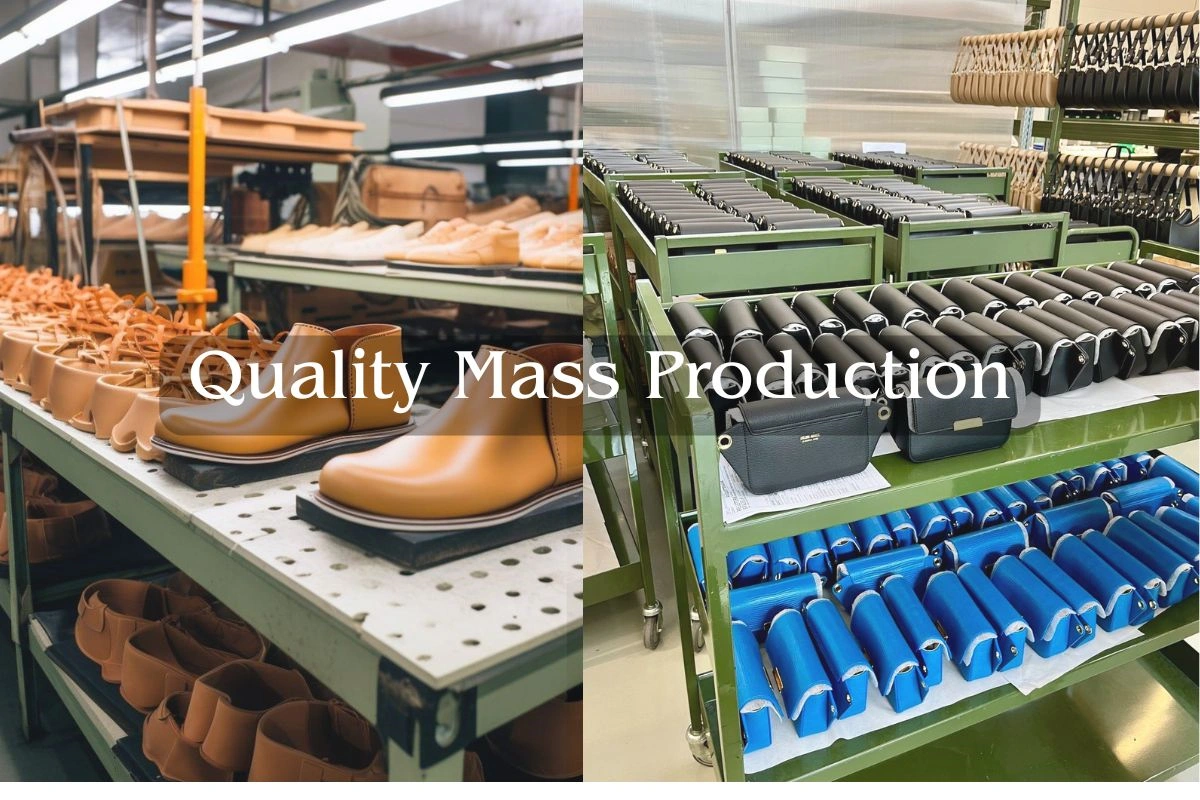
How Xinzirain Helps Brands Choose the Right Leather (OEM/ODM Advantage)
Instead of guessing, we guide brands using:
- Access to Italian, French & LWG-certified leather
- Factory-level testing: stretch, abrasion, finish, durability
- Material matching for bags + shoes for cohesive collections
- Cost vs. performance optimization
- Tailored leather recommendations based on design purpose
Our team works 1-to-1 with designers—especially first-time founders—to ensure your material choice aligns with market expectations, branding, and retail pricing.
Final Takeaway: The Leather You Choose Becomes Your Brand
A customer may not understand leather science, but they feel quality immediately:
- A bag that keeps its shape
- A heel that doesn’t wrinkle
- A sneaker that ages well
- A leather surface that softens instead of cracking
Choosing the right leather isn't just technical—
it's emotional, commercial, and brand-defining.
And when done right, it becomes one of your strongest competitive advantages.
If you're preparing your next footwear or handbag collection,
Xinzirain’s material experts can help you choose the right leather with confidence.
Request a free leather consultation
Explore Xinzirain OEM/ODM services
Send us your design for material matching