

When people search for wide-toe box shoes, they are usually not looking for a trend alone. They are looking for relief, a better fit, improved comfort, and footwear that works with the natural shape of the foot instead of fighting against it. That shift matters for both consumers and footwear brands. Research has linked poorly fitted footwear and reduced toe box volume with discomfort, forefoot pressure, and a higher likelihood of foot problems, while medical and podiatry guidance consistently recommends a wider, deeper front shape for people dealing with bunions, toe crowding, or forefoot sensitivity.
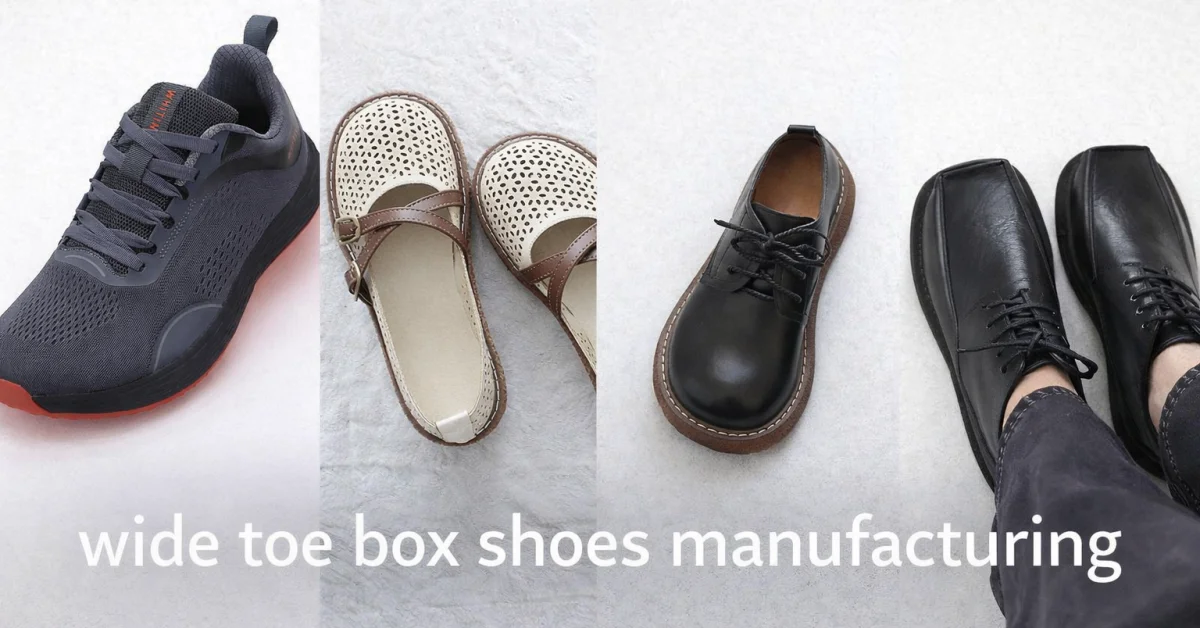
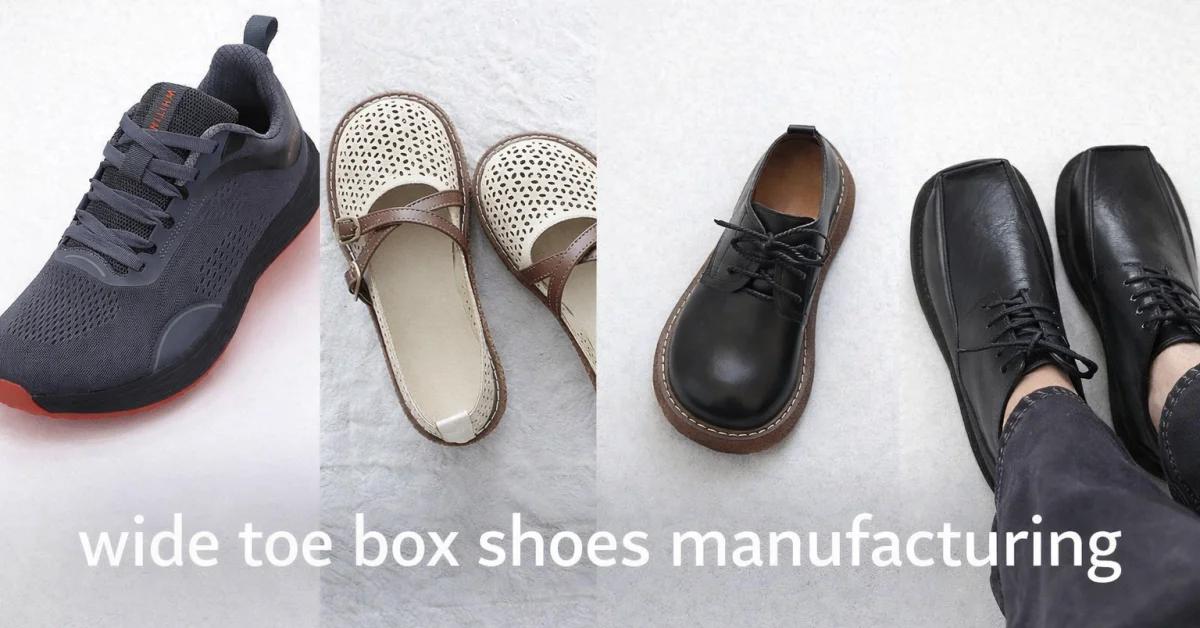
For footwear brands, the rise of wide-fit demand is not a niche story anymore. It sits at the intersection of comfort, health awareness, inclusive sizing, athletic performance, and e-commerce fit expectations. At the same time, the broader footwear market continues to grow, North America remains a major footwear market, and consumers increasingly say comfort and fit are central to purchase decisions. That creates room for brands to develop better wide toe box running shoes, wide toe box sneakers, wide toe box boots, and even wide toe box heels that feel modern rather than orthopedic.
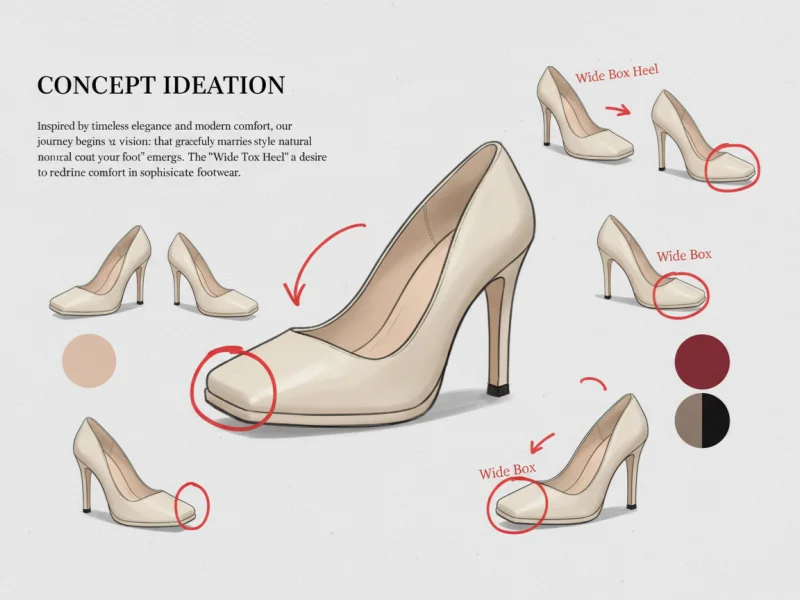
This article explains what a wide toe box really means, why it matters biomechanically, which categories are seeing the strongest demand, and how brands can build commercially viable collections around foot-shaped comfort.
What does “wide toe box” actually mean?
A wide toe box is not simply a shoe sold in a “wide width.” Those are related, but they are not the same thing. Shoe width usually refers to the overall girth or fit of the shoe. A wide toe box refers more specifically to the front part of the shoe having enough width, height, and shape to let the toes rest naturally, rather than being squeezed inward. Clinical and footwear-fit literature has highlighted that toe box shape and toe box volume influence pressure on the forefoot, and that reduced volume can contribute to compression of the toes and poor fit outcomes.
This distinction is important. A person may not need an overall extra-wide shoe, but may still need more room around the metatarsal heads and toes. That is why many shoppers complain that a shoe is “wide enough in the middle” but still painful in the front. For brands, this means better product design begins with the last, forefoot shape, vamp pattern, toe spring, upper flexibility, and insole geometry—not just with a wider size label. The clinical guidance around forefoot conditions also repeatedly points toward shoes with a wide front, a rounded or squared toe box, and sufficient depth, especially when pressure or toe deformity is already present.
Why the wide toe box conversation is growing
The market conversation around wide-toe box footwear is growing because consumers are connecting footwear shape with long-term comfort. Research on incorrectly fitted footwear found a large share of participants wearing shoes that did not accommodate width or length properly, and this mismatch was associated with pain and foot disorders. In other words, a lot of people have been wearing the wrong shape for years.
There is also a strong lifestyle driver. More people are walking, standing for longer work shifts, returning to running, or looking for comfort-first daily footwear. In parallel, e-commerce has made shoppers more vocal about fit problems, especially around toe crowding, forefoot pain, and inconsistent sizing. The athletic footwear market is still expanding, and the insole market is also growing, which suggests that consumers are willing to spend more on fit, cushioning, and foot-support solutions.
Another driver is education. Foot and ankle organizations now communicate more clearly that shoes with narrow or pointed toe boxes can aggravate toe deformities and forefoot discomfort. That message has moved beyond medical settings and into mainstream product search behavior. Today, terms like wide toe box running shoes, best wide toe box running shoes, and wide toe box sneakers are often proxies for a broader consumer need: “I want my feet to feel normal inside the shoe.”
The biomechanics behind wide-toe box shoes
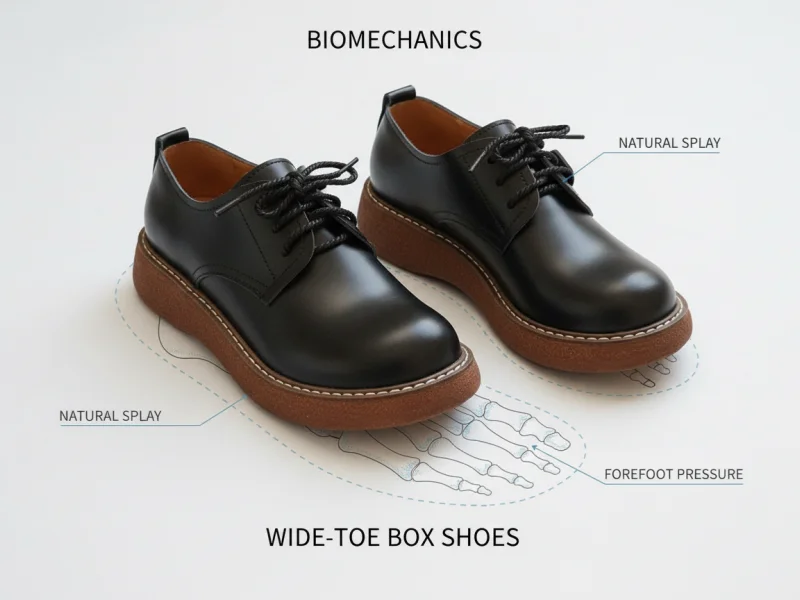
From a biomechanical perspective, the forefoot is not designed to live in constant compression. During standing and walking, the forefoot bears load, the toes help stabilize the body, and the metatarsals need enough room to spread according to the phase of gait and the person’s anatomy. Research has shown that toe box shape can significantly influence forefoot pressure, and poorly fitting shoes can restrict natural forefoot splay.
This matters because the toes are not passive. They contribute to balance, propulsion, pressure distribution, and overall comfort perception. When the front of the shoe compresses the toes, several things can happen:
- localized pressure rises around the forefoot,
- The big toe may be pushed inward,
- friction increases,
- upper material rub becomes more likely,
- and wearers often compensate in gait or posture.
These issues do not always create immediate injury, but they often create a pattern of discomfort that shoppers recognize long before they know the medical terms for it. That is why consumers frequently say a shoe “feels too tight in the front” even if the official size is correct. Research on footwear fit and comfort supports the idea that fit quality is a major part of perceived comfort.
Wide-toe box shoes and foot health
Wide-toe box footwear often becomes relevant when people start experiencing bunions, hammer toes, toe crowding, calluses, or generalized forefoot pain. NHS guidance and specialist foot-and-ankle resources commonly recommend shoes with a wide, deep toe box and discourage narrow, pointed, or high-heel designs that increase compression on the forefoot. The American Podiatric Medical Association also advises avoiding narrow or pointed toe boxes in the context of hammer toes.
That does not mean every customer buying wide-toe box shoes has a diagnosed condition. Many are simply trying to prevent problems before they become chronic. This is where footwear brands have a major opportunity: not to market medical treatment, but to offer a smarter fit. A well-designed wide toe box product can reduce front-foot crowding, accommodate mild asymmetry, and improve day-long wearability without making the shoe look bulky or clinical. The best commercial designs feel normal, polished, and versatile.
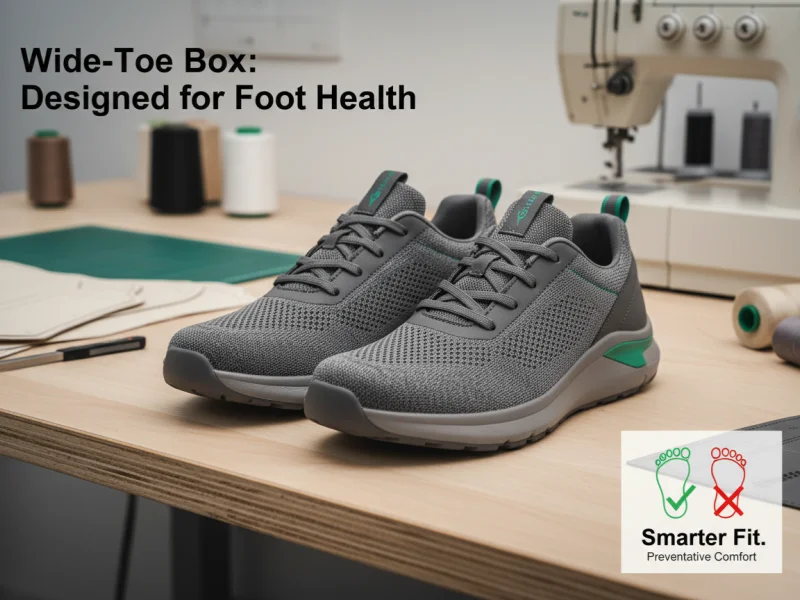
Why a wide toe box matters in running
The strongest search demand today is often around wide-toe box running shoes and the best wide-toe box running shoes. That makes sense. Running places repeated load through the forefoot, feet can swell during longer efforts, and runners tend to notice fit flaws more quickly than casual wearers. Mainstream running media increasingly highlights roomy toe boxes as a real product differentiator, not a fringe attribute. Recent footwear coverage from Runner’s World, for example, specifically highlights roomy toe boxes and comfort for runners with wide feet or big toes.
Biomechanically, runners often benefit from additional forefoot room because:
- The foot may expand under load,
- Repetitive toe compression can increase irritation,
- Downhill running can push the toes forward,
- and longer mileage can amplify small fit issues into major discomfort.
That does not mean every runner should wear the widest possible shoe. Too much internal volume can create instability or slippage. The better principle is anatomically appropriate width with secure midfoot and heel lockdown. This is why some of the most successful wide toe box running shoes pair a spacious forefoot with a stable rearfoot, good lacing structure, and cushioned but controlled midsoles. That design logic aligns with podiatry advice emphasizing fit at the front, back, and sides—not just a loose overall feel.
Wide-toe box sneakers are moving from “functional” to mainstream
The rise of wide-toe box sneakers is one of the clearest examples of comfort-led design entering everyday fashion. A few years ago, wide-toe box products were often perceived as niche, technical, or medical-looking. Today, consumer expectations have shifted. People want casual sneakers that feel less restrictive, especially for commuting, travel, retail work, and daily city wear.
For brands, this is commercially attractive because sneakers can absorb a wider toe box design more easily than formal shoes. Pattern adjustments, mesh uppers, knit constructions, gusseted tongues, wider lasts, extra-depth footbeds, and removable insoles all help create a more accommodating front-foot fit. A brand that gets this balance right can serve customers who have been excluded by standard fashion sneakers without losing aesthetic appeal.
Wide-toe box shoes for men: a major commercial category
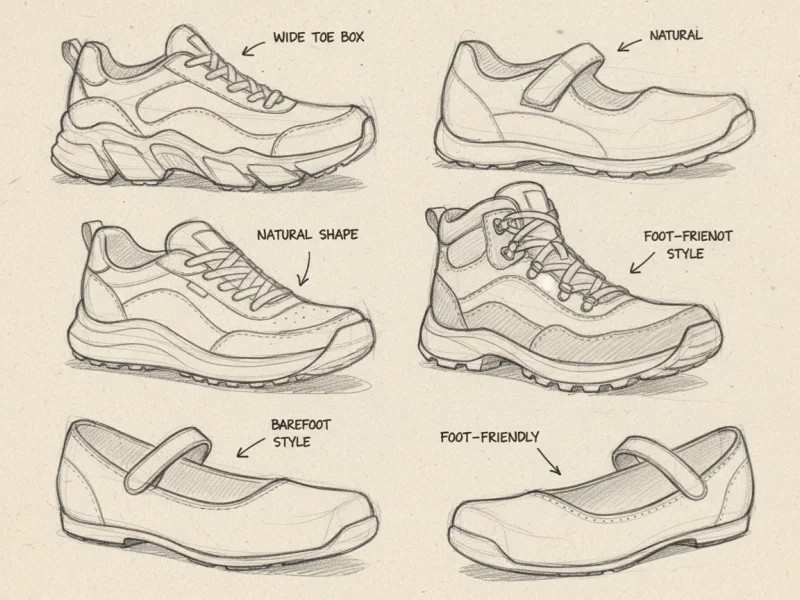
Searches for wide-toe box shoes for men continue to matter because men often shop later in the pain cycle. Many do not actively look for “foot health” products at first. They search for work shoes, travel shoes, walking shoes, running shoes, or casual shoes that “don’t squeeze” or that are “good for wide feet.” That means wide toe box positioning for men often performs best when tied to function and wear context rather than only to anatomy.
Commercially, the biggest opportunities include:
- walking sneakers,
- business-casual comfort shoes,
- travel sneakers,
- golf shoes,
- work-adjacent casual shoes,
- and wide-toe box boots.
From a development standpoint, men’s wide toe box products usually need careful attention to instep fit, collar hold, and outsole stability. A roomy front without secure rearfoot control can feel sloppy, especially in heavier silhouettes.
Wide toe box boots: where comfort and structure must work together
Wide-toe box boots present a more technical challenge because boots naturally use heavier uppers, stiffer constructions, and more structured toe shapes. That makes forefoot comfort harder to achieve. Still, the demand is real—especially in work, outdoor, travel, and fashion-boot segments.
A commercially strong wide-toe box boot usually needs:
- an anatomical or semi-anatomical last,
- sufficient toe height as well as width,
- flexible forefoot break,
- supportive midfoot platform,
- and internal finishing that avoids pressure hotspots.
For fashion boots, the challenge becomes even more interesting. Brands want a sleek silhouette, but too much taper in the forepart creates the exact problem shoppers are trying to escape. The best solution is often smarter pattern engineering and better outsole proportion rather than simply making the shoe look oversized.
Can wide-toe box heels really work?
Yes—but only if the design team is honest about the trade-offs.
From a manufacturing perspective, developing wide-toe box heels requires balancing aesthetics and engineering.
At XINZIRAIN, we often work with emerging brands that want to create elegant stilettos while improving comfort.
Through HERRAINS, we help achieve this by:
- Adjusting forefoot width without losing silhouette
- Adding cushioned insoles and pressure-distribution layers
- Designing slightly wider heel bases for better stability
- Developing custom heel structures (including branded heel designs)
- Supporting outsole customization, such as engraved branding
This allows brands to create heels that are not only visually refined but also commercially viable for real customers.
The ergonomic case for a wider forefoot design
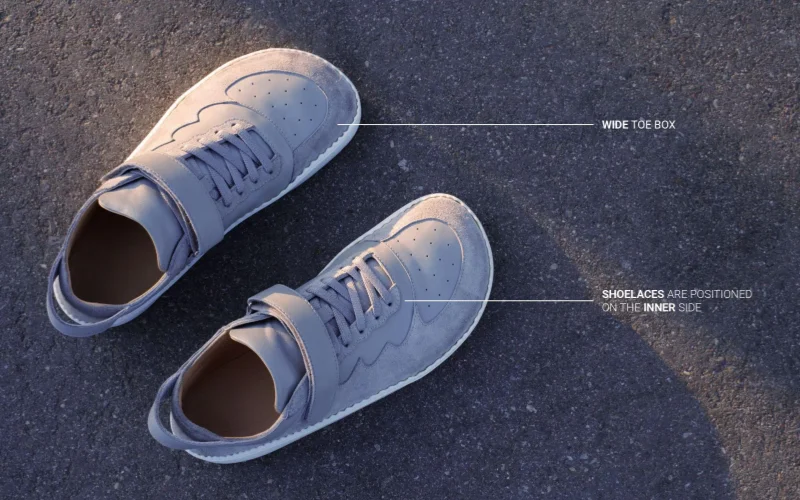
From an ergonomic perspective, wide-toe box footwear is about matching shoe form to human form. Foot-scan and anthropometric studies show that feet vary meaningfully in width, shape, and proportional geometry. Women’s feet are not simply scaled-down men’s feet, and foot shape differences matter in product development. Dynamic foot shape can also change under load, which means static dimensions alone do not fully describe how a foot behaves inside a shoe.
For brands, this means better fit development should consider:
- sex-based foot shape differences,
- wide forefoot but narrow heel combinations,
- foot expansion during standing or running,
- and the fact that e-commerce customers increasingly expect fit solutions, not generic sizing.
Wide toe box design is therefore not just about comfort marketing. It is an ergonomics problem—and ergonomics, when solved well, becomes a commercial advantage.
Product categories with the strongest wide toe box opportunity
For brands evaluating product strategy, the strongest wide toe box opportunities today are usually:
1. Running shoes
This remains the clearest demand cluster because consumers are already educated enough to search by fit problem. Terms like wide toe box running shoes and best wide toe box running shoes align with purchase intent and product comparison behavior.
2. Lifestyle sneakers
Wide-toe box sneakers are highly scalable because they fit daily-wear use cases and allow brands to merge comfort with trend-led styling.
3. Everyday comfort shoes
This includes commuter shoes, travel shoes, retail-work shoes, and long-standing wear categories.
4. Men’s casual and hybrid business shoes
Wide-toe box shoes for men can bridge comfort and presentability, especially for customers who need one pair for multiple settings.
5. Boots
Wide-toe box boots remain underserved in both fashion and function-led segments.
6. Dress heels
Wide-toe box heels are a high-differentiation niche. Harder to develop well, but highly valuable when executed correctly.
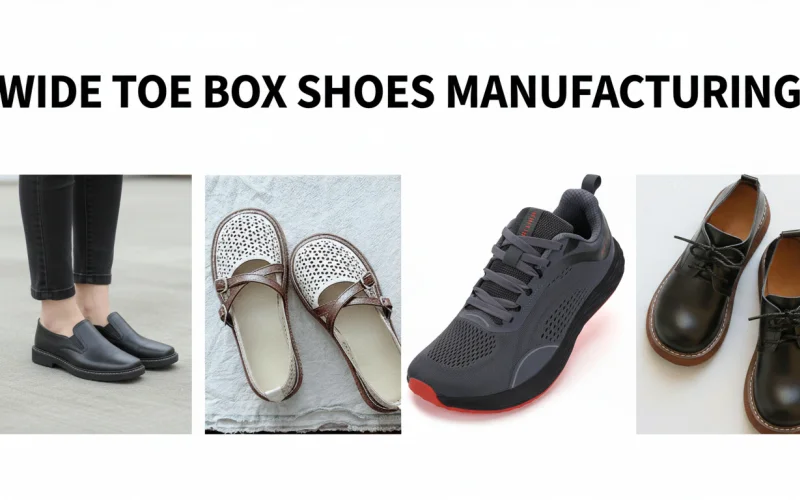
What footwear brands should do next?
If you are developing a wide-toe-box collection, avoid treating it as a single feature. A successful product usually combines:
- a better-shaped last,
- upper pattern adjustments,
- toe height as well as width,
- cushioning under the forefoot,
- arch and shank balance,
- and stable outsole geometry.
For performance categories, secure heel hold and controlled midfoot fit remain essential. For women’s heels, heel pitch and forefoot cushioning become even more important. For boots, upper stiffness and internal seam placement need more attention than many brands realize. And for e-commerce, the product page must explain fit clearly—especially around forefoot room, heel hold, and intended foot shape.
From Design to Production: How Brands Actually Build Wide Toe Box Shoes
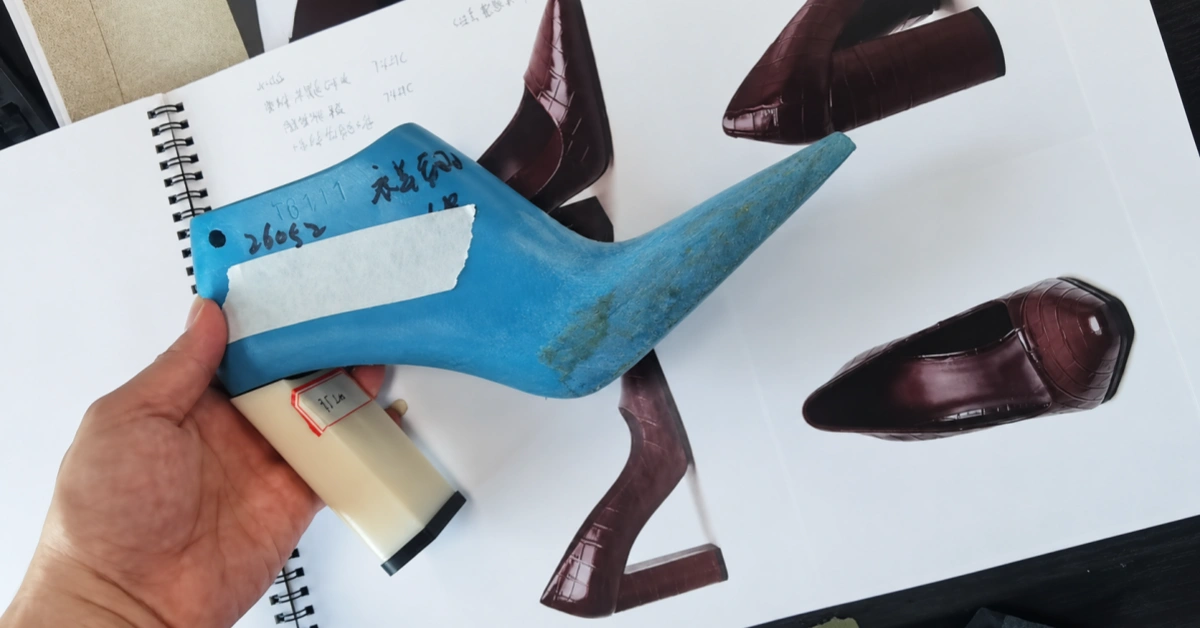
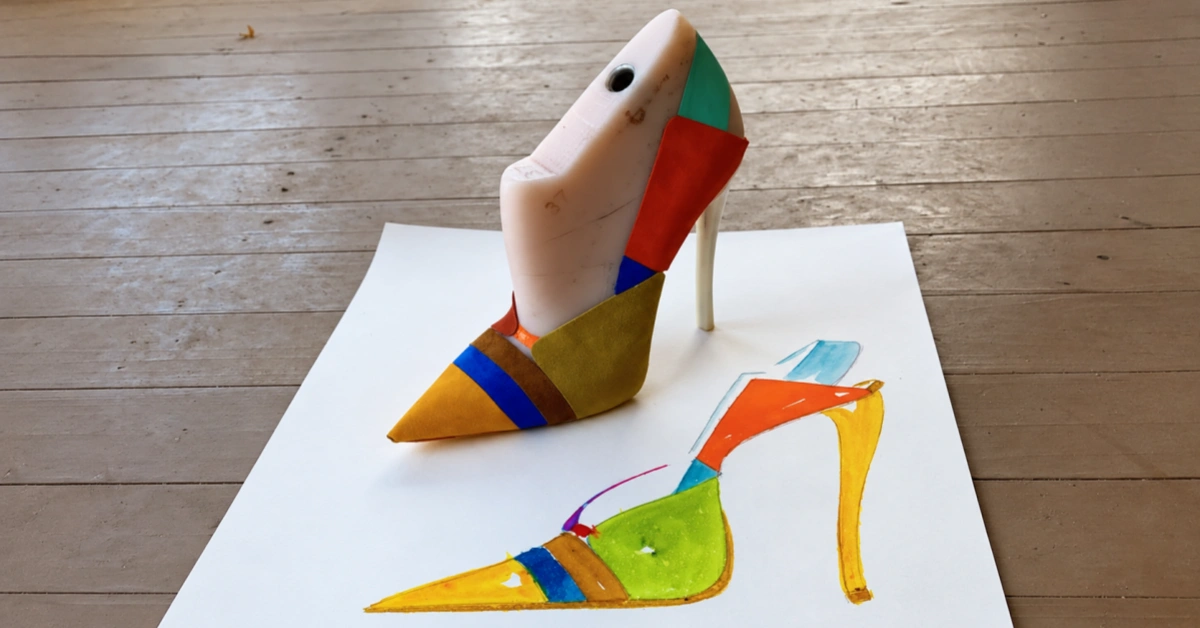
When moving from concept to production, many brands quickly realize that designing a true wide-toe box shoe requires more than simply adjusting width. It involves the latest development, upper pattern engineering, material flexibility, cushioning systems, and structural balance.
As a manufacturing partner, XINZIRAIN supports brands through this entire process—from concept validation to final production.
Through its specialized sub-brand HERRAINS, we provide:
- Custom last development for wide toe box structures
- Cushioning system optimization for forefoot comfort
- Heel stability engineering (including wider base support designs)
- OEM / ODM / private label production
- Flexible MOQ for growing brands
- Sample development before bulk production
This integrated approach ensures that brands don’t just design better shoes—but successfully bring them to market.
Final Thoughts
The demand for wide-toe box shoes is not just a trend—it reflects a long-term shift toward comfort, inclusivity, and better footwear design.
For brands, the opportunity lies in combining ergonomic thinking with strong product identity.
If you are planning to develop:
- wide toe box running shoes
- wide toe box sneakers
- wide toe box boots
- or even wide-toe box heels
Working with an experienced manufacturing partner can significantly reduce development risks.
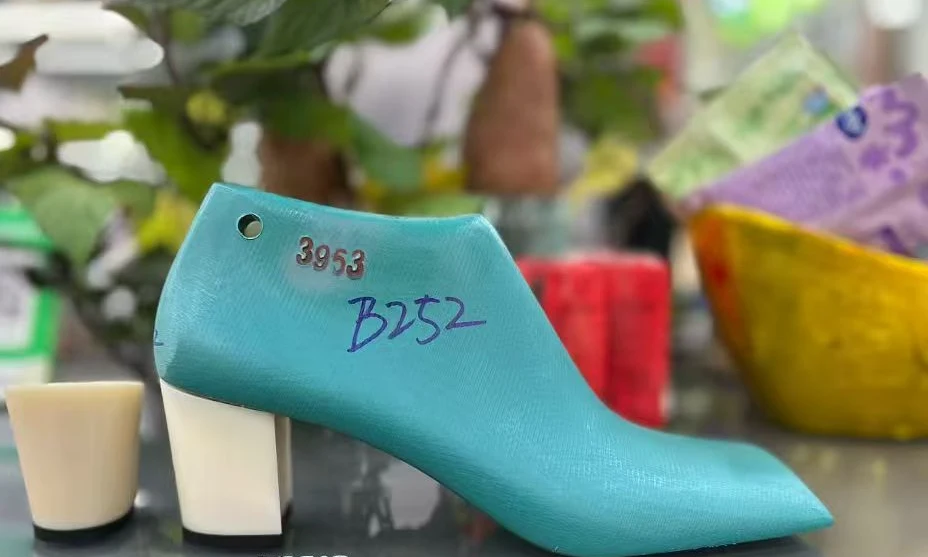
At XINZIRAIN, together with our specialized solution brand HERRAINS, we help brands turn ideas into market-ready products—from initial concept to final delivery.
Start with a sample. Scale with confidence.
Author: XINZIRAIN Footwear Development Team
The content of this article is created by the product development and manufacturing team at XINZIRAIN, a leading footwear and bag manufacturing group with over 25 years of industry experience serving global brands across Europe, North America, and the Middle East.
Our team works directly with fashion brands, designers, and sourcing managers to develop market-ready products—from concept sketches to final production. With hands-on experience in last development, material selection, structural engineering, and quality control, we bring practical, real-world insights into every stage of footwear creation.
Through our specialized solution brand HERRAINS, we focus on providing one-stop OEM, ODM, and private label manufacturing services, helping brands turn ideas into scalable products with consistent quality and reliable timelines.
This article is based on real manufacturing experience, industry research, and ongoing collaboration with global clients—ensuring that the insights shared are not just theoretical, but applicable in actual product development and production.
References
- Footwear fit and foot pain research
- Toe box shape and forefoot pressure study
- NHS advice on wide toe box footwear
- APMA footwear recommendations
- High heels and forefoot pressure research
- Heel base stability research
- Foot shape differences study
- Global footwear market growth
- Athletic footwear market insights
- Wide-toe box running shoes trend