
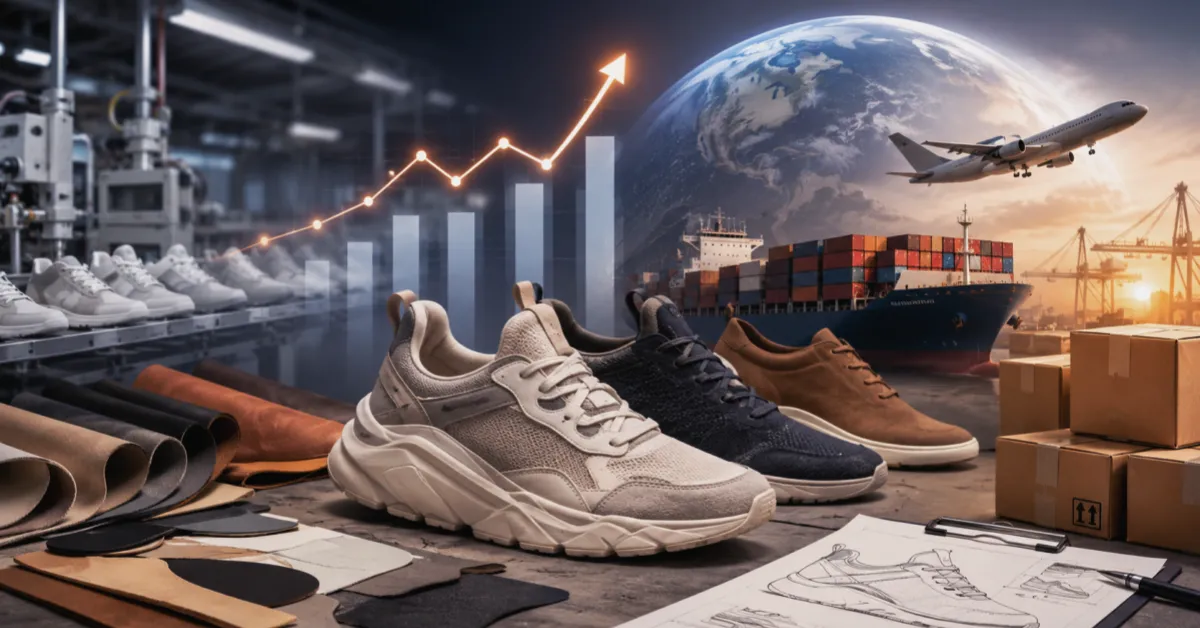

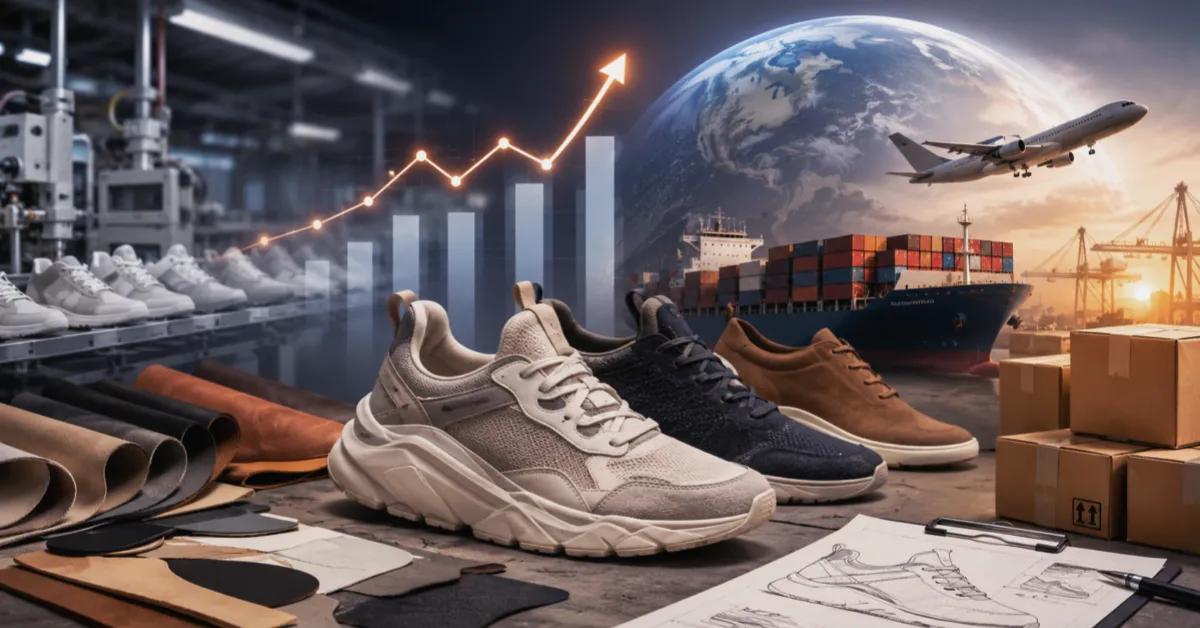
The Global Footwear Market Is Changing Faster Than Many Brands Expected
If you feel like shoes are getting more expensive lately, you are not alone.
Over the past year, many footwear brands, retailers, and buyers have started facing the same problem — costs keep going up across almost every part of the business.
Materials are more expensive. Shipping is less stable than before. Labor costs are rising in many countries. Even packaging and warehouse expenses are becoming harder to control.
Because of this, the footwear industry in 2026 looks very different from a few years ago.
For brands, this is no longer just about finding cheaper production. The bigger challenge now is how to build a more stable and flexible supply chain while still keeping product quality and delivery times under control.
For footwear brands, wholesalers, and private label startups, this is no longer just a “cost problem.” It is becoming a long-term supply chain challenge.
According to the latest data from the FDRA (Footwear Distributors and Retailers of America), U.S. retail shoe prices increased by 4.2% year-over-year in April 2026, marking the largest increase in nearly four years.
At the same time, average import shoe costs increased by 13.7% in the first quarter of 2026.
The message from the market is becoming very clear:
The era of low-cost footwear production is gradually ending.
Why Are Shoe Prices Increasing So Quickly?
The answer is simple:
Almost every part of the footwear supply chain has become more expensive.
This includes:
- Raw materials
- Labor
- Shipping
- Energy
- Packaging
- Import duties
- Warehouse costs
- Quality control
- International logistics
For many footwear brands, production costs are rising faster than retail sales growth.
As a result, brands are being forced to increase prices to protect profit margins.
The Biggest Pressure Comes From Manufacturing Costs
Footwear manufacturing today is far more complex than many people realize.
A modern shoe is not just fabric and rubber. It involves:
- Upper material sourcing
- Outsole development
- Mold costs
- Hardware
- Stitching labor
- Foam materials
- Packaging systems
- Quality inspections
- International freight
Even a small increase in one production stage can affect the final retail price significantly.
For example:
When energy prices rise, factories pay more for production.
When shipping costs rise, importers pay more for transportation.
When material prices increase, brands either absorb the cost or pass it to consumers.
Eventually, consumers see the final result on the store shelf.
Footwear Brands Are Entering a “Higher Price, Lower Volume” Era
One of the most important trends in 2026 is this:
The footwear industry is shifting from “selling more pairs” to “selling higher-value products.”
Market reports show that overall footwear sales volume has started slowing down, but total revenue is still growing because average retail prices continue increasing.
In simple terms:
Consumers are buying fewer shoes, but paying more for each pair.
This creates a very different business environment for footwear brands.
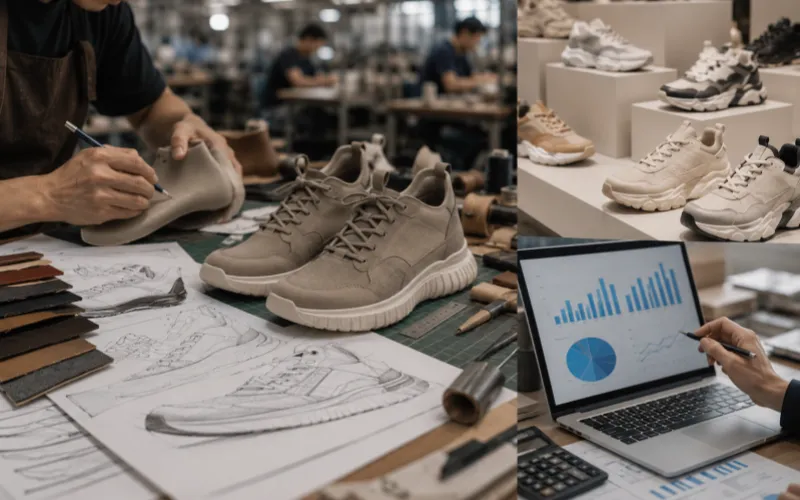
Consumers Are Becoming More Careful
Today’s buyers are more selective than before.
Instead of purchasing many low-cost shoes, many consumers now prefer:
- Better quality
- Longer-lasting products
- More comfortable materials
- Functional designs
- Limited editions
- Premium craftsmanship
This is especially true in:
- Fashion footwear
- Sneakers
- Leather shoes
- Comfort footwear
- Outdoor footwear
For brands, this means competing only on low price is becoming increasingly risky.
Fast Product Development Is Becoming More Important
Because consumer trends change quickly, brands now need faster development cycles.
The brands growing fastest in 2026 are usually the ones that can:
- Develop samples quickly
- Launch products faster
- Test new styles with lower risk
- Adjust inventory more efficiently
This is one reason why flexible OEM and ODM manufacturing is becoming more valuable.
Many startups and growing brands no longer want massive inventory pressure.
Instead, they prefer:
- Lower MOQ production
- Faster sample turnaround
- Smaller initial runs
- Flexible manufacturing partnerships
China Still Remains the Core of Global Footwear Manufacturing
Although many brands are exploring Vietnam, Indonesia, and India, China still remains one of the most important footwear manufacturing centers in the world.
Why?
Because China still offers advantages that are difficult to replace quickly.
These include:
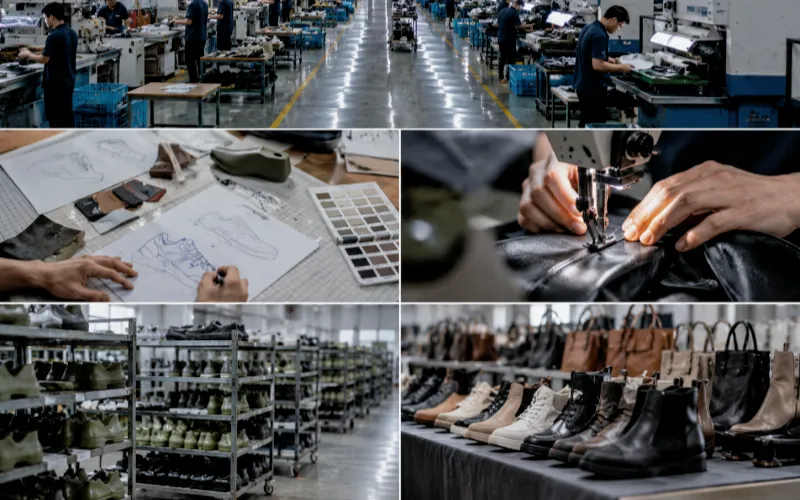
Complete Supply Chain Integration
Factories, material suppliers, mold developers, packaging vendors, and logistics providers are highly connected.
This allows faster development and better production coordination.
Strong Product Development Capability
Many Chinese footwear manufacturers now provide:
- Tech pack support
- Pattern making
- Material sourcing
- Prototype development
- Private label customization
- OEM and ODM services
This helps brands shorten development time significantly.
Better Flexibility for Growing Brands
Many global brands today are looking for manufacturing partners that can support:
- Low MOQ
- Multi-style development
- Fast revisions
- Flexible production scheduling
This is especially important for independent brands and e-commerce businesses.
Supply Chain Efficiency Is Becoming a Key Competitive Advantage
In the past, many footwear brands focused most of their attention on marketing and sales.
But today, having a stable and efficient supply chain is just as important.
The brands growing faster now are usually the ones that can:
- Develop products quickly
- Keep product quality consistent
- Control production costs
- Avoid supply delays
- Respond to market trends faster
In simple terms, success in the footwear industry is no longer only about good designs or strong branding.
It is also about how efficiently a brand can manage production and supply chain operations behind the scenes.
- Control production costs
- Maintain stable quality
- Develop products quickly
- Reduce supply chain risks
- Respond to market trends faster
In other words:
The future of footwear competition is no longer just about design.
It is about operational efficiency.
What This Means for Footwear Brands in 2026
For brands, the market is becoming more challenging — but also full of opportunity.
The companies likely to grow stronger are the ones that:
- Build long-term manufacturing partnerships
- Improve product positioning
- Focus on quality over volume
- Invest in supply chain stability
- Develop stronger private label identity
Consumers are still willing to spend money on footwear.
But they are becoming much more selective about what deserves their money.
How Manufacturers Are Adapting
Professional footwear manufacturers are also evolving.
Today, many OEM and ODM factories are no longer just “production suppliers.”
They are becoming full-service development partners.
This includes support for:
- Material recommendations
- Product engineering
- Comfort optimization
- Branding customization
- Packaging development
- Quality control systems
- International shipping coordination
For many global brands, choosing the right manufacturing partner now directly affects business survival.
Final Thoughts
The footwear market in 2026 is no longer operating under the old low-cost growth model.
Rising costs are changing the entire industry.
However, this shift is also creating opportunities for brands that can adapt quickly.
The companies most likely to succeed are not necessarily the cheapest.
They are the ones that can combine:
- Strong product development
- Efficient supply chain management
- Stable manufacturing quality
- Faster speed-to-market
- Better customer experience
At HERRAINS and XINZIRAIN, we believe the future of footwear manufacturing is not just about making shoes.
It is about helping brands build stronger, more flexible, and more resilient supply chains for long-term growth.
FAQ
Why are shoe prices rising in 2026?
Rising material, labor, shipping, and logistics costs are increasing overall footwear production expenses.
Is China still a reliable footwear manufacturing hub?
Yes. China still offers strong supply chain integration, faster development, and stable production support.
What is low MOQ footwear manufacturing?
Low MOQ manufacturing allows brands to start with smaller production quantities to reduce inventory risk.
Why are brands focusing more on supply chain efficiency?
Efficient supply chains help brands reduce costs, improve quality, and launch products faster.
What do modern footwear manufacturers provide today?
Many manufacturers now offer full services including design support, sampling, sourcing, production, QC, and logistics.
What is the difference between OEM and ODM footwear manufacturing?
OEM uses the brand’s own designs, while ODM allows brands to customize factory-developed styles.
Why are long-term manufacturing partnerships important?
Stable partnerships improve communication, product consistency, and production efficiency.
What do consumers want from footwear brands in 2026?
Consumers are focusing more on quality, comfort, durability, and premium craftsmanship.
Why is faster sample development important?
Fast sampling helps brands respond quickly to market trends and reduce development delays.
How can HERRAINS and XINZIRAIN support footwear brands?
HERRAINS and XINZIRAIN provide one-stop OEM/ODM footwear manufacturing solutions for global brands.
About the Author
HERRAINS Editorial Team
HERRAINS is a professional footwear and bag manufacturing solution provider under the XINZIRAIN group. With over 25 years of experience in OEM, ODM, and private label manufacturing, the team specializes in footwear product development, supply chain management, material sourcing, sample development, and global production solutions.
The HERRAINS editorial team shares industry insights, manufacturing knowledge, sourcing strategies, and market trends to help fashion brands, wholesalers, retailers, and startups better understand the global footwear and bag industry.
Learn more at HERRAINS Official Website and XINZIRAIN Official Website