

The Shift: Why "Sustainable" is the New Luxury Standard
In the competitive landscape of the 2026 fashion market, the definition of "luxury" has undergone a radical transformation. For independent brand owners and designers in Europe and North America, a beautiful silhouette is no longer enough. The modern high-end consumer—driven by the European Green Deal and a heightened awareness of environmental impact—demands transparency.
As a specialist eco-friendly footwear factory with 15 years of experience in high-end customization, we have observed a critical shift: Sustainable luxury shoe manufacturing is now the primary "entrance ticket" for brands aiming to be stocked in premium retailers like Selfridges, Neiman Marcus, or Net-a-Porter. If your brand cannot prove its environmental credentials, it risks being excluded from the most lucrative market segments.
The Trap of Traditional Vegan Leather (PU vs. Bio-based)
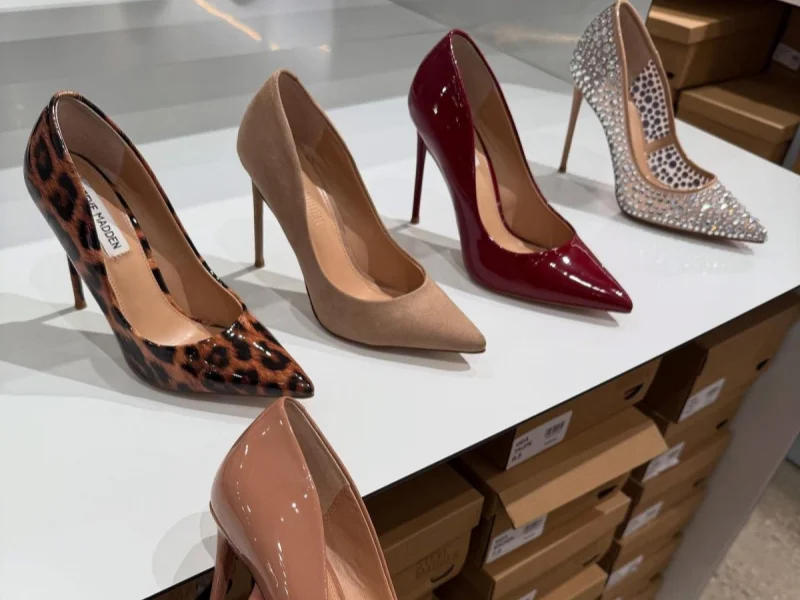
For years, many brands marketed "Vegan Leather" as a sustainable alternative. However, the industry’s "dirty secret" is that most traditional vegan leathers are composed of Polyurethane (PU) or Polyvinyl Chloride (PVC)—essentially virgin plastics derived from fossil fuels. While they avoid animal hides, they contribute to microplastic pollution and have a high carbon footprint.
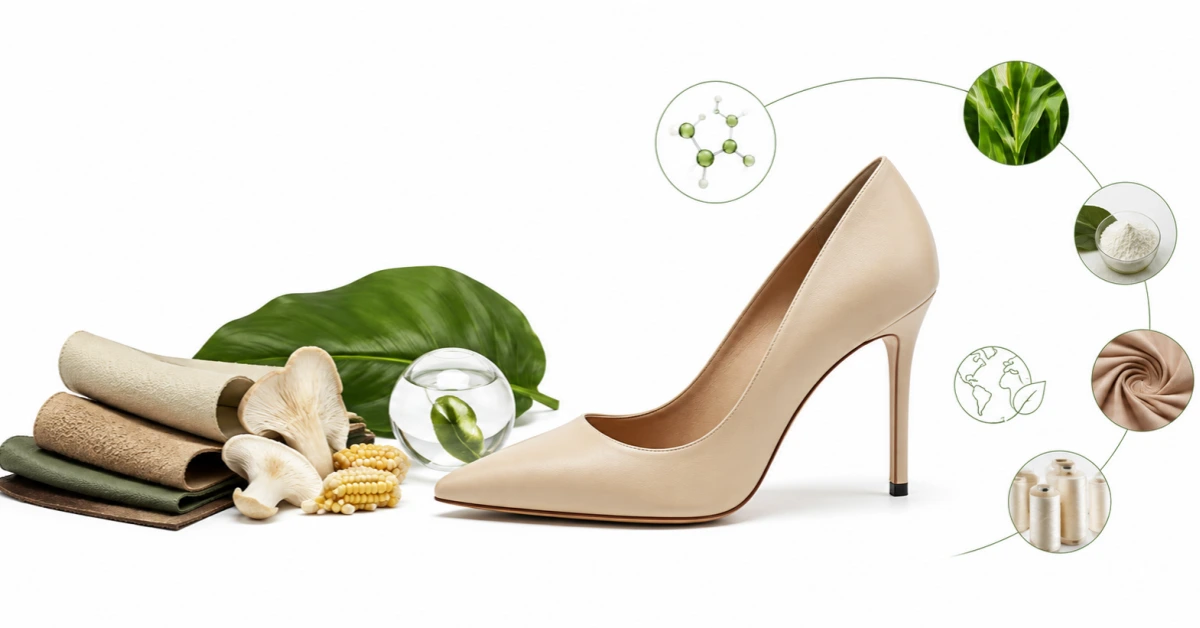
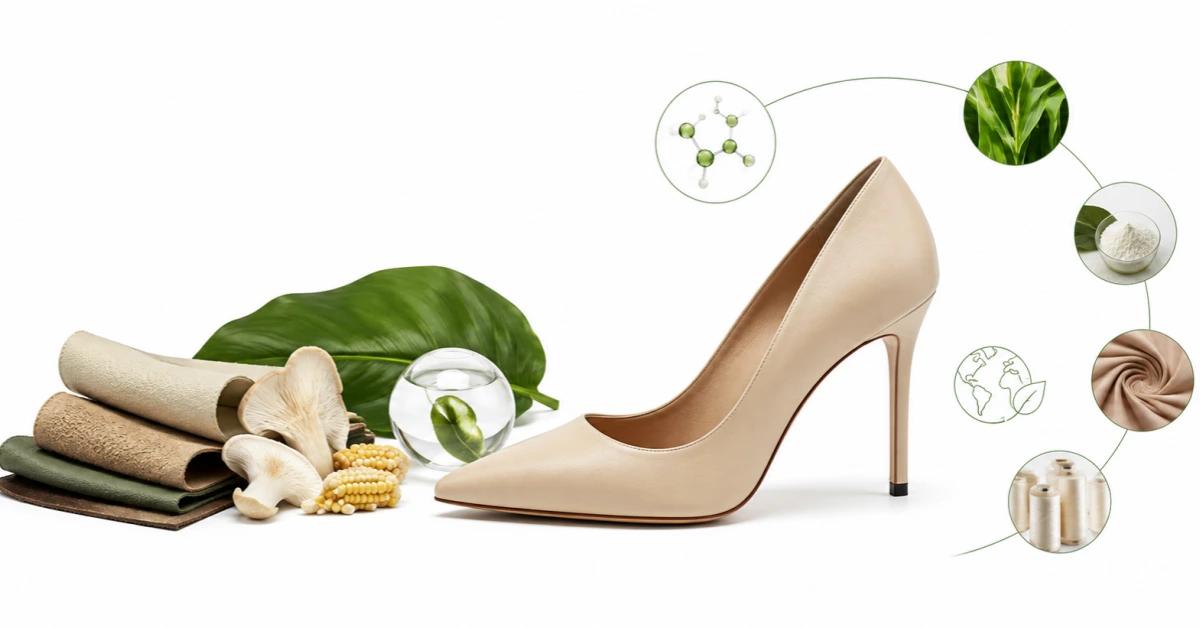
For a luxury stiletto brand, PU often fails to deliver the "breathability," "aging character," and "tensile strength" required for high-tension designs. This is why the industry is pivoting toward bio-based leather for stilettos. These materials utilize organic waste or lab-grown fibers, offering a truly circular solution without the environmental baggage of plastic.
Innovative Bio-based Leathers for Luxury Stilettos
In our manufacturing lab at XINZIRAIN, we are currently prototyping with three revolutionary bio-materials that meet luxury standards:
- Mushroom Mycelium (Mylo): This lab-grown fiber replicates the cellular structure of animal skin. It offers a unique "hand-feel" and incredible shear strength, making it ideal for the delicate straps of high-end evening sandals.
- Grape and Apple Leather: Derived from the waste of the European wine and juice industries. These materials are highly versatile and can be embossed with various textures (e.g., crocodile or lizard patterns) to meet high-fashion aesthetics.
- Cactus Leather (Desserto): Known for its high breathability and softness. It is an excellent choice for the lining of high-heels, where comfort is as important as the exterior look.
The technical challenge with bio-materials is ensuring they can withstand the "pitch" and "stretch" of a stiletto construction. Our 15 years of custom shoe prototyping experience allows us to apply specific technical interlinings that prevent these natural fibers from deforming over time.
Structural Integrity: Recycled Heel Components & Engineering
A stiletto is an engineering marvel; it must support the weight of the human body on a single point of pressure. When moving toward an eco-friendly footwear factory model, the "invisible" components must also be green.
We have successfully integrated recycled heel components into our luxury production lines:
- Recycled ABS and Aluminum: We utilize GRS-certified recycled resins and metals to create the internal "stem" of the heel. These materials undergo rigorous "impact testing" and "fatigue testing" to ensure they meet the safety standards of high-end fashion.
- Bio-Composite Insole Boards: Traditional insoles use heavy glues and non-recyclable fibers. We are now using bio-composites made from wood pulp and natural binders, reducing the "landfill footprint" of each pair.
The Compliance Pillar: Understanding LWG and GRS Certifications
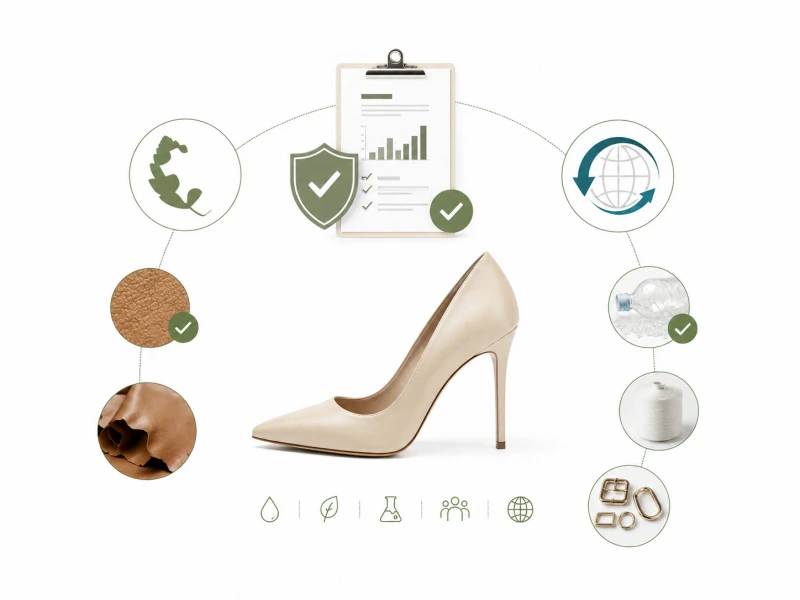
For B2B buyers, sustainability is only as good as the documentation behind it. To build a credible brand, you must ensure your manufacturer uses GRS & LWG certified materials.
- LWG (Leather Working Group): If your brand still uses genuine leather for certain high-durability lines, it must be LWG Gold or Silver rated. This ensures the tannery manages water, energy, and chemicals responsibly.
- GRS (Global Recycled Standard): This is the gold standard for tracking recycled content. Whether it is the recycled polyester in your stitching or the recycled zinc in your hardware, GRS provides a traceable "chain of custody."
At XINZIRAIN, we provide our clients with a full Transparency Report for every production run, enabling you to share authentic data with your customers and stakeholders.
The Invisible Green: Water-Based Glues and VOC Reduction
One of the most overlooked aspects of sustainable luxury shoe manufacturing is the bonding process. Traditional shoe assembly relies on solvent-based adhesives that release harmful Volatile Organic Compounds (VOCs) into the atmosphere.
As a commitment to our artisans and the environment, we have transitioned 90% of our luxury assembly to water-based glues. This process requires specialized heat-activation chambers and a slower, more precise curing time. While it increases production complexity, it results in a "cleaner" final product. Your customers will notice the difference—there is no harsh chemical odor when they unbox their new heels, only the neutral scent of high-quality materials.
Strategic Sourcing: Launching Your Sustainable Collection with XINZIRAIN
For independent designers, the barrier to sustainable entry is often the high Minimum Order Quantities (MOQs) demanded by traditional factories. We have solved this by offering Flexible Small-Batch Production specifically for "Capsule Collections."
Our One-Stop Workflow for Sustainable Brands:
- Consultation: We analyze your designs and recommend the best bio-based or recycled materials.
- Prototyping: We create 2-3 iterations to ensure the bio-leather performs perfectly with your specific heel height.
- Certification Support: We provide the necessary LWG/GRS documentation for your marketing.
- Agile Production: Launch with as few as 100 pairs per style, allowing you to test the market without overproducing.
Launching a sustainable brand is not just an ethical choice; it is a strategic business move to future-proof your company against shifting regulations and consumer preferences.
FAQ: Sustainable Footwear Manufacturing
Q1: Is bio-based leather as durable as traditional calfskin?
A: When sourced correctly and reinforced with professional technical backings, high-end bio-leathers like Mushroom or Grape leather can match the durability of traditional leather for evening and dress wear.
Q2: Can I get GRS certification for my hardware (buckles, zippers)?
A: Yes. We work with specialized hardware suppliers who provide GRS-certified recycled brass and zinc alloys, complete with a transaction certificate.
Q3: Does a "Sustainable" label affect the retail price?
A: Data shows that luxury consumers are willing to pay a 15-25% premium for products with verified sustainable credentials and transparent supply chains.
Q4: How does XINZIRAIN handle waste in the factory?
A: We implement a "Zero-Waste" cutting strategy using advanced nesting software to minimize leather scrap. Any remaining scrap is collected for downcycling into bonded leather or industrial components.
Ready to Lead the Sustainable Revolution?
Don't let your brand be left behind. Whether you have a completed tech pack or just a vision for a greener future, XINZIRAIN is here to help you navigate the complexities of sustainable luxury shoe manufacturing.