

Western Cowboy Boots Manufacturer Overview: What Are Western Cowboy Boots?
Western cowboy boots are a distinctive boot category originally shaped by riding, ranch work, and frontier life. Today, they have moved far beyond their practical origins and have become a recognizable fashion product for footwear brands, boutique labels, western lifestyle retailers, music culture, festival styling, and private label collections.
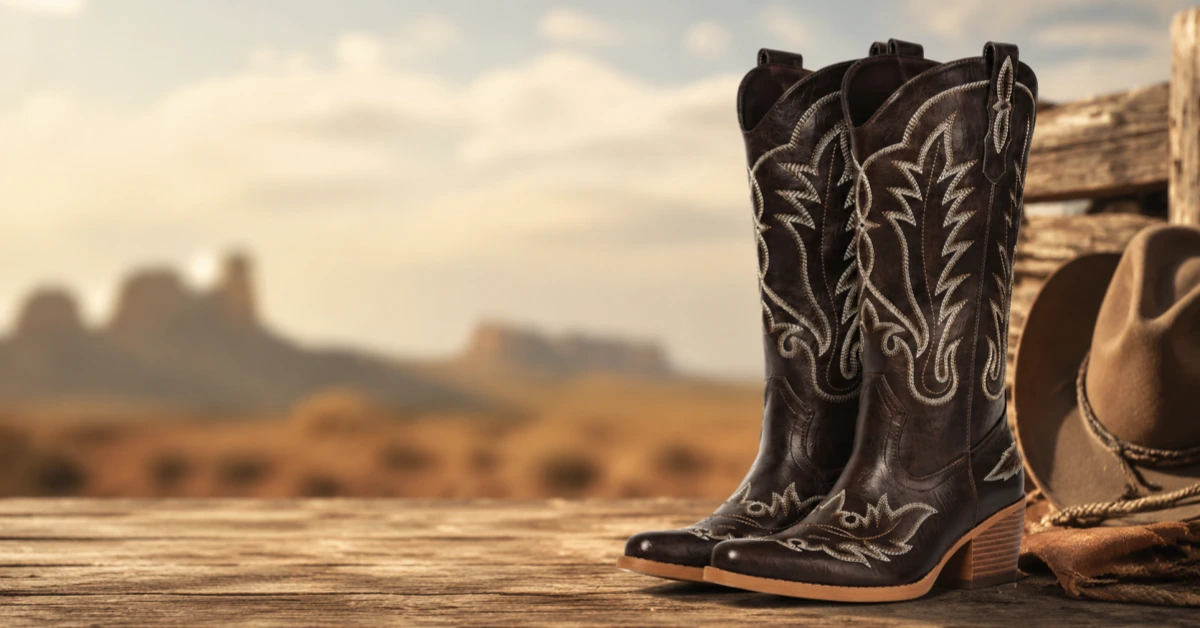
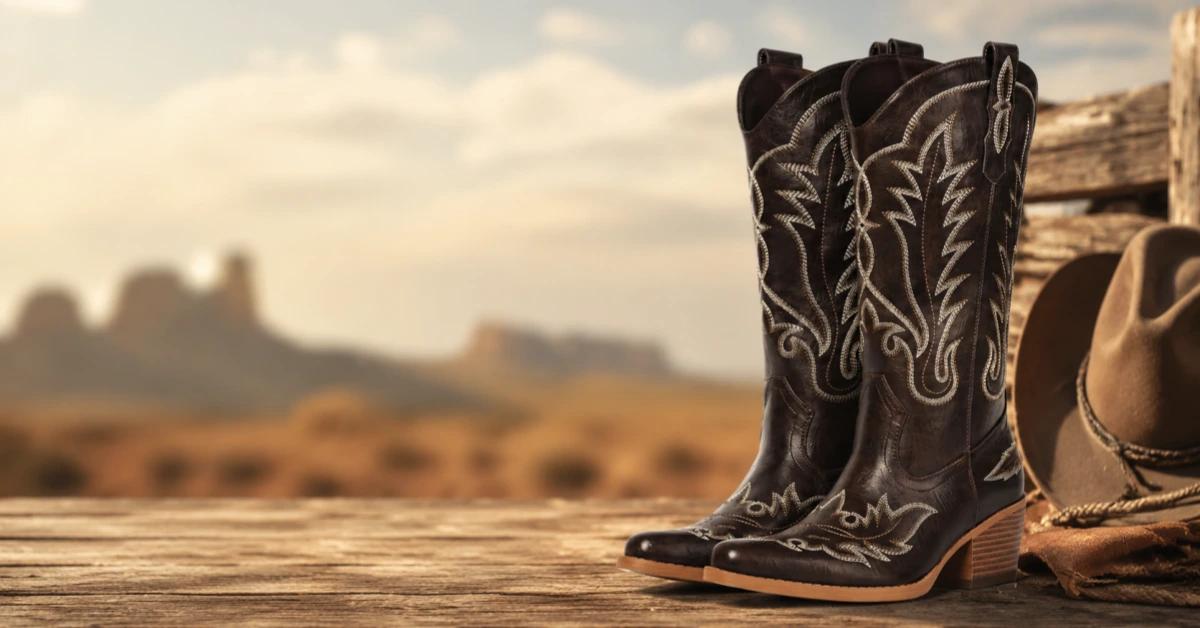
A classic western cowboy boot usually includes a tall shaft, pull-on construction, decorative stitching, a raised heel, a shaped toe, and a durable outsole. Unlike ordinary fashion boots, western cowboy boots are built around a specific relationship between structure, comfort, movement, and identity. The shaft must hold its shape, the heel must support posture, the vamp must stay clean under tension, and the toe profile must match the brand’s intended customer.
For a brand, western cowboy boots are not just a seasonal footwear style. They are a storytelling product. They carry heritage, craftsmanship, lifestyle attitude, and strong visual recognition. This is why selecting the right western cowboy boots manufacturer matters. A low-grade boot may copy the outline, but it cannot deliver correct shaft tension, toe balance, heel stability, stitching depth, leather behavior, or long-term comfort.
For Herrains, western cowboy boots sit at the intersection of technical footwear development and brand-building design. A serious private label western boots project should begin with practical questions: Who will wear the boot? Is the product intended for western lifestyle retail, urban fashion, festival styling, premium boutique positioning, or workwear-inspired outdoor use? Should the boot use full-grain leather, suede, vegan leather, embossed materials, metallic finishes, or mixed materials? Should the silhouette remain classic or move toward a modern fashion interpretation?
This guide explains western cowboy boots from a B2B manufacturing perspective. It covers history, classification, production process, market outlook, private label advantages, application scenarios, and development preparation. The goal is to help designers, brand owners, sourcing managers, and fashion entrepreneurs understand what makes a cowboy boot commercially valuable before entering product development.
Western Cowboy Boots History: Why Heritage Matters for Custom Cowboy Boots Factory Development
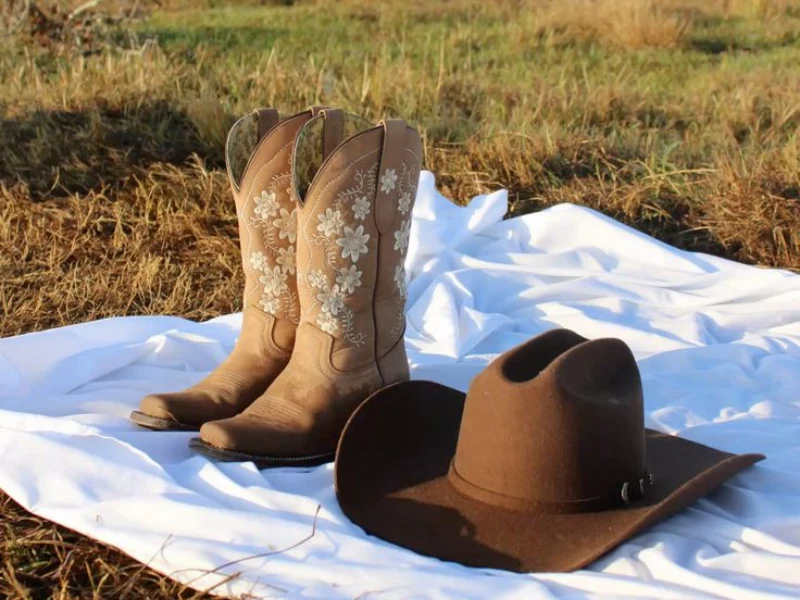
Western cowboy boots were shaped by practical riding needs. Their design had to support long hours on horseback, rough outdoor conditions, and secure foot positioning in stirrups. A raised and often angled heel helped reduce the risk of the foot sliding too far forward, while the tall shaft protected the leg from brush, friction, and outdoor hazards. Pull-on construction also made sense for riders and workers because laces could loosen, catch, or become inconvenient in rugged environments.
The history of cowboy boots is not traced to one single inventor. Several influences contributed to the shape we now recognize, including equestrian boots, military boots, Spanish and Mexican vaquero traditions, and North American ranch culture. Tecovas notes that late 1800s cattle ranching, vaquero influence, high shafts, tough cowhide, and angled heels all played important roles in the practical roots of cowboy boots (Tecovas history of cowboy boots).
Over time, cowboy boots evolved from purely functional footwear into cultural products. Hollywood western films, country music, rodeo culture, and later fashion media turned them into symbols of independence, confidence, and Americana. Decorative stitching, inlays, contrast leathers, exotic textures, and refined toe profiles helped transform the boot from utility footwear into a design object.
For modern brands, this history matters commercially. Customers do not buy western cowboy boots only because they need footwear. They buy into a feeling: freedom, craftsmanship, rural nostalgia, music culture, festival identity, and the confidence of western styling. A successful private label western boots collection must respect that emotional foundation while adapting the product to contemporary fit, comfort, materials, and styling.
That adaptation is where a professional custom cowboy boots factory becomes critical. A brand may want a traditional shaft but a softer city-wear sole. Another brand may want classic embroidery on a refined European last. A boutique label may want western boots with metallic leather, crystal details, vegan materials, or contemporary square toes. Without strong development capability, these changes can easily damage fit, durability, or visual proportion.
Herrains approaches western cowboy boot development as a balance of heritage and technical modernization. The purpose is not to create costume footwear. The purpose is to help brands create boots that carry western codes while meeting modern expectations for comfort, consistency, quality, and brand differentiation.
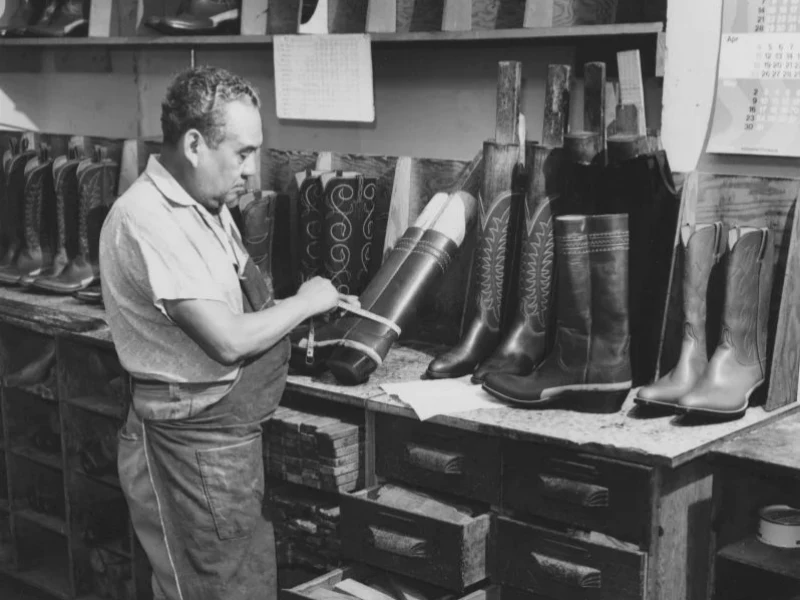
Western Cowboy Boots Classification: Key Styles for Private Label Western Boots
A strong western boot collection begins with correct category planning. Different silhouettes serve different markets, price points, and consumer identities. Below are the main styles that private label brands should understand before working with an OEM cowboy boots manufacturer.
Traditional Western Cowboy Boots Manufacturer Style
Traditional western cowboy boots usually feature a taller shaft, angled riding heel, pull straps, decorative stitch patterns, and a pointed, round, or slightly snip toe. This is the most recognizable cowboy boot style and is suitable for brands that want an authentic western identity. It works well for western lifestyle retailers, premium western wear brands, music festival collections, and fashion labels that want a strong visual statement.
The manufacturing challenge is maintaining correct shaft structure and heel balance. If the shaft is too soft, the boot collapses and loses its western identity. If the heel pitch is poorly engineered, the boot may look correct but feel unstable. A professional western cowboy boots manufacturer must control the relationship between heel height, last shape, insole board, shank support, outsole flexibility, and upper material.
Roper Boots for Custom Western Boot Production
Roper boots are shorter, more practical, and often easier for mainstream consumers to wear. They usually have a lower heel, rounder toe, and shorter shaft than traditional cowboy boots. For private label brands entering the western category for the first time, roper boots can be a smart bridge product. They keep western heritage but feel less intimidating to customers who usually wear Chelsea boots, ankle boots, or casual leather boots.
Roper boots are especially suitable for urban styling, gender-neutral collections, and everyday retail positioning. They are also more adaptable for comfort upgrades such as cushioned insoles, lighter outsoles, and flexible leather constructions.
Fashion Western Boots for Private Label Footwear Brands
Fashion western boots reinterpret cowboy boot language for runway, boutique, and lifestyle markets. These may include metallic leather, distressed suede, embroidered shafts, sculptural heels, contrast panels, crystal details, fringe, studs, or unusual colorways. This is where brand differentiation becomes strongest.
However, fashion western boots also carry greater technical risk. Added decoration can change material tension. Heavy trims can affect shaft balance. Unusual heels may require additional stability testing. Metallic and embossed materials may behave differently during lasting and stitching. Brands developing this category need a custom cowboy boots factory with strong material testing, pattern adjustment, and sample revision capability.
Western Work Boots and Durable Cowboy Boot Manufacturing
Western work boots prioritize support, durability, outsole traction, and protective function. They may include rubber outsoles, reinforced toe structures, stronger pull tabs, thicker leather, and comfort-focused insoles. This category suits outdoor lifestyle, ranch, equestrian, and workwear-inspired brands.
The key is not only strength but consistency. Workwear customers expect repeatable fit and long-term durability. A reliable wholesale western boots supplier must control abrasion resistance, outsole bonding, stitching quality, heel attachment, and quality inspection across bulk production.
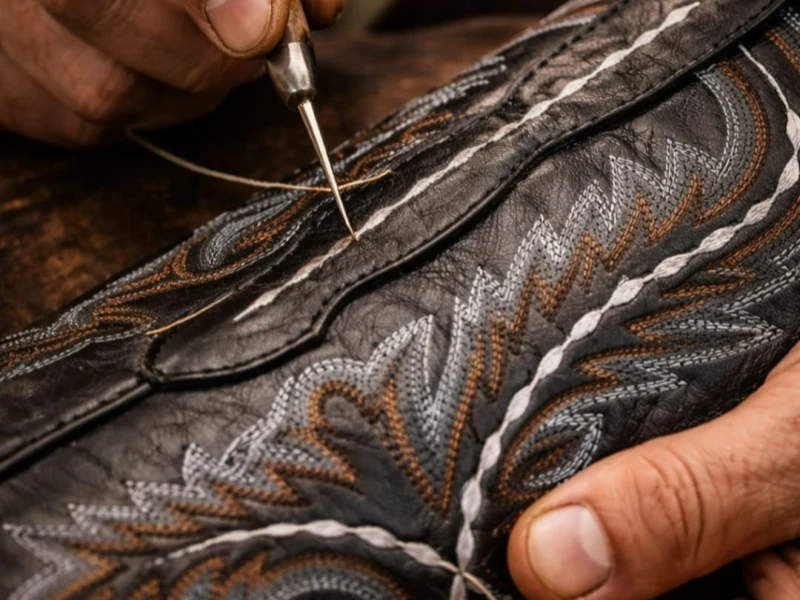
Exotic, Embossed, Vegan, and Sustainable Western Boots
Market segmentation now includes exotic-style embossing, vegan leather, suede, recycled components, denim, faux leather, and mixed materials. Fortune Business Insights segments cowboy boots by outer material including leather, faux leather, faux fur, denim, natural rubber, vegan, suede, and others (Fortune Business Insights cowboy boots market).
For B2B brands, this opens several positioning routes: premium leather heritage, cruelty-free western fashion, festival styling, sustainable urban western, or luxury embossed collections. Material choice should never be decided only by appearance. Western boots place high stress on the vamp, shaft, pull area, heel counter, and outsole connection. Materials must be tested for stretch, recovery, colorfastness, cracking risk, bonding performance, and compatibility with embroidery or edge finishing.
Cowboy Boot Manufacturing Process: How a Professional Western Cowboy Boots Manufacturer Builds Quality
The cowboy boot manufacturing process is more complex than many brands expect. A western boot is not just a tall boot with embroidery. It is a structured footwear system built from pattern engineering, material behavior, lasting control, shaft balance, bottom construction, and finishing quality.
Design Review and Technical Assessment for Custom Cowboy Boots
Before sampling, a professional manufacturer should review the design from a technical perspective. This includes shaft height, toe shape, heel type, leather thickness, lining choice, embroidery layout, outsole construction, and target wearer. For private label western boots, this stage prevents expensive sample failures.
Key questions include: Can the shaft stand properly with the chosen material? Will the embroidery distort the panel? Does the heel height match the last? Is the outsole suitable for the intended market? Does the boot need comfort padding, arch support, or a flexible forepart? Does the design require new molds, special lasts, special hardware, or extra reinforcement?
Herrains treats this stage as a technical foundation, not an optional step. Good development begins before the first sample is made.
Last Development for Western Cowboy Boots Manufacturer Precision
The last defines the boot’s fit, toe shape, volume, and posture. Cowboy boots require careful last selection because the product often has no laces. The boot must be easy enough to pull on but secure enough to wear comfortably. If the instep is too tight, customers cannot enter the boot. If it is too loose, the heel slips excessively.
For fashion brands, last development is also a branding tool. A sharp pointed toe creates a different identity from a broad square toe. A refined almond toe gives a premium European feeling. A round toe feels more casual and accessible. Custom last development allows a brand to create recognizable fit and silhouette consistency across seasons.
Pattern Engineering and Shaft Structure for Custom Western Boot Production
Western boot patterns include vamp, counter, shaft front, shaft back, lining, pull tabs, reinforcement components, and decorative panels. The shaft must be engineered to maintain shape while allowing movement. This requires correct material thickness, reinforcement placement, stitch density, lining behavior, and cutting direction.
Decorative stitching is not only visual. It can add structure to the shaft and help control panel tension. However, too much stitching can stiffen the boot or distort the leather if not planned correctly. A skilled custom cowboy boots factory must balance decoration with wearability.
Leather Cutting, Embroidery, and Upper Stitching
Material cutting affects cost, consistency, and visual quality. Premium western boots often require careful matching of grain direction, color tone, texture, and panel placement. Suede, metallic leather, embossed leather, and vegan materials each require different cutting and handling rules.
Embroidery is one of the strongest visual identifiers of western cowboy boots. For private label brands, embroidery can become a signature asset. It may include geometric western patterns, floral motifs, brand initials, contrast stitching, tone-on-tone details, or region-inspired artwork. The embroidery file must be tested before bulk production to avoid thread breakage, puckering, misalignment, or panel distortion.
Lasting and Shape Control in Cowboy Boot Manufacturing
Lasting is the process of pulling the upper over the last and shaping it into final form. Western boots require careful control because the shaft, vamp, toe box, heel counter, and lining must align correctly. Poor lasting can cause wrinkles, twisted shafts, uneven toe shape, or uncomfortable pressure points.
This is where experienced footwear technicians make the difference. The same design can look premium or cheap depending on lasting quality. For B2B brands, consistent lasting across sizes is essential because customers judge quality quickly from symmetry, shape, and comfort.
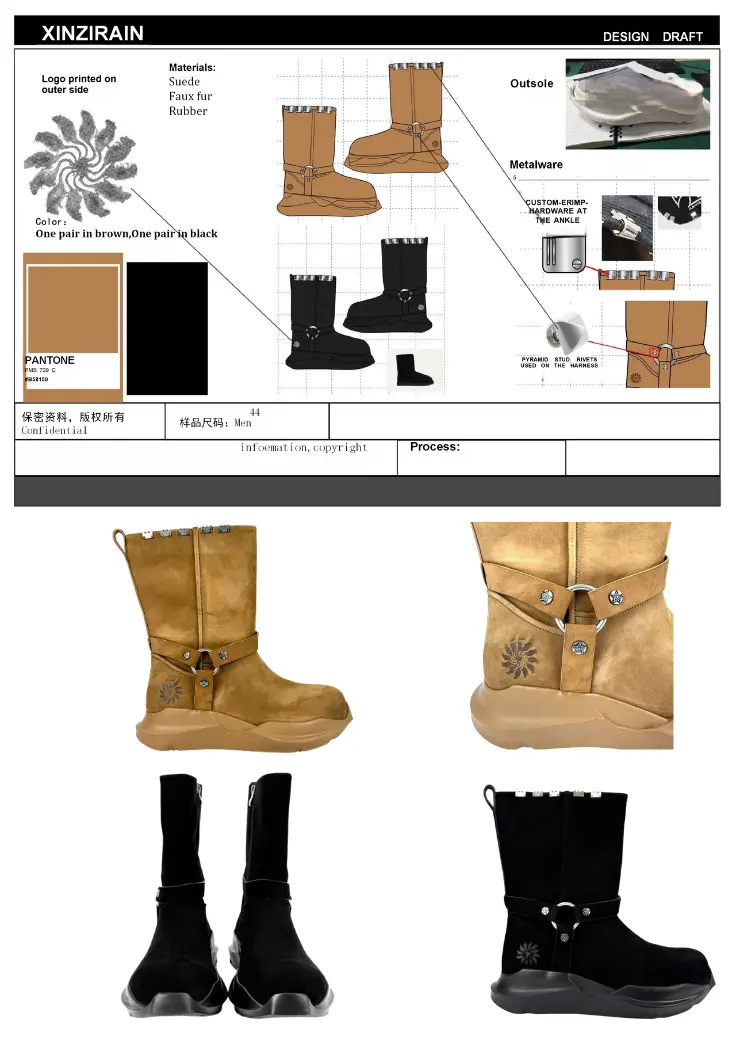
Outsole Construction: Cemented, Blake, Stitchdown, and Goodyear Welt Options
Different western boots require different bottom constructions. Cemented construction can be suitable for fashion collections where lighter weight and accessible pricing matter. Blake stitching can create a cleaner profile. Stitchdown construction can offer rugged character. Goodyear welt construction provides durability and repairability for premium boots.
Thorogood explains that Goodyear welt construction attaches the boot upper to the sole by sewing the upper to a welt, then sewing the welt to the sole. It also notes that welted construction can improve longevity, comfort, and moisture resistance compared with basic cement construction (Thorogood Goodyear welt construction guide).
A professional western cowboy boots manufacturer should not force one construction on every design. The right method depends on brand positioning, target retail price, material, outsole type, expected wear scenario, and customer expectation. Premium western boots often benefit from stronger bottom construction because customers associate cowboy boots with longevity.
Heel Attachment, Shank Support, and Balance Testing
The heel is one of the most important technical components in a cowboy boot. Western heels may be angled, stacked, blocked, low, high, or fashion-shaped. The boot must remain stable when walking, standing, and turning. Shank support helps maintain arch stability and prevents the boot from feeling weak under the foot.
For brands, heel engineering affects returns. A boot can look beautiful online but fail if the heel pitch is uncomfortable. During sample development, Herrains recommends testing heel balance, forefoot flex, arch support, entry comfort, heel slip, and walking stability before confirming bulk production.
Finishing, Quality Inspection, and Bulk Production Control
Finishing includes polishing, edge treatment, cleaning, color correction, thread trimming, outsole finishing, and final shape setting. Quality inspection should check size accuracy, pair symmetry, stitching, adhesive strength, heel stability, outsole bonding, pull tab strength, lining comfort, packaging condition, and material consistency.
For private label western boots, packaging and brand presentation also matter. Dust bags, branded boxes, care cards, QR product stories, and sustainability notes can support customer trust. A strong manufacturing partner should understand that B2B footwear production is not only about the shoe; it is about the total brand experience.
Western Cowboy Boots Market Outlook: Why Brands Are Reconsidering Cowboy Boot Production
The western boot category is gaining renewed global attention. Fortune Business Insights estimated the global cowboy boots market at USD 294.80 million in 2025 and expects it to rise from USD 313.92 million in 2026 to USD 519.03 million by 2034, with a CAGR of 6.49% from 2026 to 2034. The same report identifies western fashion trends, media influence, e-commerce expansion, product innovation, customization, and emerging market demand as important growth drivers (Fortune Business Insights cowboy boots market).
Fashion media also confirms the trend. Vogue described western boots as one of the key shoe trends of the season and noted that the cowboy boot has moved beyond traditional western culture into modern wardrobes, runway styling, celebrity dressing, and city outfits (Vogue western boot outfit ideas). This matters for B2B brands because trend validation reduces market education cost. Consumers already understand the visual language; brands need to offer a more relevant version.
Several market forces make western cowboy boots especially attractive for private label development:
- Western aesthetics have moved into mainstream fashion. Cowboy boots now appear with dresses, blazers, denim, tailored trousers, festival looks, and luxury accessories.
- E-commerce supports niche footwear brands. A brand no longer needs mass retail distribution to validate a focused western boot line.
- Customization creates differentiation. Shaft embroidery, toe shape, heel design, leather finish, and hardware allow brands to build signature products.
- Premium materials support higher perceived value. Leather, suede, embossed textures, and specialty finishes can justify stronger retail positioning.
- Gender-fluid styling expands the customer base. Western boots can be developed for women, men, or unisex collections depending on last and styling.
- Product education increases customer confidence. Videos, styling guides, material stories, and production process pages help customers understand why a well-made boot costs more and lasts longer.
For Herrains, the opportunity is not to compete as a generic wholesale western boots supplier. The opportunity is to become a technical manufacturing partner for brands that want to build recognizable western boot products with stronger fit, construction, and design integrity.
Private Label Western Boots: Why Brand Owners Should Develop Cowboy Boots With an OEM Manufacturer
Private label western boots give brands a chance to enter a product category with strong identity and storytelling potential. Unlike basic sneakers or simple sandals, cowboy boots have more design surface: shaft height, embroidery, pull tabs, toe shape, heel style, leather finish, lining color, outsole structure, and packaging. This gives brand owners more room to build a unique product language.
Strong Visual Differentiation for Fashion Brands
Western cowboy boots are instantly recognizable. A brand can create a signature look through embroidery, color, silhouette, or material choice. This makes the product more shareable on Instagram, TikTok, Pinterest, product pages, and editorial lookbooks. For independent brands, visual distinction is essential because paid traffic is expensive and generic products are easy to compare.
Higher Perceived Value Than Simple Footwear Categories
Because cowboy boots involve visible craftsmanship, structured patterns, and heritage associations, customers often accept a higher price point than they would for basic shoes. The perceived value increases further when the brand explains construction, material quality, fit development, and production story.
Seasonal and Evergreen Potential
Western boots work across multiple selling calendars: fall/winter collections, festival season, country music events, rodeo culture, western weddings, resort styling, and urban fashion drops. A brand can launch a core boot and then extend it through seasonal colors, shaft patterns, heel variations, and limited editions.
Brand Storytelling Through Manufacturing Transparency
Modern consumers want to know how products are made. A private label western boot collection can be supported by content showing sketch development, material selection, embroidery testing, lasting, outsole construction, and quality inspection. This creates trust and helps customers understand the work behind the product.
Technical Ownership and Long-Term Fit Consistency
Working with a professional custom cowboy boots factory allows a brand to build its own last, patterns, construction standards, and quality benchmarks. This reduces dependence on generic open-market styles and protects product identity. Over time, technical ownership becomes brand equity.
Application Scenarios for Western Cowboy Boots: From Ranch Heritage to Global Fashion
Western cowboy boots now serve many consumer scenarios. Understanding these scenarios helps brands plan product design, photography, website copy, and collection architecture.
Western Lifestyle and Heritage Retail
This is the traditional market: ranch-inspired fashion, rodeo culture, country music, western boutiques, and Americana lifestyle retail. Products should focus on authenticity, durability, leather quality, classic shaft patterns, and traditional colorways such as brown, black, tan, and distressed finishes.
Urban Fashion and Boutique Styling
Urban consumers often wear cowboy boots as a styling contrast. They pair them with dresses, oversized blazers, denim, leather jackets, tailored pants, and minimalist outfits. For this scenario, brands may choose cleaner silhouettes, softer shaft shapes, elegant toe profiles, and modern colors.
Music Festival and Social Media Collections
Festival western boots can be more expressive. Metallic leather, suede fringe, embroidery, studs, crystal details, pastel colors, and bold shafts can perform well in visual-first marketing. Comfort is still important because customers may wear the boots for long hours.
Premium Designer and Limited-Edition Drops
Designer cowboy boots can use refined materials, sculptural heels, custom embroidery, branded hardware, and specialty packaging. Limited editions are especially suitable for brands that want scarcity and higher margin.
Workwear-Inspired Outdoor Collections
Workwear western boots focus on ruggedness, traction, support, and durability. They may not be used for heavy industrial work, but they borrow the visual credibility of functional footwear. This scenario suits brands targeting outdoor lifestyle, utility fashion, and durable everyday wear.
Bridal, Event, and Resort Styling
White, ivory, metallic, embroidered, or embellished western boots are increasingly relevant for western weddings, destination events, resort wardrobes, and editorial styling. Brands can develop small capsule collections for these occasions with strong product storytelling.
Product Education for Brands Selling Western Cowboy Boots Online
If a brand wants to sell western cowboy boots online, product development should be supported by clear customer education. A technically strong product still needs simple explanations that help buyers understand the difference between a generic boot and a well-developed western boot.
Useful customer education topics include:
- What are western cowboy boots?
- How are cowboy boots made?
- What is the difference between roper boots and traditional western boots?
- How should a brand choose leather for cowboy boots?
- What makes a good custom cowboy boots factory?
- How can private label brands develop cowboy boots?
- Are western boots still in fashion?
- Which cowboy boot construction is best for premium brands?
Good product education should provide direct answers, definitions, structured lists, comparison tables, manufacturing details, and FAQ sections. Customers are more likely to trust a brand when the product page explains materials, construction, fit, comfort, and care instead of relying only on lifestyle images.
For conversion, the page should include visual proof: material swatches, embroidery samples, construction photos, last development images, finished boot videos, and packaging examples. B2B buyers need to see that the factory understands both fashion and technical execution.
FAQ for Private Label Brands Looking for a Western Cowboy Boots Manufacturer
What is the most important factor when choosing a western cowboy boots manufacturer?
The most important factor is technical development capability. A manufacturer should understand last selection, shaft structure, heel balance, material behavior, embroidery testing, outsole construction, and bulk quality control. Price alone cannot determine whether a cowboy boot will fit, stand correctly, and last.
Can a private label brand customize western cowboy boots?
Yes. A private label brand can customize shaft height, toe shape, heel type, leather, suede, vegan material, embroidery, pull straps, lining, outsole, insole, packaging, and branding details. More advanced projects may require custom lasts, molds, or hardware.
What materials are suitable for western cowboy boots?
Common options include full-grain leather, suede, nubuck, embossed leather, metallic leather, faux leather, vegan materials, denim, and mixed materials. The best material depends on brand positioning, target price, durability expectations, and design complexity.
Are western cowboy boots suitable for fashion brands outside the United States?
Yes. Western boots have expanded into Europe, Asia Pacific, the Middle East, and global e-commerce markets. Many non-US brands use western boot elements to create urban, luxury, festival, or lifestyle collections.
What should a brand prepare before requesting a cowboy boot sample?
A brand should prepare reference images, target customer profile, preferred toe shape, shaft height, heel height, material direction, outsole requirement, size range, target retail price, branding needs, and expected production volume. A complete tech pack is ideal, but an experienced manufacturer can also begin with concept references and technical discussion.
Herrains Manufacturing Perspective: Experience, Quality, and Development Control
Herrains works with fashion brands, designers, and private label teams across footwear and handbag development. For western cowboy boots, our focus is not only to reproduce a shape, but to help brands control fit, structure, material performance, craftsmanship, and bulk consistency.
A strong western boot project should move through a controlled development path:
- Concept review: Confirm target customer, market positioning, styling references, and technical feasibility.
- Material direction: Select leather, suede, vegan material, lining, outsole, and reinforcement based on use case.
- Last and pattern development: Build the correct toe profile, instep volume, shaft height, and heel balance.
- Sample engineering: Test embroidery, shaft structure, outsole construction, heel stability, and entry comfort.
- Revision and confirmation: Improve fit, material tension, finishing, and visual proportion before bulk production.
- Bulk production control: Maintain consistency across sizes, colors, pairs, and packaging.
This type of process helps brands reduce preventable risks: collapsing shafts, unstable heels, uncomfortable insteps, distorted embroidery, material cracking, outsole separation, and inconsistent bulk production. For a category as recognizable as cowboy boots, these details directly affect customer trust.
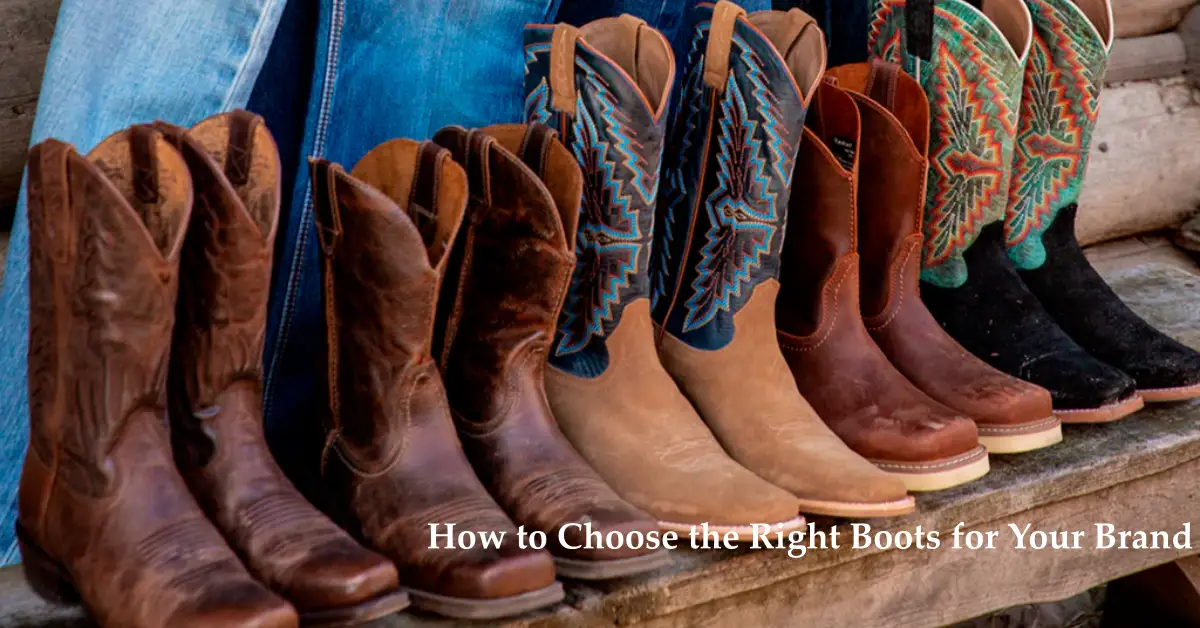
Conclusion: Build Western Cowboy Boots With a Technical Manufacturing Partner
Western cowboy boots are powerful because they combine history, structure, craftsmanship, and fashion identity. For private label brands, they offer more than a trend. They offer a product platform with strong storytelling, premium positioning, and long-term collection potential.
But the opportunity comes with technical responsibility. A western boot must be engineered correctly. The shaft must hold shape. The heel must remain stable. The material must survive lasting and wear. The embroidery must support the design rather than damage it. The outsole must match the product’s use case. The fit must work across sizes.
Herrains supports brands in developing custom western cowboy boots from concept to production. With experience across footwear and handbag manufacturing, Herrains helps brands translate creative direction into technical execution, from last development and material selection to sampling, production management, and quality control.
If your brand is planning a western boot collection, start with a technical discussion. The right manufacturing partner will not only make the boot; it will help you protect your design identity, improve product quality, and build a stronger commercial foundation.
Contact Herrains to discuss your custom western cowboy boots project, private label western boots collection, or OEM cowboy boots manufacturing requirements.
References
- Fortune Business Insights, “Cowboy Boots Market Size, Share, and Industry Analysis,” last updated July 27, 2026: https://www.fortunebusinessinsights.com/cowboy-boots-market-112262
- Tecovas, “The History of Cowboy Boots”: https://www.tecovas.com/blog/the-history-of-cowboy-boots
- Thorogood, “Why is Goodyear Welt Construction a Better Option?”: https://thorogoodusa.com/goodyear-welt/
- Vogue, “Western Boot Outfit Ideas,” October 15, 2025: https://www.vogue.com/article/western-boot-outfit-ideas