
From Runway Signals to Market Opportunities
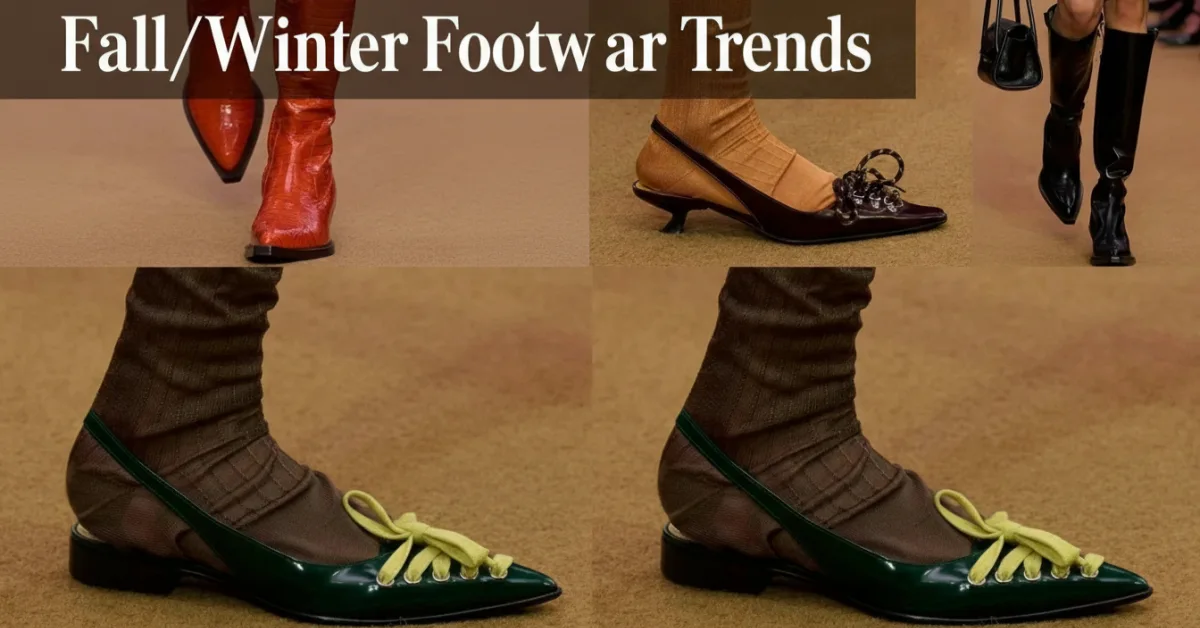
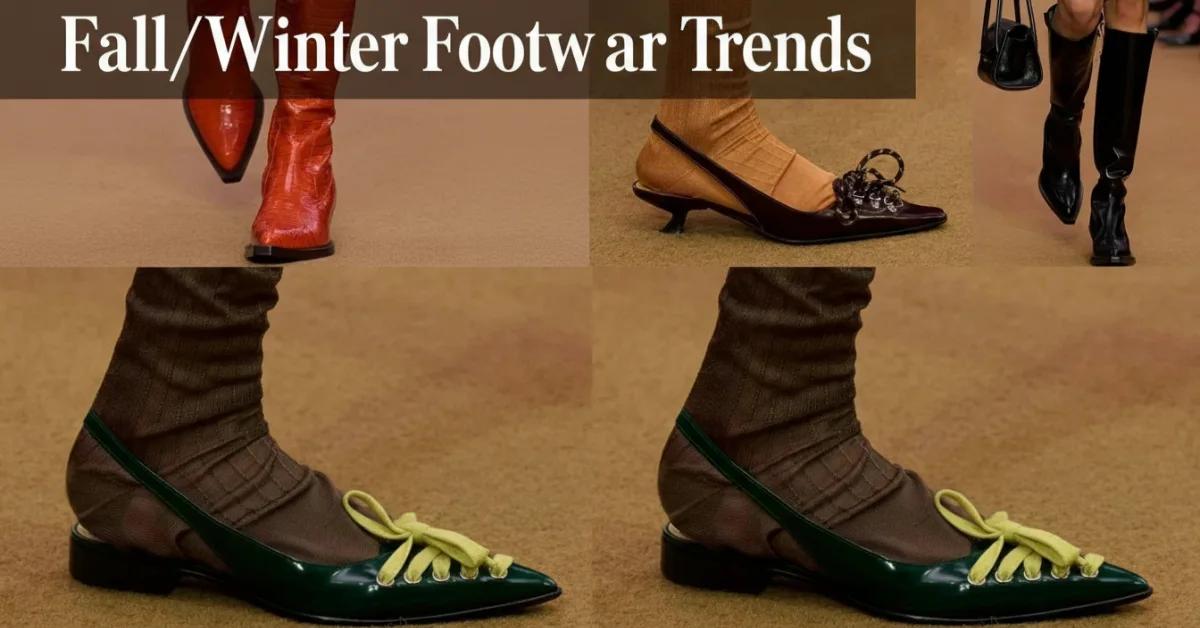
The Fall/Winter fashion weeks across Paris and Milan have made one thing clear:
footwear is no longer a supporting role — it is leading product direction.
For brands, importers, and private label buyers, this season is not just about aesthetics — it's about identifying which trends can be commercialized and scaled.
In our previous report, we covered the return of classics and comfort-driven silhouettes.
This second part focuses on high-impact design elements that are shaping the next buying cycle — from Jil Sander to Valentino.
If you're planning your next collection, these are the footwear trends worth turning into production.
Studded Footwear Is Back — But Sharper and More Commercial
Trend Insight
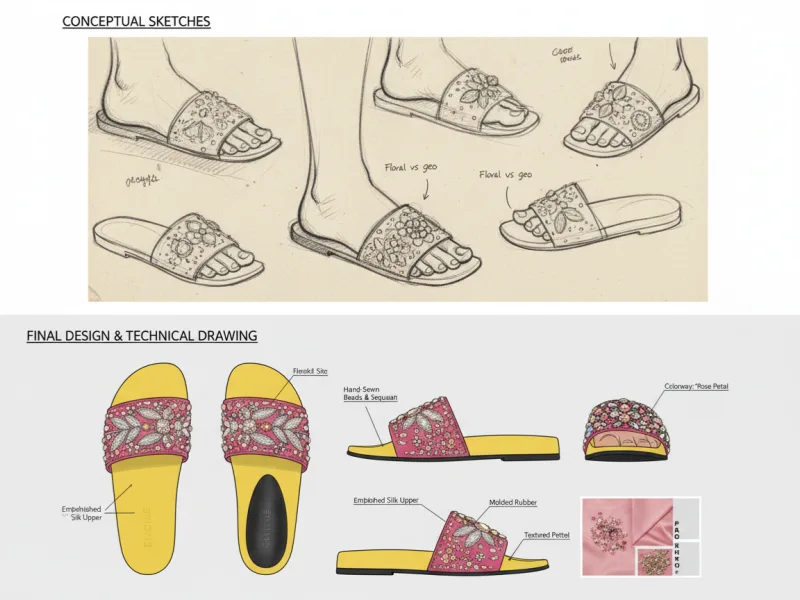
Studs are making a strong comeback — but not in their old punk form.
This season, brands like Valentino are redefining studs as refined, structured, and highly brandable elements.
- Cleaner placement
- More geometric layouts
- Integrated into elegant silhouettes (heels, pumps, sandals)
Why It Matters for Brands
Studded designs offer a key advantage:
high visual identity + easy differentiation in saturated markets
They are especially effective for:
- Mid-to-high-end private label brands
- DTC brands needing strong visual hooks
- Collections targeting Europe & Middle East markets
Production Considerations
At XINZIRAIN, we typically advise:
- Custom hardware mold development (logo studs)
- Anti-oxidation coating for EU markets
- Reinforced attachment for durability
Tip: Studs can be used as a signature branding element, not just decoration.
Bubble Soles & Inflated Structures — Comfort Meets Visual Impact
Trend Insight
Miu Miu’s bubble sole series confirms the continuation of volume-driven footwear — but lighter, softer, and more playful.
This is not just chunky — it’s inflated aesthetics with comfort engineering.
Why It Matters for Buyers
This trend aligns perfectly with current consumer demand:
- Lightweight comfort
- Athleisure crossover
- Visual differentiation for social media
Ideal for:
- Sneaker brands
- Lifestyle footwear labels
- Fast-growing DTC brands
Manufacturing Insights
Through our sub-brand HERRAINS, we support:
- EVA / PU lightweight sole development
- Mold customization for unique sole shapes
- Balance between design and wearability
Key point: Bubble soles require technical prototyping, not just design copying.
Mixed Materials & Decorative Maximalism
Trend Insight
Prada pushes the boundary with:
- Satin + distressed leather
- Feathers + metal
- Crystal embroidery + bold color contrast
Footwear is no longer minimal — it becomes a visual centerpiece.
Commercial Application
While full runway versions may be extreme, brands can adapt this trend into:
- Partial embellishment (toe / heel / strap focus)
- Removable decorative elements
- Limited edition collections
Production Reality
Complex designs require:
- Multi-material sourcing coordination
- Handcraft + machine hybrid production
- Strong quality control on embellishments
This is where a full supply chain partner becomes critical.
Extreme Toe Shapes & Jewelry-Inspired Details
Saint Laurent and others are pushing proportions:
- Ultra-sharp pointed toes
- Oversized gemstone buckles
- Footwear treated like jewelry
Market Opportunity
These designs work well for:
- Occasion wear
- Evening collections
- Premium positioning brands
They create high perceived value with relatively controlled production cost.
Development Focus
Key challenges include:
- Last (shoe mold) precision
- Comfort balance for sharp toe designs
- Secure fixing of large accessories
Reimagined Loafers & Soft Volume Silhouettes
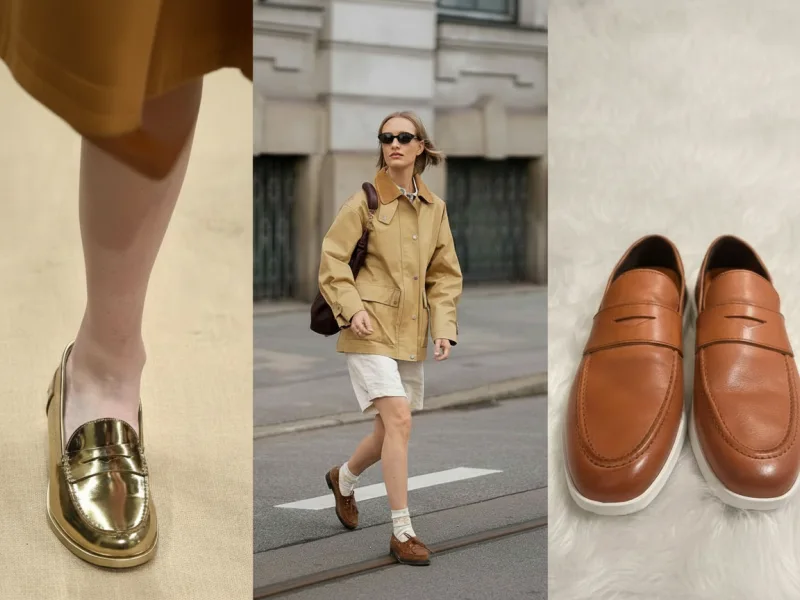
Trend Insight
TOD’S introduces:
- Softer round toe shapes
- Clean color palettes + animal textures
- Elevated casual positioning
Why This Matters
Loafers remain one of the most commercially stable categories, but with updates:
- More comfort-driven structure
- Gender-neutral appeal
- Strong repeat order potential
Production Advantage
For brands, loafers offer:
- Lower development risk
- Faster sampling
- High scalability
A smart entry point for new brands.
What These Trends Mean for Your Next Collection
Across all runway signals, a few clear directions emerge:
Footwear as a Statement Product
Not just functional — it defines the entire outfit
Balance Between Creativity & Wearability
Runway inspiration must be translated into sellable versions
Technical Capability Becomes a Competitive Advantage
Design alone is not enough — execution matters
How We Help Brands Turn Trends into Products
At XINZIRAIN, through our specialized brand HERRAINS, we help clients:
- Translate runway trends into commercial designs
- Develop prototypes with real material & structure solutions
- Optimize designs for cost, MOQ, and production
- Manage full process from concept to bulk production
From concept to shipment — everything handled in one place.
Ready to Develop Your Next Footwear Collection?
If you're planning:
- A new seasonal collection
- A private label footwear line
- Trend-driven product expansion
We can support you with:
- Design development
- Material sourcing
- Sampling & prototyping
- Bulk manufacturing
Contact us via WhatsApp: +8615530191496
Or send your design ideas to start sampling
FAQ
What is the MOQ for trend-based footwear production?
Typically 100–200 pairs per style, depending on complexity.
How long does sampling take?
Around 20–25 working days.
Can you customize hardware like studs or buckles?
Yes, we offer custom mold development for branded hardware.
Are bubble soles difficult to produce?
They require mold development and testing, but we handle full technical support.
Can runway designs be simplified for mass production?
Absolutely — we help adapt designs to balance cost and market demand.