
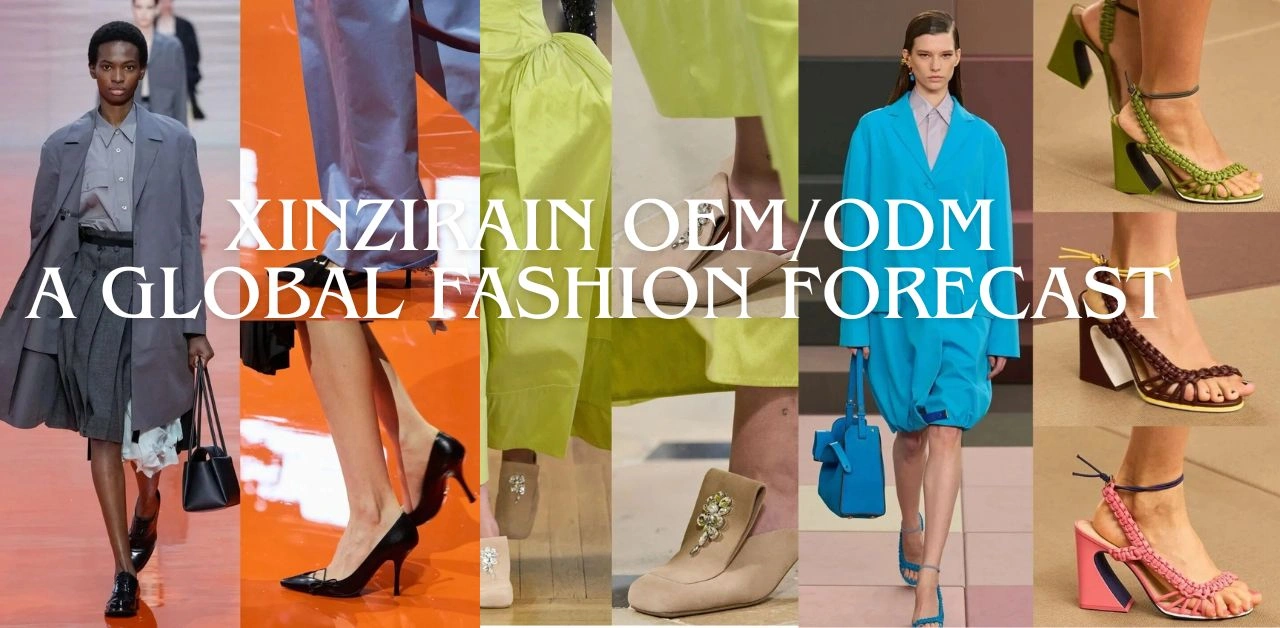

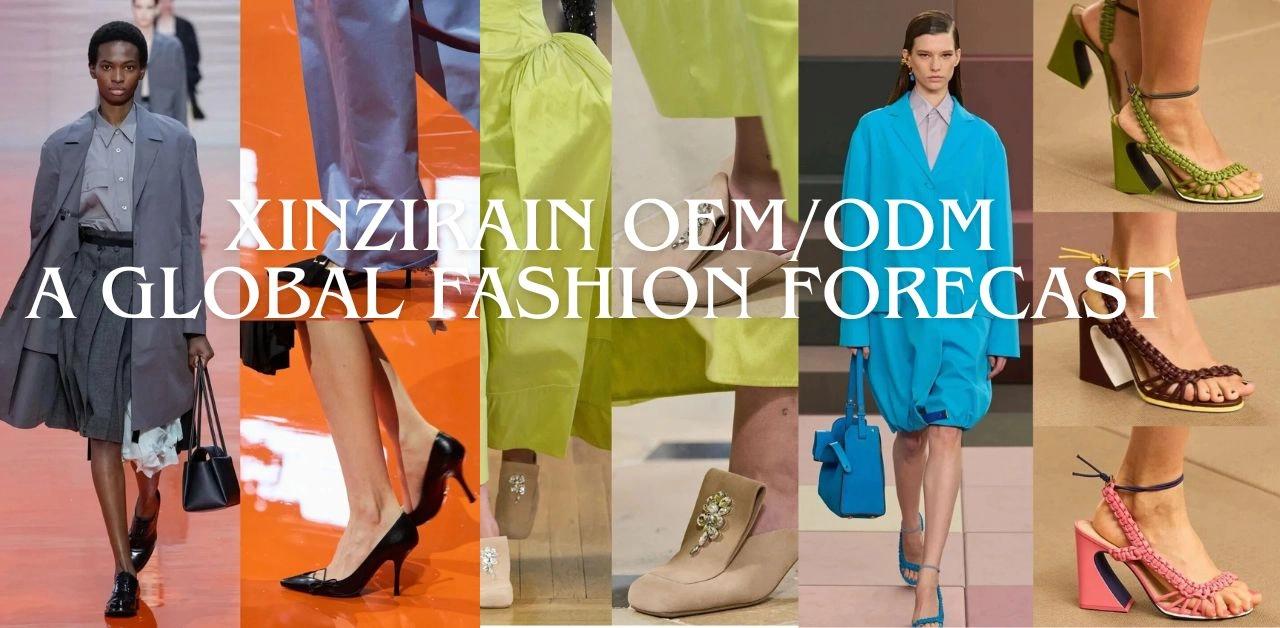
As the four major fashion weeks—New York, London, Milan, and Paris—officially come to an end, the global direction for Spring/Summer 2026 has come into focus. From sculptural heels to redefined loafers and modernized sports influences, the world’s top designers are redefining footwear for a post-minimalist era.
At Xinzirain, we’ve analyzed and curated runway collections from over 40 leading fashion houses, bringing together the most striking footwear trends of the upcoming season.
Recap: Icons of the First 20 Brands
In our previous feature, we explored the runway shoes from Acne Studios, Anna Sui, Balenciaga, Balmain, Burberry, and Bottega Veneta—each contributing unique perspectives to the season.
The highlights?
-
Acne Studios emphasized surrealist platforms and metallic surfaces.
-
Balmain brought architectural heels with a futuristic edge.
-
Burberry reimagined classic riding boots with an urban chic twist.
-
Bottega Veneta showcased woven textures that fused craftsmanship with modernity.
Each of these designs revealed a clear shift toward tactile materials, avant-garde silhouettes, and comfort-led innovation—themes that will continue to shape 2026.
The Next 20: Defining the Future of Footwear
Now, let’s continue with another 20 influential brands that define the Spring/Summer 2026 footwear narrative:
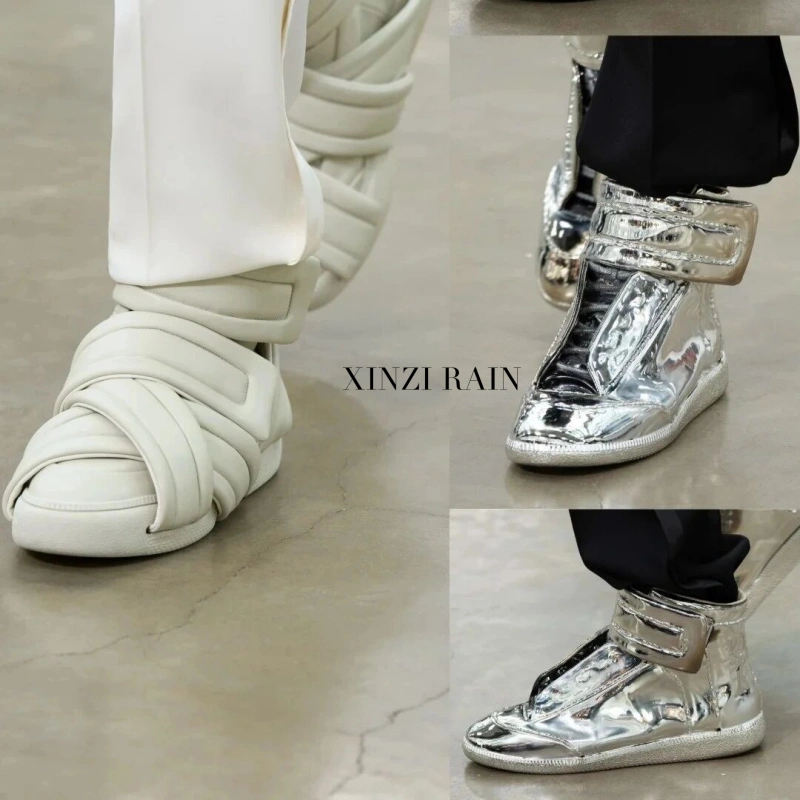
Maison Margiela
The brand continues to deconstruct luxury. Split-toe tabi boots and transparent vinyl sandals blur boundaries between art and fashion, reinforcing Margiela’s cult craftsmanship.
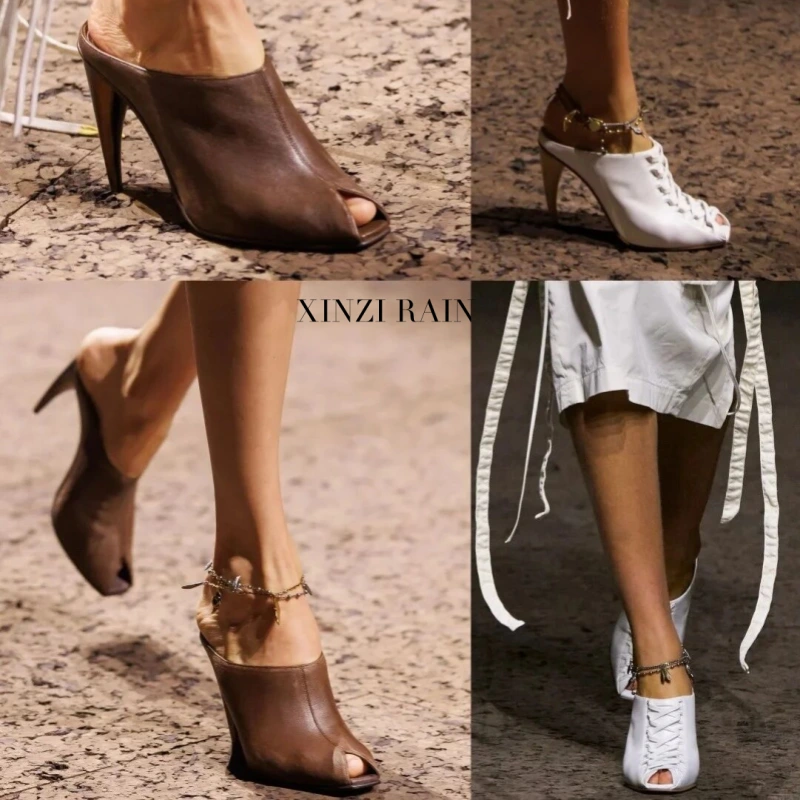
Alexander McQueen
Known for sculptural beauty, McQueen’s heels featured organic curves and metallic structures—transforming footwear into wearable sculpture.
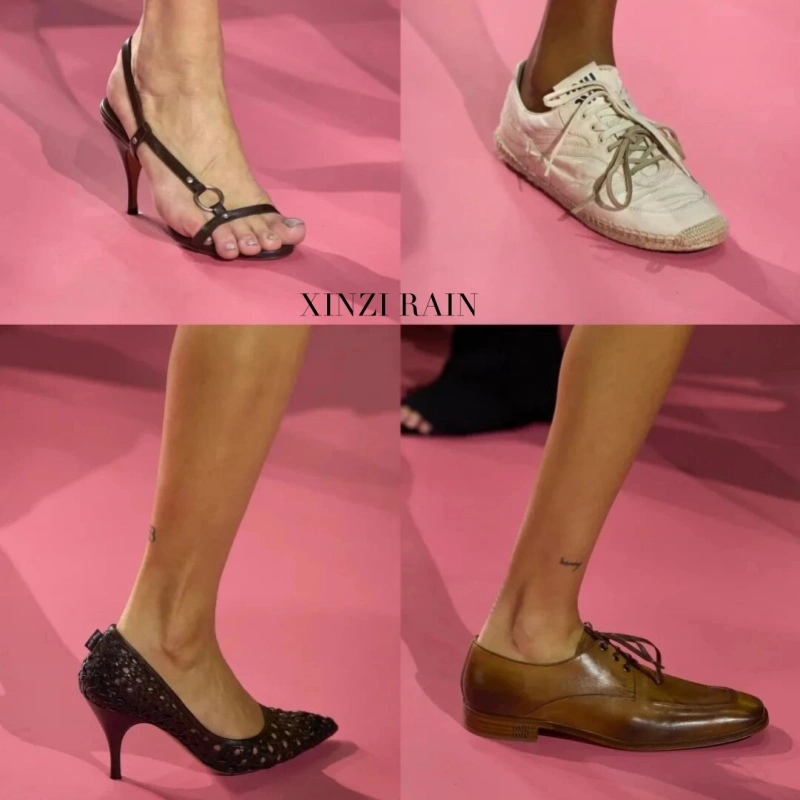
Michael Kors
Minimalist yet glamorous, Kors’ runway offered strappy neutrals, resort-ready espadrilles, and platform sandals ideal for modern jet-setters.
Miu Miu
Miuccia Prada brought a youthful energy with preppy loafers, pointed ballet flats, and playful mix-and-match fabrics—bridging nostalgia and rebellion.
MM6 Maison Margiela
The diffusion line reimagined chunky soles and unisex sneakers, merging comfort with experimental design.
Monse
Monse pushed asymmetry to new levels—twisted straps, unfinished edges, and deconstructed uppers added a rebellious charm.
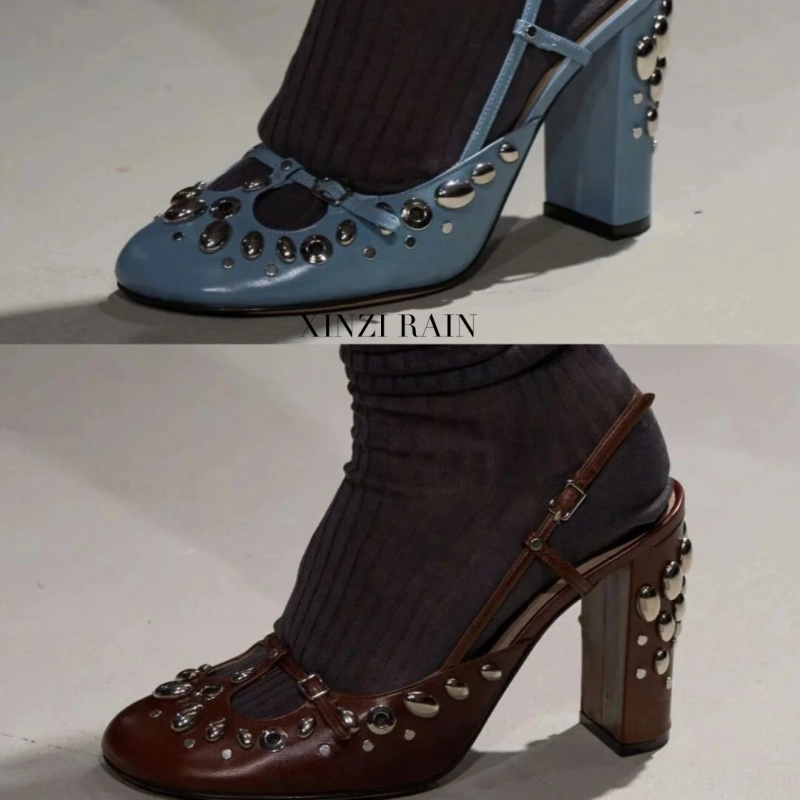
N°21
Striking metallic mules and jeweled heels offered an Italian take on modern femininity, blending sensuality with structure.
Noir Kei Ninomiya
A master of avant-garde construction, Kei Ninomiya’s footwear embraced cage-like forms and industrial buckles, echoing Tokyo’s underground aesthetics.
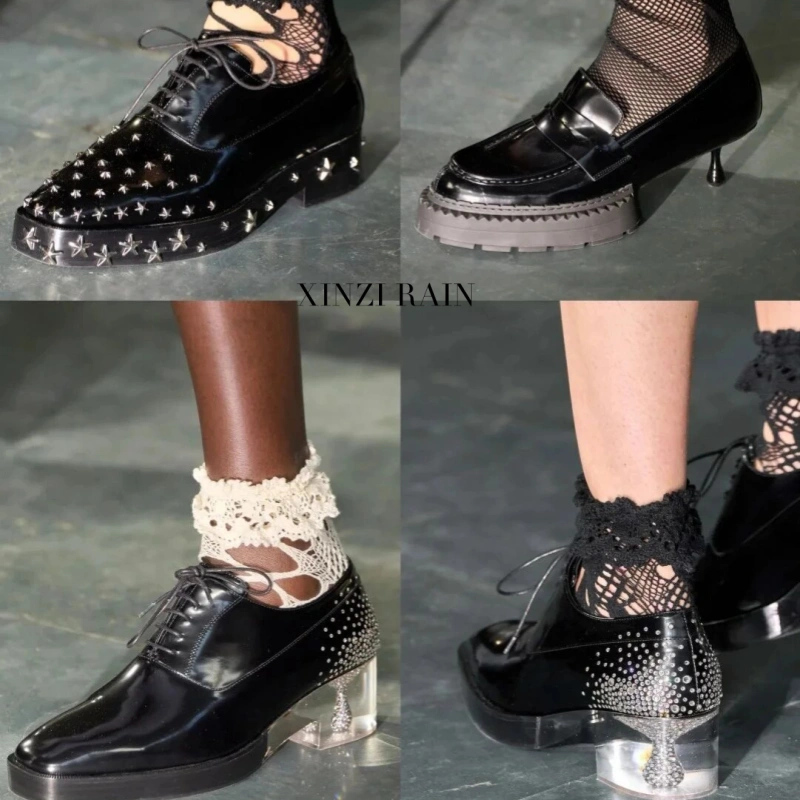
Off-White
The brand’s 2026 shoes fused streetwear attitude with couture craftsmanship. Expect chunky-soled loafers, transparent vinyl boots, and bold color blocking.
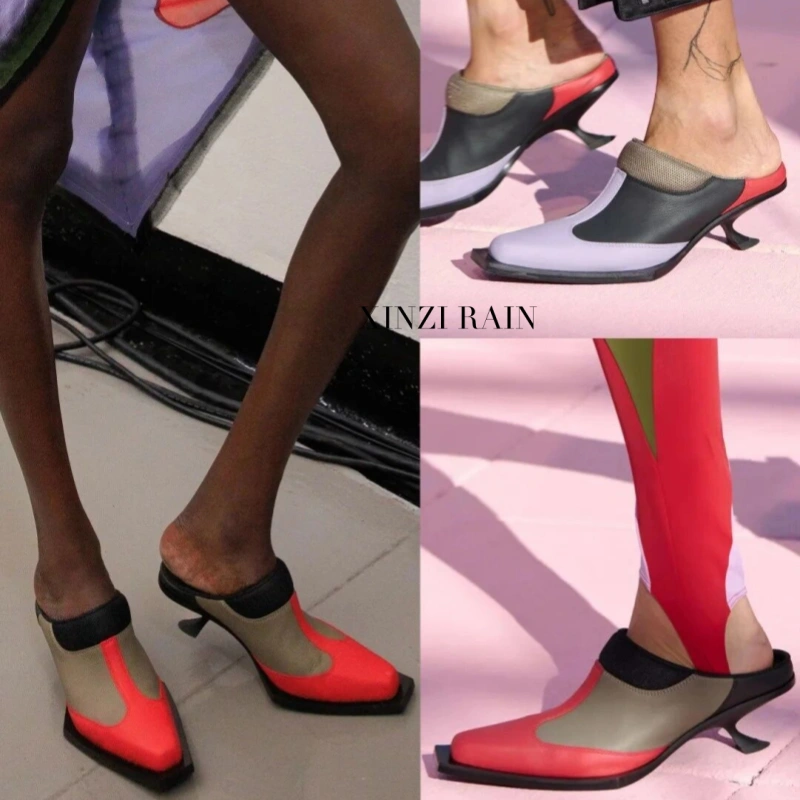
Prada
Prada maintained its leadership in practical elegance. Classic silhouettes were reimagined with technical nylons, perforated leathers, and geometric hardware.
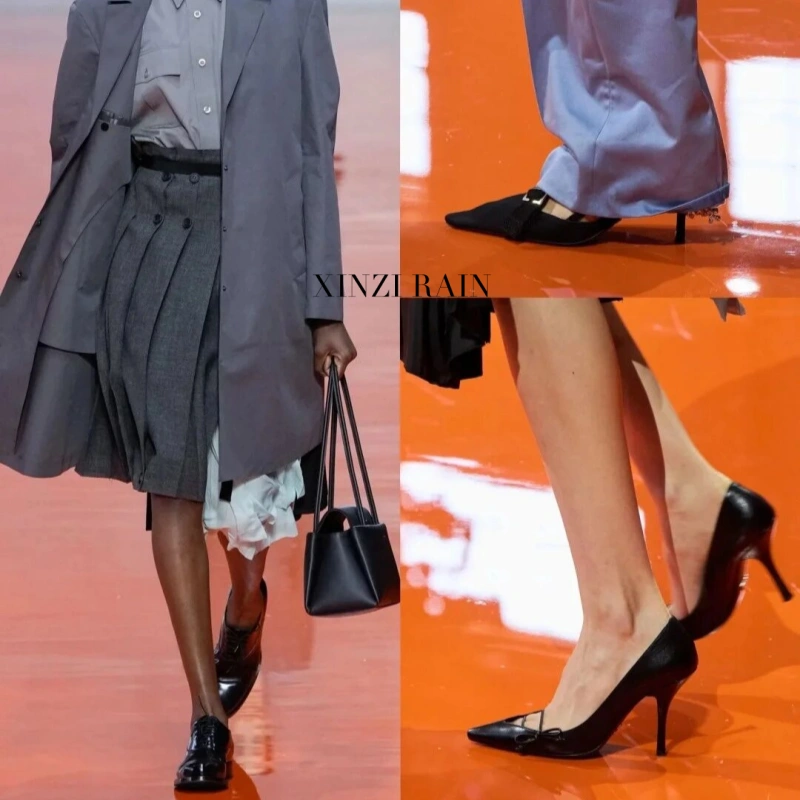
Proenza Schouler
The New York duo focused on fluid minimalism—square-toe sandals, neutral palettes, and sculpted wedges epitomized effortless cool.
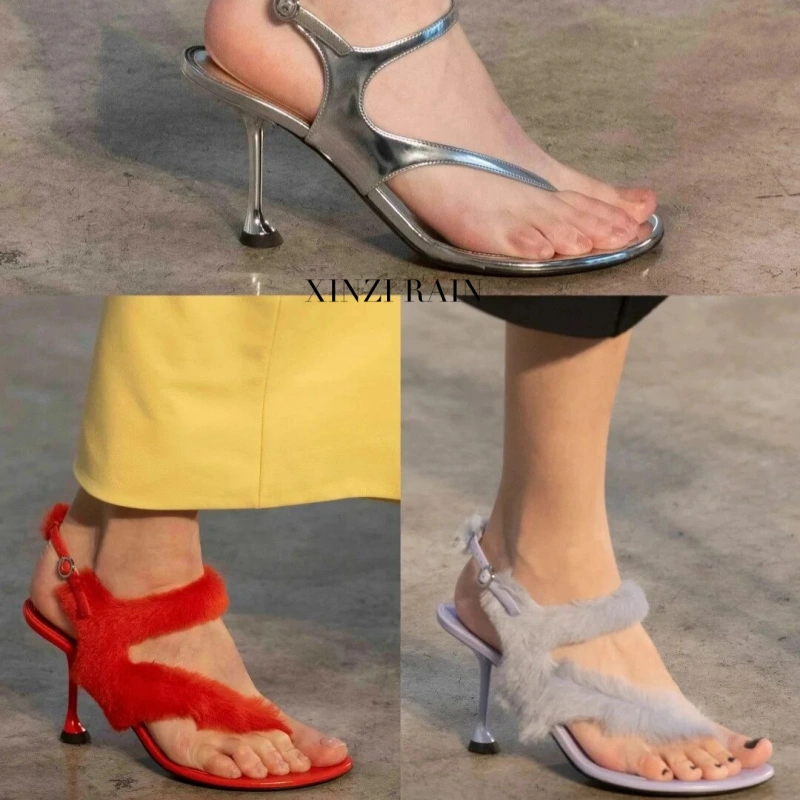
Sacai
Sacai’s hybrid DNA appeared once again through fusion footwear: sneakers spliced with loafers, sandals merged with mules. A study in contrasts.
Saint Laurent
Sharp, sensual, and Parisian to the core—razor-thin stiletto boots and sleek pumps defined YSL’s vision of power dressing for 2026.
Simone Rocha
Romance reigned supreme with pearl-embellished flats, crystal straps, and transparent tulles—a soft rebellion through delicate details.
Stella McCartney
Sustainability met innovation. McCartney presented bio-based vegan leather boots and 3D-printed heels, proving that luxury can be ethical.
Tod’s
Tod’s revived its heritage driving shoe with oversized soles and woven leather textures, emphasizing craftsmanship in motion.
Toga Archives
Known for eclectic style, Toga’s latest sandals combined Western buckles, metallic details, and sculptural soles, embodying bold individuality.
Tory Burch
Refined simplicity took center stage. Soft leather mules and sculpted wedges highlighted modern femininity and understated luxury.
Toteme
Scandinavian minimalism continued with square-toe flats and sleek slingbacks, balancing purity with architectural form.
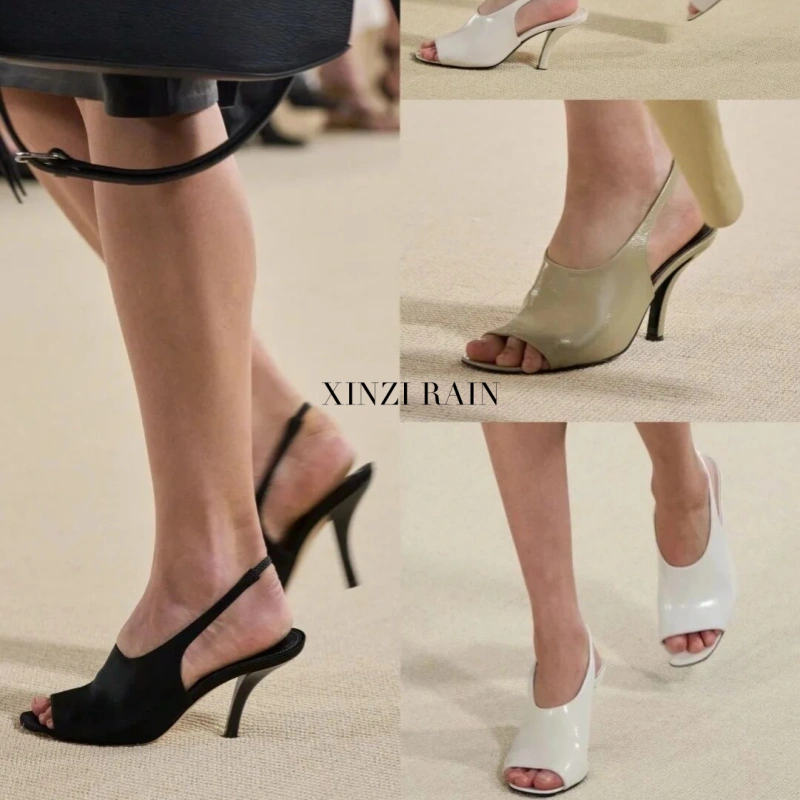
Valentino
Pierpaolo Piccioli’s Valentino celebrated freedom—bold platforms, transparent plexi heels, and romantic lace-up boots radiated confidence and artistry.
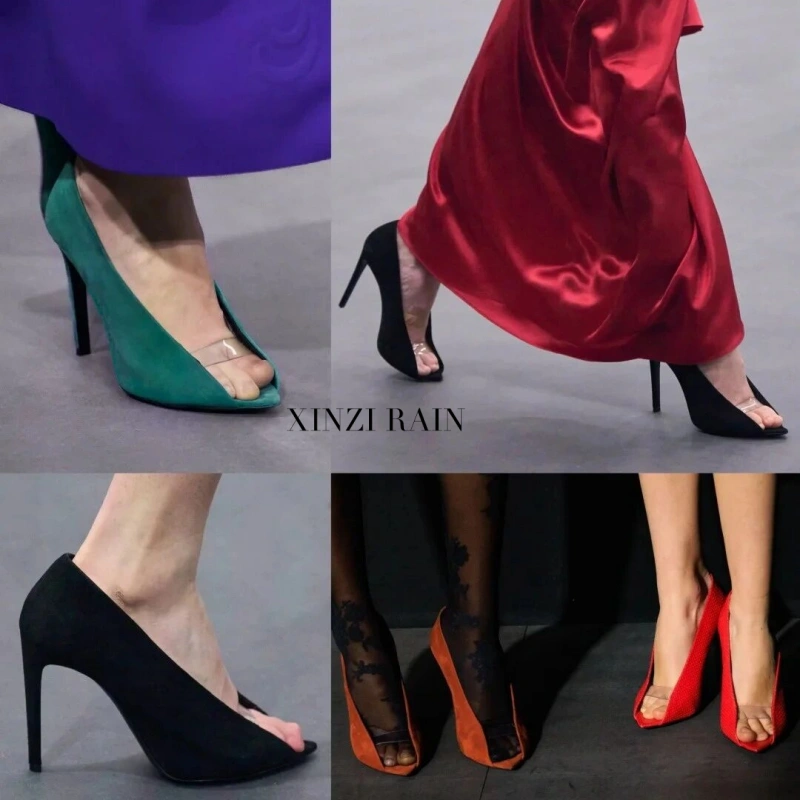
The Common Language of 2026 Footwear
Across all 40 brands, several clear trends emerge:
-
Sculptural silhouettes — heels are becoming artistic statements.
-
Material innovation — expect vegan leather, metallic mesh, and woven craftsmanship.
-
Retro nostalgia meets futurism — 70s platforms collide with digital-age details.
-
Gender fluidity — boundaries between men’s and women’s styles continue to blur.
-
Sustainable luxury — responsible materials and modular construction dominate.
How XINZIRAIN Transforms Runway Trends Into Market-Ready Footwear
As a professional OEM & ODM footwear manufacturer in China, XINZIRAIN goes beyond trend observation—we translate global runway inspiration into commercially viable footwear collections for brands worldwide.
Our team closely analyzes seasonal fashion signals—from sculptural heels to sustainable materials—and integrates them into scalable, production-ready designs.
We help brands bridge the gap between creative vision and manufacturing reality through:
-
Custom shoe development based on runway trends
-
Material sourcing, including leather, vegan alternatives, and innovative textiles
-
Footbed and structure engineering for comfort and durability
-
Private label production with full branding customization
-
Low MOQ manufacturing for emerging and growing brands
With over a decade of experience in women’s footwear manufacturing, our production system ensures that every design maintains its aesthetic integrity while meeting quality, cost, and lead-time requirements.
From Trend Insight to Product Launch
Fashion trends only create value when they can be transformed into products that sell.
Whether inspired by:
-
sculptural runway heels
-
minimalist leather silhouettes
-
retro-futuristic platforms
-
or sustainable material innovations
XINZIRAIN supports brands through a complete process:
Trend → Design → Sample → Production → Market Launch
This end-to-end approach allows our partners to launch collections faster, reduce development risks, and stay competitive in rapidly evolving markets.
Why Brands Choose XINZIRAIN as Their Footwear Manufacturing Partner
Global brands, startups, and distributors choose XINZIRAIN because we provide:
-
Flexible MOQ (starting from 50–100 pairs)
-
Full private label customization
-
Experienced R&D and design team
-
Stable supply chain and material sourcing
-
Strict quality control standards
-
Export experience across Europe, North America, and the Middle East
We don’t just manufacture shoes—we help brands build collections that align with real market demand.
Start Your Next Footwear Collection With XINZIRAIN
If you’re planning to develop a new footwear line inspired by Spring/Summer 2026 trends, working with the right manufacturer is critical.
Explore our custom services:
Custom Shoe Manufacturer for Private Label & OEM Brands
Learn how to build your brand:
Create Your Shoe Brand -Our One-Stop Process
View our women’s shoe manufacturing capabilities:
Launch Your Shoe Brand with a One-Stop Private Label Shoe Solution
We’re ready to help you turn trend insights into successful, market-ready products.
Frequently Asked Questions
How do fashion brands turn runway trends into real products?
Fashion brands typically work with experienced footwear manufacturers to convert design concepts into production-ready shoes. This process includes material selection, structural development, prototyping, and bulk manufacturing.
Can I create a custom shoe line based on fashion trends?
Yes. Many manufacturers offer custom shoe development services, allowing brands to create unique designs inspired by runway trends while maintaining their own branding and identity.
What is the MOQ for custom footwear production?
MOQ varies depending on the manufacturer, but many factories (like XINZIRAIN) offer low MOQ starting from 50–100 pairs per design, making it accessible for startups and small brands.
How long does it take to develop a new shoe collection?
The typical development timeline includes:
-
design & tech pack: 1–2 weeks
-
sample production: 2–4 weeks
-
bulk production: 3–6 weeks
Timelines may vary based on complexity and materials.
Why is China a leading hub for footwear manufacturing?
China has a highly developed footwear supply chain, skilled labor, and advanced production capabilities. Manufacturers can offer competitive pricing, flexible production, and complete OEM/ODM services.
What should I prepare before working with a shoe manufacturer?
Brands should ideally prepare:
-
design sketches or references
-
target market positioning
-
estimated quantity
-
material preferences
This helps streamline development and improve efficiency.
About the Author
Tina Zhang is the founder of XINZIRAIN and a footwear manufacturing specialist with over 15 years of experience in OEM and ODM shoe production.
Based in Chengdu, China—one of the world’s most important footwear manufacturing hubs—she has worked with global brands across Europe, North America, and the Middle East, helping them develop market-ready collections from concept to mass production.
Her expertise includes:
-
custom footwear development and private label production
-
trend-driven product development aligned with global fashion markets
-
material sourcing and supply chain optimization
-
quality control and scalable manufacturing solutions
Through XINZIRAIN, Tina and her team focus on bridging the gap between fashion trends and real-world production, ensuring that each design is not only visually compelling but also commercially viable.