
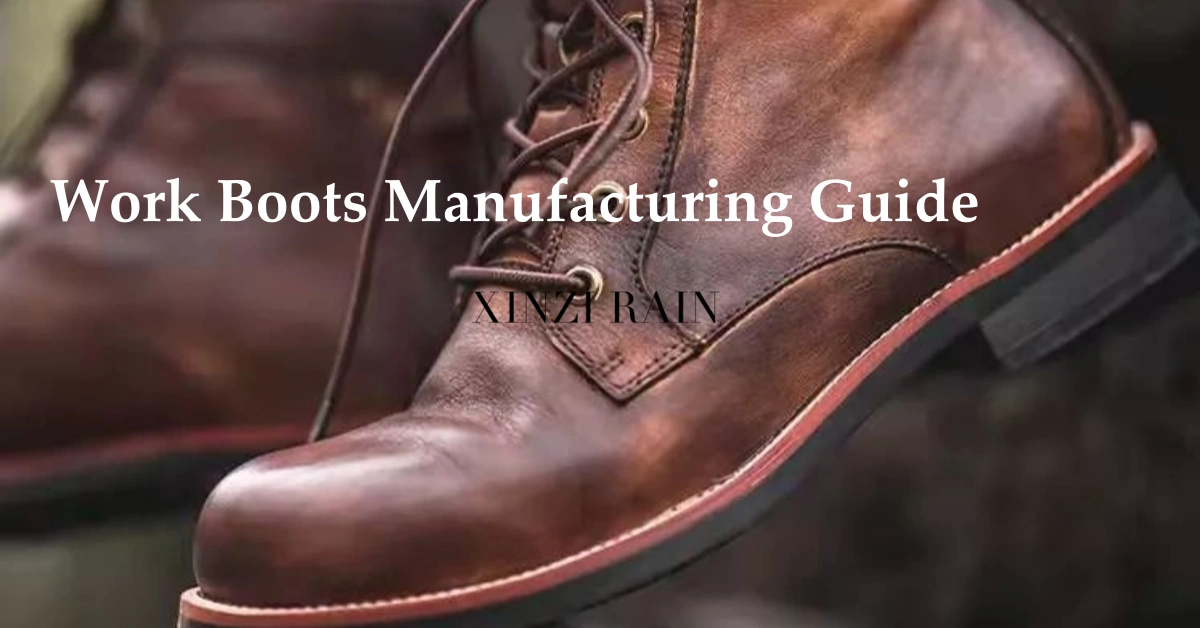

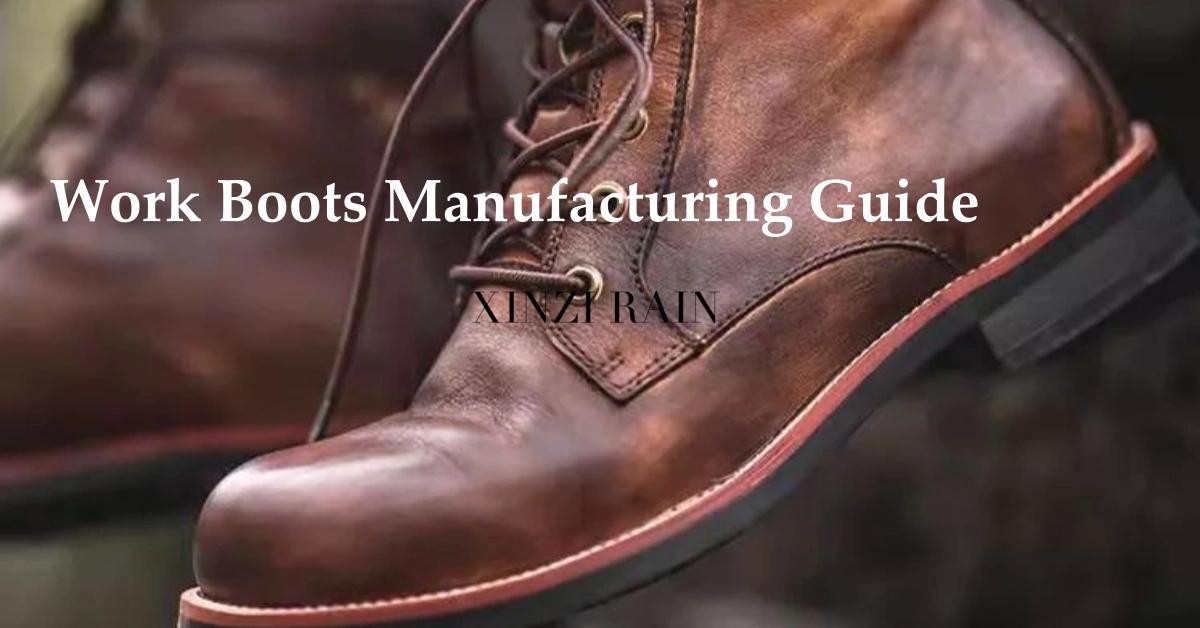
Work boots are essential protective footwear designed for demanding industrial environments. As global demand increases across the U.S., Europe and the Middle East, more brands and distributors are seeking reliable OEM leather work boots manufacturers capable of delivering durability, safety compliance and private-label customization. This guide explains what work boots are, which materials determine their performance, and how industrial suppliers can choose the right manufacturing partner.
What Are Work Boots? Definition, Functions and Applications
Work boots are specialized safety footwear engineered to protect workers in construction, logistics, warehousing, oil and gas, mining, manufacturing and other high-risk environments. Unlike casual boots, work boots prioritize protection, durability and structural reinforcement.
Key Functions of Work Boots
-
Toe protection using steel, alloy or composite safety caps
-
Slip-resistant rubber outsoles designed for oil, water and uneven terrain
-
Puncture-resistant midsoles made from steel plate or Kevlar
-
Waterproof membranes or oil-tanned leather for wet environments
-
Ankle support through padded collars and reinforced shafts
Work Boots vs Casual Boots
Work boots use thicker leather, industrial stitching, safety toes, reinforced outsoles and certified components. They are built to meet ASTM, CE or EN ISO standards, while casual boots are designed primarily for style and comfort.
Global Demand for Work Boots Is Increasing
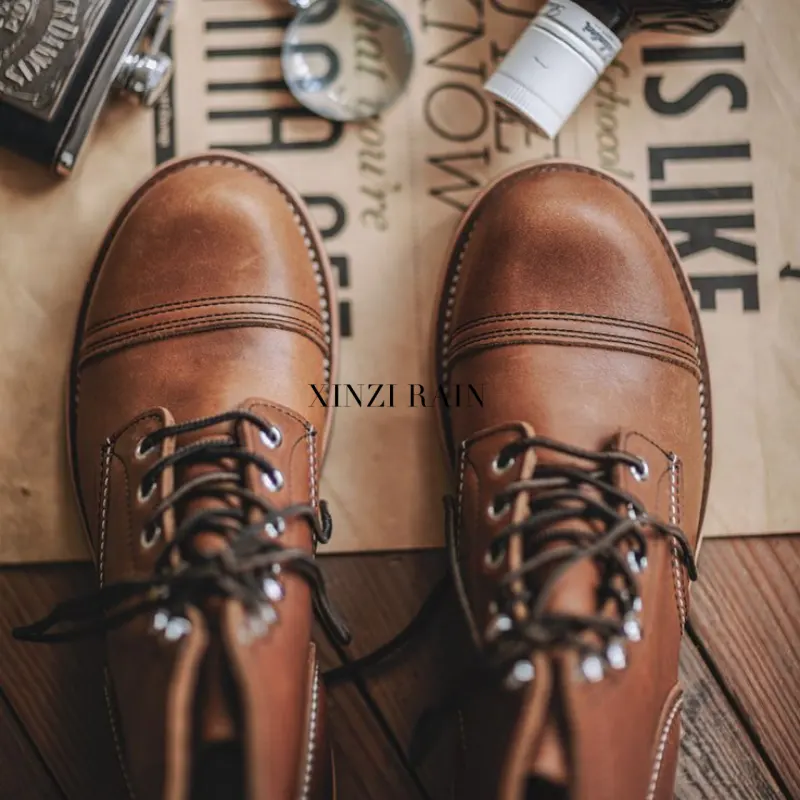
Demand for leather work boots, men’s safety boots and durable construction boots continues to grow across major markets.
North America and Europe
-
Strict workplace safety regulations
-
High employment in construction, logistics and manufacturing
-
Growing preference for rugged outdoor footwear in lifestyle fashion
Middle East Market Trends
-
Large-scale infrastructure projects
-
Oilfield and industrial sector growth
-
Strong need for heat-resistant, oil-resistant and anti-slip outsoles
-
Rising popularity of brown leather work boots as durable daily footwear
Why Private Label Brands Enter the Work Boot Market
-
Stable year-round demand
-
High margins and strong customer loyalty
-
Less trend-dependent compared to sports or fashion footwear
-
Customizable and scalable through OEM/ODM production
What Makes a High-Quality Work Boot?
A high-quality work boot must balance protection, durability, comfort and structural performance.
Essential Structural Components
-
Reinforced leather uppers
-
Steel toe, alloy toe or composite safety toe
-
EVA midsole cushioning
-
Puncture-resistant steel or Kevlar midsole
-
Slip-resistant deep-lug rubber outsole
-
Moisture-wicking or antimicrobial insoles
-
Padded collar for ankle comfort
Work Boot Materials Guide (Leather, Soles, Linings and Hardware)
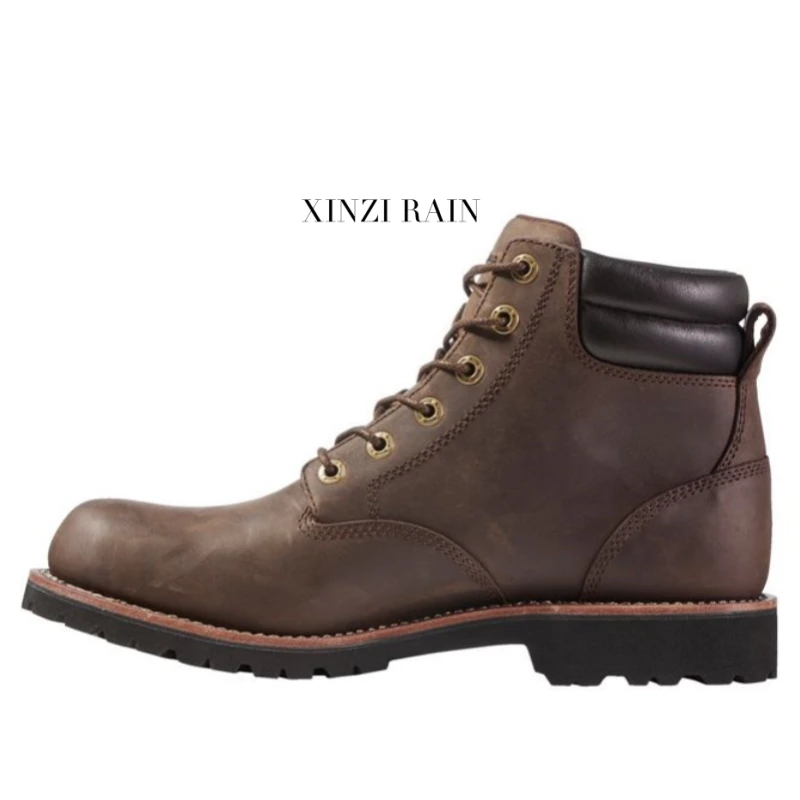
Materials determine the durability, safety performance and cost structure of a work boot.
Leather Types
| Leather Type | Advantages | Best Use |
|---|---|---|
| Full-grain leather | Extremely durable, water-resistant | Heavy-duty industrial boots |
| Crazy Horse leather | Rugged look, scratch-resistant | Outdoor & lifestyle work boots |
| Nubuck leather | Soft, premium feel | Light-duty or casual work boots |
| Split leather | Budget-friendly | Entry-level work boots |
Outsole Materials
-
Nitrile Rubber: Heat and oil resistant; ideal for factories and construction
-
PU + Rubber Combo: Lightweight and slip-resistant; ideal for logistics
-
TPU: High abrasion resistance for outdoor industrial work
Protective Components
-
Toe caps: steel, alloy or composite
-
Puncture resistance: steel plate or Kevlar midsole
-
Electrical hazard protection where required
Hardware
-
Rust-proof eyelets
-
Heavy-duty lace hooks
-
Reinforced nylon laces
How to Choose a Work Boot Manufacturer (B2B Supplier Checklist)
Quality & Compliance
A reliable OEM leather work boots manufacturer should provide:
-
CE / ASTM / EN ISO safety testing
-
Material certifications such as REACH
-
Social compliance audits such as BSCI or SEDEX
-
AQL-based inspection processes
Manufacturing Capability
Evaluate whether the manufacturer can handle:
-
Goodyear welt, cementing or stitch-down construction
-
Steel toe, composite toe or alloy toe integration
-
Kevlar puncture-resistant midsole installation
-
3D design, tech pack support and pattern development
MOQ and Pricing
MOQ for private label men’s construction boots typically ranges from 100–500 pairs per style. Pricing depends on:
-
Leather grade
-
Outsole formula
-
Toe cap type
-
Stitching complexity
-
Packaging requirements
Communication & Lead Time
A suitable partner offers:
-
Dedicated English-speaking project managers
-
Weekly production updates
-
7–12 day sampling
-
25–35 day mass production
OEM/ODM Work Boot Manufacturing Process
Production Workflow
-
Requirement and style consultation
-
Material selection and confirmation
-
Tech pack refinement and pattern creation
-
Sample development and fit testing
-
Functional and safety testing
-
Mass production
-
Final quality inspection (AQL 2.5)
-
Packaging and export logistics
Why Global Industrial Brands Choose XINZIRAIN
XINZIRAIN is a trusted OEM leather work boots manufacturer with over 20 years of experience producing industrial footwear for global distributors and private label brands.
Core Advantages
-
One-stop OEM/ODM development
-
REACH-compliant materials and full inspection standards
-
7–12 day sampling
-
Low MOQ suitable for new and mid-sized brands
-
Strong experience in U.S., European and Middle Eastern markets
-
Customization options for leather, outsoles, toe caps, linings and branding
Product Categories We Support
-
Men’s safety boots
-
Durable construction boots
-
Brown leather work boots
-
Outdoor industrial boots
-
Private label men’s construction boots
Conclusion: Build Work Boots That Last
Work boots are long-life, high-value products requiring professional engineering, compliant materials and consistent craftsmanship. Choosing the right OEM manufacturer ensures durability, safety performance, brand credibility and long-term customer trust. With XINZIRAIN’s one-stop OEM/ODM system, global brands can build reliable, performance-driven work boots tailored for industrial markets.