

Introduction
3D printing is no longer a concept limited to prototyping. In 2026, it became one of the most discussed innovations in the global footwear industry.
Major brands are increasingly integrating 3D printing into both product design and manufacturing processes. What was once experimental is now entering scalable production, signaling a potential shift in how shoes are designed, developed, and manufactured.
From Adidas’ latest CLIMACOOL LACED release to Nike’s multicolor Air Max 1000 prototype, the industry is exploring how additive manufacturing can redefine comfort, structure, and customization.
This article provides a comprehensive analysis of the current state of 3D printed shoes, key brand innovations, and what this technology means for the future of footwear manufacturing.
The Breakthrough: Adidas CLIMACOOL LACED Goes Global
From Limited Release to Global Launch
In March 2026, Adidas officially launched the CLIMACOOL LACED globally after nearly two years of limited release testing.
The shoe is manufactured using Digital Light Synthesis (DLS) technology developed in collaboration with Carbon, a leading 3D printing company.
Key Technical Features
-
Material: EPU Pro (expanded polyurethane)
-
Production time: ~24 hours per pair
-
Seamless one-piece construction
-
No stitching, no glue, no traditional assembly
This manufacturing method eliminates traditional pressure points and seams, resulting in a more uniform and adaptive structure.
Source: Adidas official release and Carbon technology documentation
A Shift in Footwear Design Philosophy
According to Adidas, 3D printing allows designers to rethink footwear from a systems perspective:
Instead of separating:
structure·materials·aesthetics
These elements are developed simultaneously within a single digital model.
This marks a fundamental shift in footwear development—from assembly-based manufacturing to integrated digital design.
Why 3D Printed Shoes Are Gaining Momentum
Seamless Construction and Comfort
Traditional footwear manufacturing involves multiple components:
upper·midsole·outsole
These parts are assembled through stitching, gluing, or molding.
3D printing eliminates these steps by creating:
a single, continuous structure
This reduces:
-
friction points
-
structural weaknesses
-
production complexity
Design Freedom and Complexity
3D printing allows for structures that cannot be produced using traditional molds.
Examples include:
-
lattice cushioning systems
-
variable density structures
-
organic geometries
These innovations improve both performance and visual identity.
Customization Potential
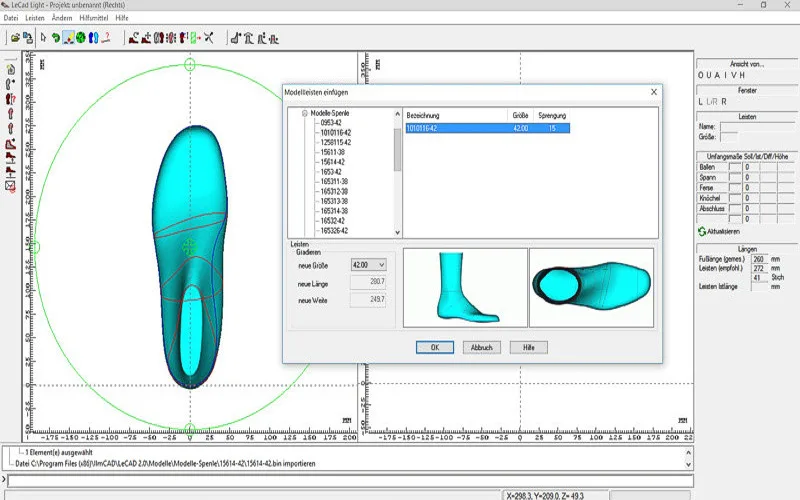
One of the most promising advantages of 3D printing is mass customization.
In theory, brands can produce:
-
personalized fit
-
customized cushioning zones
-
unique design variations
This aligns with the growing demand for personalized footwear experiences.
Major Brands Driving 3D Footwear Innovation
Adidas + Carbon: Digital Light Synthesis
Adidas remains one of the most active brands in 3D printed footwear.
-
CLIMACOOL LACED
-
Future expansions planned for 2026
The DLS process uses light and oxygen to create high-performance polymer structures.
Source: Carbon3D technology overview
Nike + Zellerfeld: Multicolor 3D Printing
Nike recently revealed the Air Max 1000 “Multicolor” prototype, developed with Zellerfeld.
Key innovation:
Color is printed directly into the structure
This eliminates traditional color layering and allows:
-
seamless color transitions
-
deeper integration between design and structure
Source: Nike innovation showcase
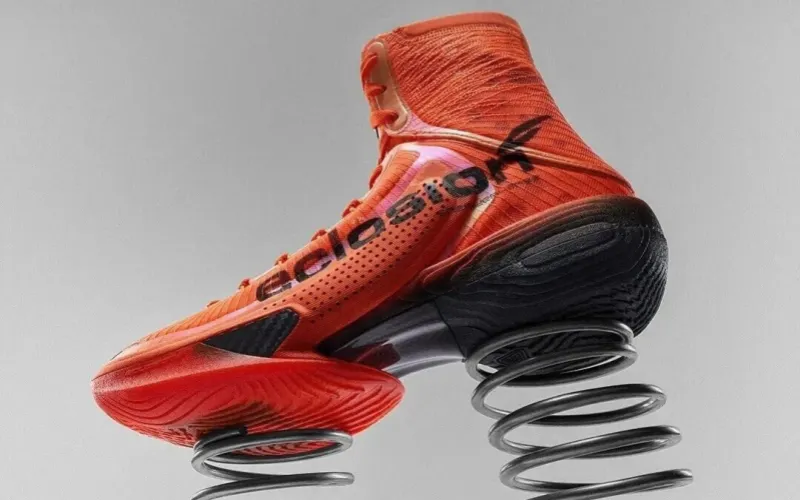
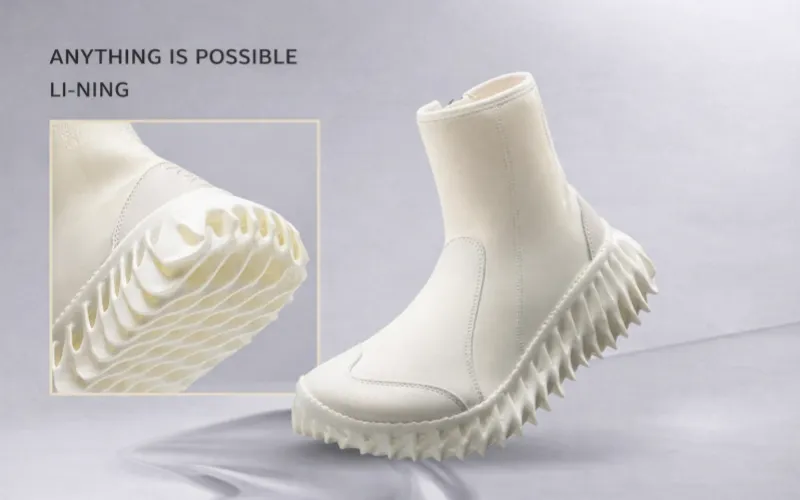
Li-Ning: 3D Printing + Supercritical Foam
At Milan Fashion Week 2026, Li-Ning introduced:
“Wudao Future.”
Technology highlights:
-
3D printed structure
-
supercritical foam integration
-
lightweight cushioning system
This hybrid approach combines:
traditional foam performance + digital manufacturing precision
Anta & On Running: Expanding the Ecosystem
Other brands are also investing in 3D technologies:
-
Anta → lattice cushioning structures
-
On Running → LightSpray™ upper technology
These innovations demonstrate that 3D printing is not limited to midsoles—it is expanding into full shoe construction.
Limitations of 3D Printed Shoes (Current Reality)
Despite the hype, 3D printed footwear still faces several challenges.
Production Speed
-
~24 hours per pair (Adidas CLIMACOOL)
-
significantly slower than traditional mass production
This limits scalability.
Cost Efficiency
3D printing materials and equipment remain expensive.
Compared to traditional manufacturing:
-
higher per-unit cost
-
lower production efficiency
Material Limitations
While materials like EPU are improving, they still face:
-
durability constraints
-
limited flexibility compared to traditional rubber/EVA
Not Yet Ready for Mass Production
Currently, 3D printed shoes are best suited for:
-
limited releases
-
innovation showcases
-
premium product lines
What This Means for Footwear Manufacturing
Hybrid Manufacturing Is the Future
Rather than replacing traditional manufacturing, 3D printing is more likely to:
complement existing processes
Future production models may include:
-
3D printed midsoles
-
traditional uppers
-
hybrid assembly
Faster Prototyping and Development
3D printing already plays a major role in:
-
rapid prototyping
-
design testing
-
structural experimentation
This shortens development cycles for brands.
New Opportunities for Custom Footwear
For manufacturers, 3D printing opens the door to:
-
customized production
-
small-batch manufacturing
-
design-driven collections
However, traditional manufacturers still play a critical role in scaling production.
How Manufacturers Like XINZIRAIN Adapt to New Technologies
As footwear technology evolves, manufacturers must adapt to new design and production methods.
At XINZIRAIN, we integrate:
-
advanced material sourcing
-
structural engineering
-
modern production techniques
to support brands in developing innovative footwear.
While 3D printing is still emerging, we help brands:
-
Translate complex designs into manufacturable products
-
Combine traditional craftsmanship with modern innovation
-
Optimize cost and production efficiency
For most brands today, the key is not choosing between traditional manufacturing and 3D printing—but finding the right balance.
The Future of 3D Printed Footwear
Looking ahead, several trends are expected:
-
improved printing speed
-
lower material costs
-
better durability
-
wider adoption in performance footwear
As technology matures, 3D printing may become a standard part of footwear manufacturing.
However, in the near term, it will remain a high-end innovation tool rather than a mass production replacement.
Conclusion
3D printed shoes represent one of the most exciting developments in the footwear industry.
From Adidas to Nike and Li-Ning, major brands are exploring how digital manufacturing can unlock new levels of performance, comfort, and design.
While challenges remain, the technology is steadily evolving and influencing how shoes are created.
For fashion brands and manufacturers, the future lies in combining:
innovation
scalability
market demand
Those who can successfully integrate these elements will define the next generation of footwear.
About the Author
Tina Zhang is the founder of XINZIRAIN and a senior expert in footwear manufacturing with over 15 years of experience in OEM and ODM shoe production.
Based in Chengdu—widely recognized as the “Women’s Shoe Capital of China”—she has led the development of thousands of footwear projects for global brands across Europe, North America, and the Middle East.
Her expertise covers:
custom footwear development and private label production
material sourcing and supply chain management
fashion trend translation into scalable manufacturing
quality control and international production standards
Tina and her team at XINZIRAIN specialize in helping brands transform design concepts into market-ready footwear collections, combining Italian-inspired craftsmanship with modern manufacturing efficiency.
Expert Insight
This article is based on a combination of:
global fashion runway analysis (Spring/Summer 2026)
real manufacturing experience in footwear production
industry case studies from leading brands such as Adidas, Nike, and Li-Ning
Ongoing research into footwear innovation and material technologies
At XINZIRAIN, we continuously monitor how emerging technologies like 3D printing impact real-world production, cost structures, and scalability—ensuring our insights are not only trend-driven but also commercially practical.
About XINZIRAIN
XINZIRAIN is a professional custom shoe manufacturer in China, providing end-to-end OEM & ODM solutions for global fashion brands.
We offer:
low MOQ production (starting from 50–100 pairs)
full private label customization
in-house design and development support
strict quality control and global export experience
With a mature supply chain and a skilled R&D team, we help brands launch footwear collections efficiently and scale production with confidence.
Sources & References
Adidas Official Release (2026 CLIMACOOL LACED)
Carbon 3D Printing Technology Overview
Nike Innovation Reports (Air Max 1000 Prototype)
Milan Fashion Week 2026 (Li-Ning Showcase)